
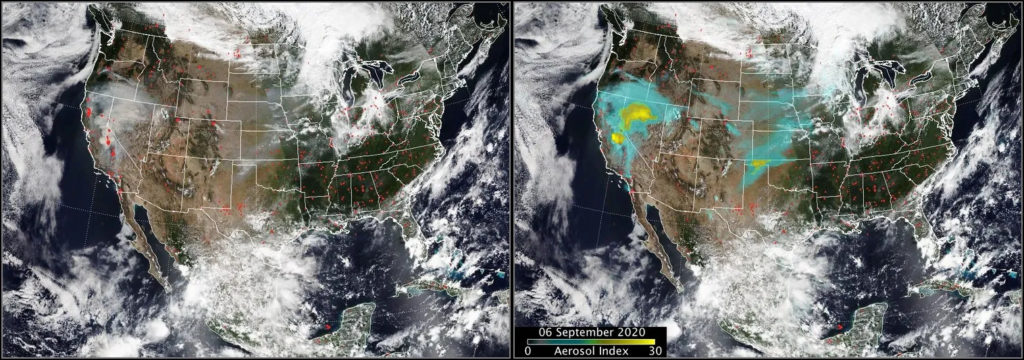
Wildfires are growing in size and intensity worldwide. Researchers are conducting an airborne mission to study severe storm clouds that form over some of the hottest blazes. These ‘firestorm’ clouds, known as pyrocumulonimbus (pyroCb), can inject smoke into the stratosphere, similar to a volcanic eruption. They cause extreme weather, including lightning and firenadoes, but their mechanisms are not well understood, posing a danger to residents and emergency crews.
This summer, scientists led by NASA, the U.S. Naval Research Laboratory (NRL), and the National Center for Atmospheric Research (NCAR) examined these clouds closely. They flew aircraft equipped with measurement instruments over and into wildfire smoke plumes. John Yorks, a scientist at NASA, noted the novelty of sampling inside and above the plumes, something never done before.
The INSPYRE Mission
The mission, named INSPYRE (Injected Smoke and Pyrocumulonimbus Experiment), aims to collect real-time data from active wildfires. This research helps scientists understand the dynamics of these clouds and their atmospheric effects. Principal investigator David Peterson described the mission as a well-coordinated storm chase. The team considers the summer deployment highly successful, offering unique experiences and data collection.
It’s a really dark, almost orange hue when you go through the cloud.– David Peterson
Peterson explained that they accessed the smoke and cloud tops, capturing valuable data.
Understanding Firestorm Clouds
Under specific conditions, wildfires can produce dense smoke plumes that transport water vapor and particles high into the atmosphere. As the vapor cools, pyrocumulonimbus clouds form and spread at the plume’s top. These clouds act as chimneys, pushing smoke upwards. They create hazardous weather, such as dry lightning, which can start new fires, and strong downdrafts, posing risks to firefighters. The smoke and cloud obscurity challenge visibility, complicating evacuation efforts.
Challenges and Discoveries
Research into these clouds is relatively new, making them difficult to model and predict. INSPYRE builds on previous studies but is one of the few attempts to get close to these clouds. While satellites view them from above, there’s a lack of direct data from within. Understanding aerosols and other elements helps forecast smoke patterns.
NASA’s ER-2 plane and NCAR’s Gulfstream V contributed to the mission. The ER-2 carried remote sensors, while the Gulfstream V flew through smoke, collecting air samples. This approach allows researchers to build a vertical profile of the events within firestorms.
The final deployment sampled smoke from a massive Siberian firestorm cloud that traveled across the Pacific Ocean. The data collected is expected to significantly improve understanding and forecasting of these clouds.
With this mission, researchers hope to refine models and fill knowledge gaps in future deployments.