
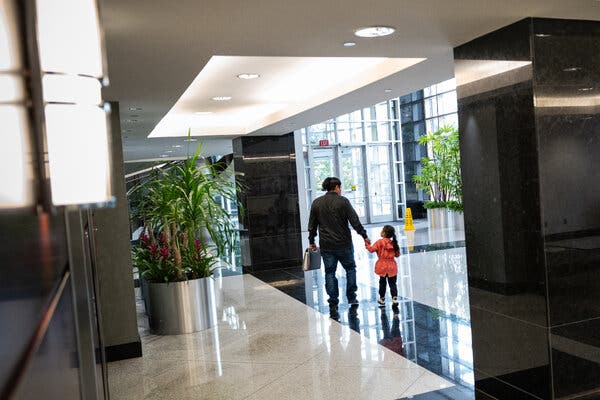
In May, at the Annandale Immigration Court in Virginia, a man and his child were seen leaving the premises amid the Trump administration’s efforts to urge immigrants to voluntarily leave the U.S. This strategy focuses on financial pressures, impacting noncitizens, including those with legal status.
For almost three decades, Raquel Molina, an immigrant from El Salvador, had worked diligently cleaning planes at Boston’s Logan International Airport. She held a valid Social Security number and work permission. However, last summer, at the age of 65, Molina was unexpectedly dismissed from her job, along with other immigrants legally employed at the airport. This occurred because a new mandate restricted access to secure areas to U.S. citizens, green card holders, and others with more stable residency statuses, as stated in a lawsuit filed by a labor union.
“I didn’t understand what was happening,” said Molina, who has lived legally in the U.S. under Temporary Protected Status, a program that offers refuge to individuals from countries in crisis. “I had worked hard at my job. This news put me in a state of shock.” Her dismissal is part of a broader, systematic strategy by President Trump to create a less welcoming environment for immigrants.
For over a year, the administration has sought to utilize every possible bureaucratic method to restrict immigrants — both documented and undocumented — from accessing jobs, healthcare, financial services, tax credits, and child care. The intention is to pressure immigrants to depart from the U.S. and diminish the allure that initially attracts them.
This policy showcases the president’s capacity to alter immigration policy through executive orders and federal regulations, bypassing Congress. It also demonstrates a shift towards more subtle and creative tactics following political backlash against earlier deportation raids in major cities.