
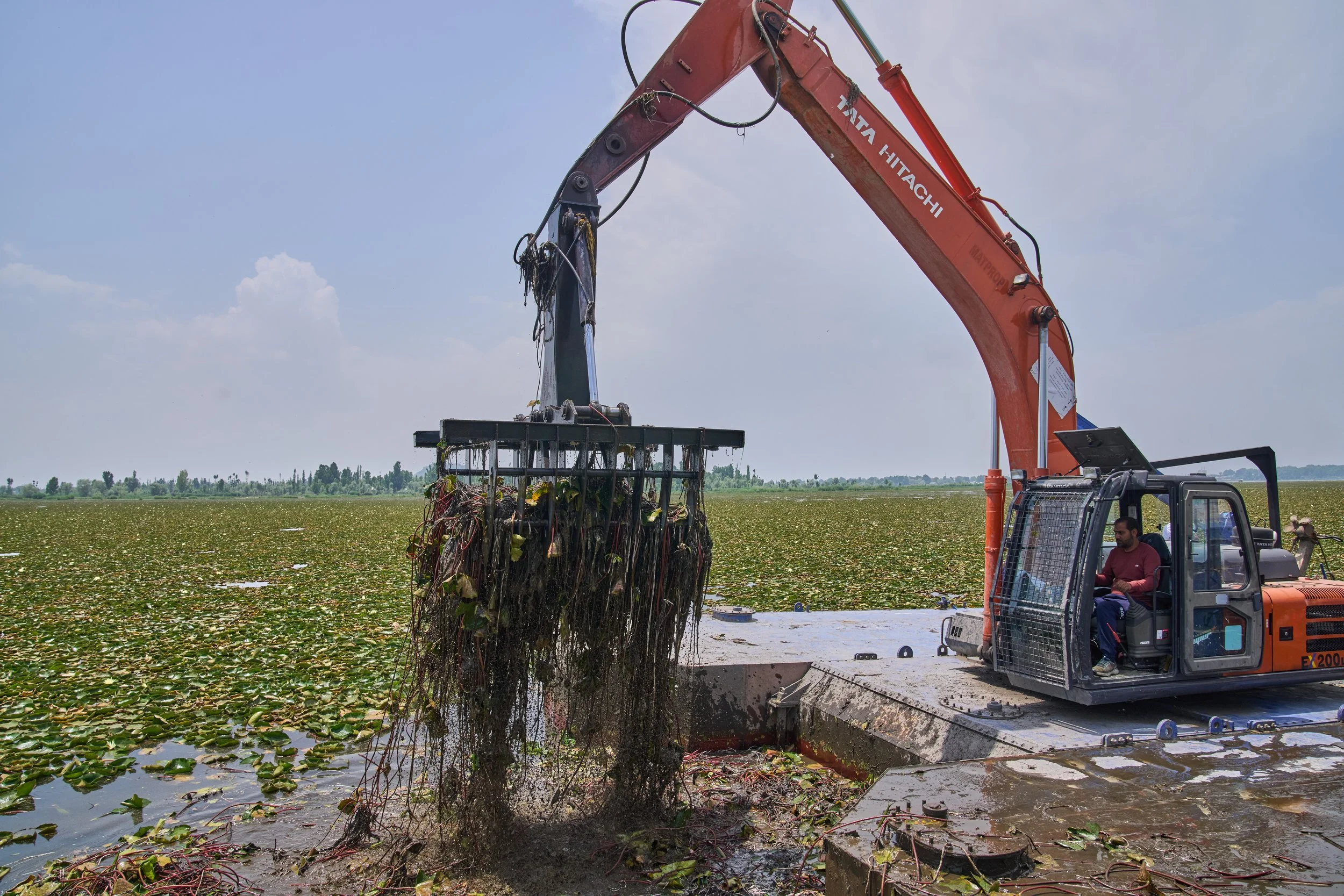
Srinagar is home to Dal Lake, a picturesque yet imperiled natural treasure surrounded by the majestic Himalayas. The beauty of the lake is marred by pollution, invasive species, and dwindling water levels. These challenges threaten the lake’s existence, along with many others in Indian-controlled Kashmir.
Efforts to clean Dal Lake are relentless but perilous. Pollution causes skin irritations for workers handling the cleanup. The Lake Conservation and Management Authority (LCMA) employs machines to tackle the infestation of weeds.
“We are afraid to touch the water with bare hands.” —Ghulam Rasool
Rasool, a weed cleaner, reports constant contamination from sewage and garbage flowing into the lake. This problem is common across many lakes in the region, exacerbated by climate change and urban expansion.
The Indian government revealed alarming statistics: nearly half of Jammu and Kashmir’s lakes have vanished or become polluted over decades. Of the original 697 lakes, 315 have disappeared, while 203 have significantly shrunk since 1967.
Dal Lake is more than a tourist attraction. It hosts vibrant floating markets where locals sell various goods. However, its boundaries have gradually receded, leaving land for illegal developments.
Encroachment by farms and homes is a pressing issue. These expansions worsen pollution by contributing untreated sewage and waste. Teams equipped with heavy machinery labor daily to manage the weed overgrowth fueled by nutrient-rich pollution.
While around 75% of Srinagar’s population has access to sewage systems, unserviced areas significantly pollute the lakes, highlights Muzamil Ahmad Rafiqui of LCMA.
Climate change intensifies these challenges. The Himalayas are experiencing warming rates above global averages. This leads to erratic rainfalls and faster snowmelt, altering river and lake water flows.
Sher Muhammad, a glaciologist, notes volatile water influxes followed by drought cycles due to climate shifts. With glaciers contributing initial boosts in water flow, their eventual depletion will hinder natural water storage.
Environmental scientist Irfan Rashid emphasizes climate’s impact across economic sectors, including hydropower, tourism, and key agricultural outputs like apples and saffron.
Fishing communities are particularly affected. Wular Lake, northwest of Srinagar, becomes harder to navigate due to vegetation overgrowth, with the fish population declining.
“There are a lot of changes since my childhood.” —Abdul Rasheed
Rasheed laments lost earnings due to declining fish stocks and pollution. Wular Lake’s reduction in size and quality intensifies flood risks in Kashmir.
Fishing, a tradition in Kashmir, is increasingly unsustainable. Bashir Ahmed, an elderly fisher, recounts reduced catches, signifying dire prospects for future fishing livelihoods.
The preservation of Kashmir’s lakes is an arduous task, demanding greater resources and attention to combat environmental degradation and ensure the survival of fishing communities.