
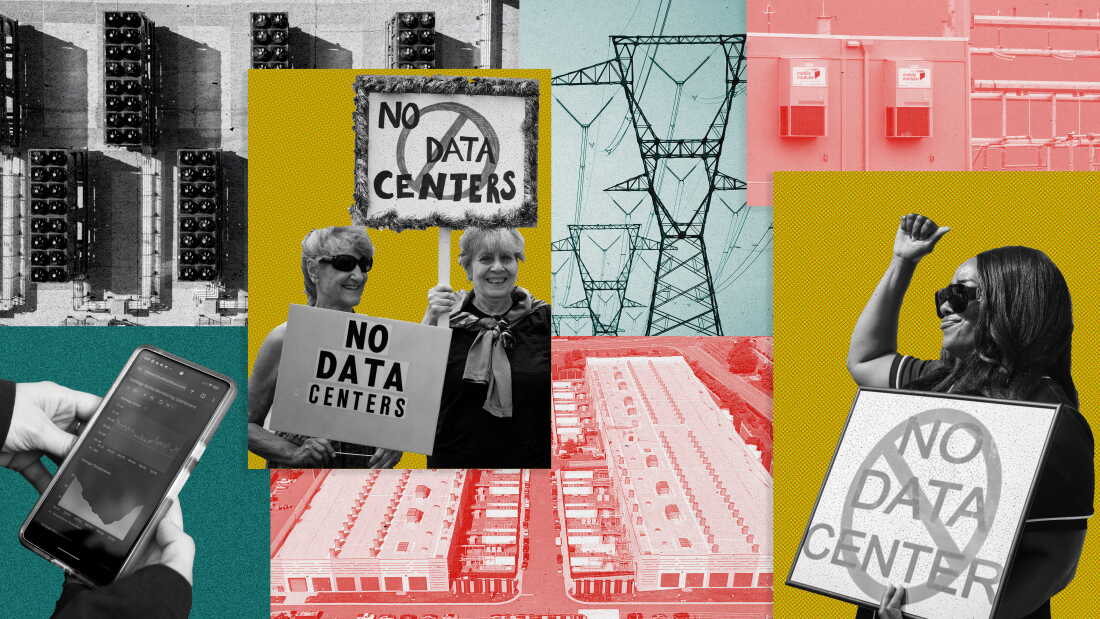
Data centers are dividing communities across the United States, sparking debates that cut across political lines. From city halls to county commissions, citizens are confronting their local representatives with concerns that range from local noise pollution to fears of job losses due to artificial intelligence.
Darrell West, a senior fellow at the Brookings Institution, describes the widespread mistrust as significantly disruptive to traditional politics. The issue taps into existential worries about the consequences of technology and artificial intelligence on society.
“People feel they’ve lost control over technology, and that’s concerning,” West explains.
Data centers present both economic benefits and increasing suspicions. While they generate tax revenue and jobs, secretive deals involving nondisclosure agreements exacerbate public distrust. For instance, in Sterling, Virginia, the noise from gas turbines at the Vantage VA2 data center has fueled local complaints.
A poll by The Economist and YouGov revealed that approximately two-thirds of Americans oppose new data centers in their communities. Chris Borick, a political science professor at Lehigh University, remarks on the unusual coalition forming around this issue.
“Current leaders face a challenge as their traditional political alliances shift,” Borick notes.
In Loudoun County, Virginia, political divisions illustrate the local complexity. On one side is Juli Briskman, who opposes further data center developments. Her Democratic opponent, Phyllis Randall, supports data centers for their fiscal benefits despite admitting their drawbacks.
This political struggle is mirrored in the experiences of residents like Kasey Hatch, whose work in tech aligns her with unexpected allies against data centers due to noise issues.
Similarly, Nusheen Farahani, a Loudoun County resident traditionally aligned with liberal policies, finds common ground with diverse political groups opposing data centers.
Across states like Minnesota and Pennsylvania, grassroots movements rally against these developments. Around 640,000 individuals are actively engaged in such campaigns, driven by a sense of governmental neglect.
The tech industry places significant demand on communities, requiring substantial resources. Although data centers lower property taxes, their electricity and water needs strain local resources. The economic impact is undeniable, with Loudoun County reporting over $1.2 billion in tax revenue from data centers in fiscal year 2026.
Despite economic benefits, secrecy around data center deals breeds suspicion. In Virginia, nondisclosure agreements are common in negotiations, leading to mistrust. John Stephenson of Vantage Data Centers admits past mistakes in not engaging communities sooner.
In places like Wisconsin and Alabama, secrecy in planning amplifies local opposition. These tensions resulted in the abandonment of a $12 billion proposal in DeForest, Wisconsin.
Virginia serves as a warning with its pause on new data center applications. In Frederick County, Maryland, public discontent is evident as locals push against ongoing developments.
Steve Black, a nursery owner, notes his community’s fight against unchecked developments similar to those in Loudoun County. The situation reflects a broader mistrust of government and Big Tech, according to Kathy Cramer, a political science expert at the University of Wisconsin-Madison.
Ultimately, these conflicts channel broader societal discontent into actionable political initiatives, uniting individuals of varying political backgrounds.