
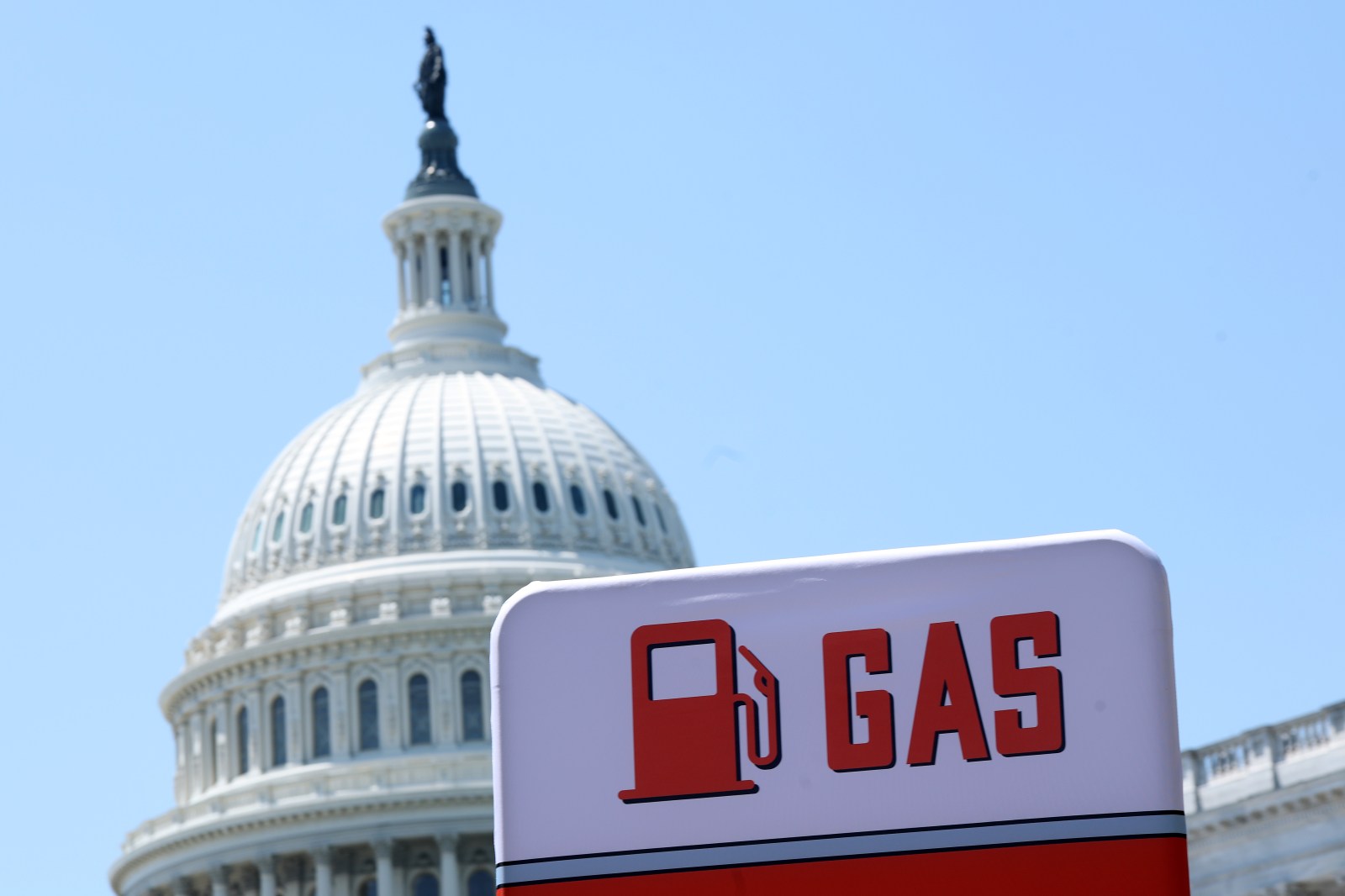
The conflict involving Iran, along with the increasing fuel costs it has triggered, has led economists and think tanks to caution that these effects might serve as a new, enduring financial burden on American households. Besides the surge in gas prices, there are concerns the nearly three-month-long conflict could escalate inflation throughout the economy, further complicating expectations of interest rate reductions in 2026. These concerns are highlighted by the latest consumer price index (CPI) released by the Department of Labor. It shows inflation surpassing wage growth for the first time since 2023, negating recent pay increases Americans have received.
Justin Wolfers, an economist at the University of Michigan’s Gerald R. Ford School of Public Policy, suggests that Americans may face this “Iran tax” for “months and probably years.”
How Much Is the War Costing Consumers?
The conflict has most notably impacted energy prices. Oil prices have risen sharply since Tehran began obstructing ships in the Hormuz Strait, through which about 20 percent of the world’s supply typically passes, causing domestic fuel costs to climb significantly. According to the AAA, the national average price for a gallon of regular unleaded fuel rose from under $3 before the conflict to $4.49, though it has slightly decreased in recent days amid hopeful negotiations.
Researchers at Brown University’s Watson School of International and Public Affairs estimate that consumers have incurred close to $48 billion in extra fuel costs since the conflict started on February 28. This figure pertains mainly to gasoline and also to diesel, whose price has risen by over 50 percent. Combined, these increases have led to an average burden of $364.40 per U.S. household.
Roger A. Pielke Jr., a political scientist and senior fellow at the American Enterprise Institute (AEI), notes that, on average, households now spend roughly $410 more each month when accounting for the effects on gas and other products such as jet fuel and fertilizer.
The pressure on consumers both at fuel stations and grocery stores has escalated consumer inflation expectations, with forecasts for the year ahead reaching 4.8 percent in the University of Michigan’s latest survey. Official predictions from the Department of Agriculture also suggest higher prices for several goods than previously anticipated.
Analysts Warn of Long-Term Economic Effects
The administration has maintained optimism, asserting that once military goals are achieved and the conflict concludes, fuel and other affected commodity prices will return to pre-conflict levels.
In April, President Donald Trump expressed confidence that prices would “drop like a rock” once the war ends. He assured participants at a recent event that “prices are going to tumble as soon as I finish up with Iran.” In early May, Kevin Hassett, the National Economic Council director, stated that a return to routine shipments through the Hormuz Strait would lead to a rapid decrease in fuel costs ahead of the midterm elections.
No Quick End to High Prices
However, many analysts believe the economic repercussions could continue even with a prompt resolution.
Mark Zandi, chief economist at Moody’s Analytics, emphasized last month that despite a hypothetical immediate end to the war, a risk premium would persist in oil prices due to the fear that Iran could blockade the Strait of Hormuz and disrupt global oil production.
Mark Blyth, a professor of international economics at Brown University, pointed out that the closure of the Hormuz Strait has also halted supplies of plastic, petrochemical feedstock, and fertilizer inputs, potentially leading to future food price hikes as farmers face tighter margins. He remarked that “even if all this stopped tomorrow, it could take up to a year to normalize supply.”
During an interview with MS Now last week, Wolfers mentioned that while an end to the war would lead to decreasing fuel costs, the decline might not occur as quickly as the administration anticipates. He noted that despite White House assurances of immediate relief, “they’re not going to come down very quickly.”