
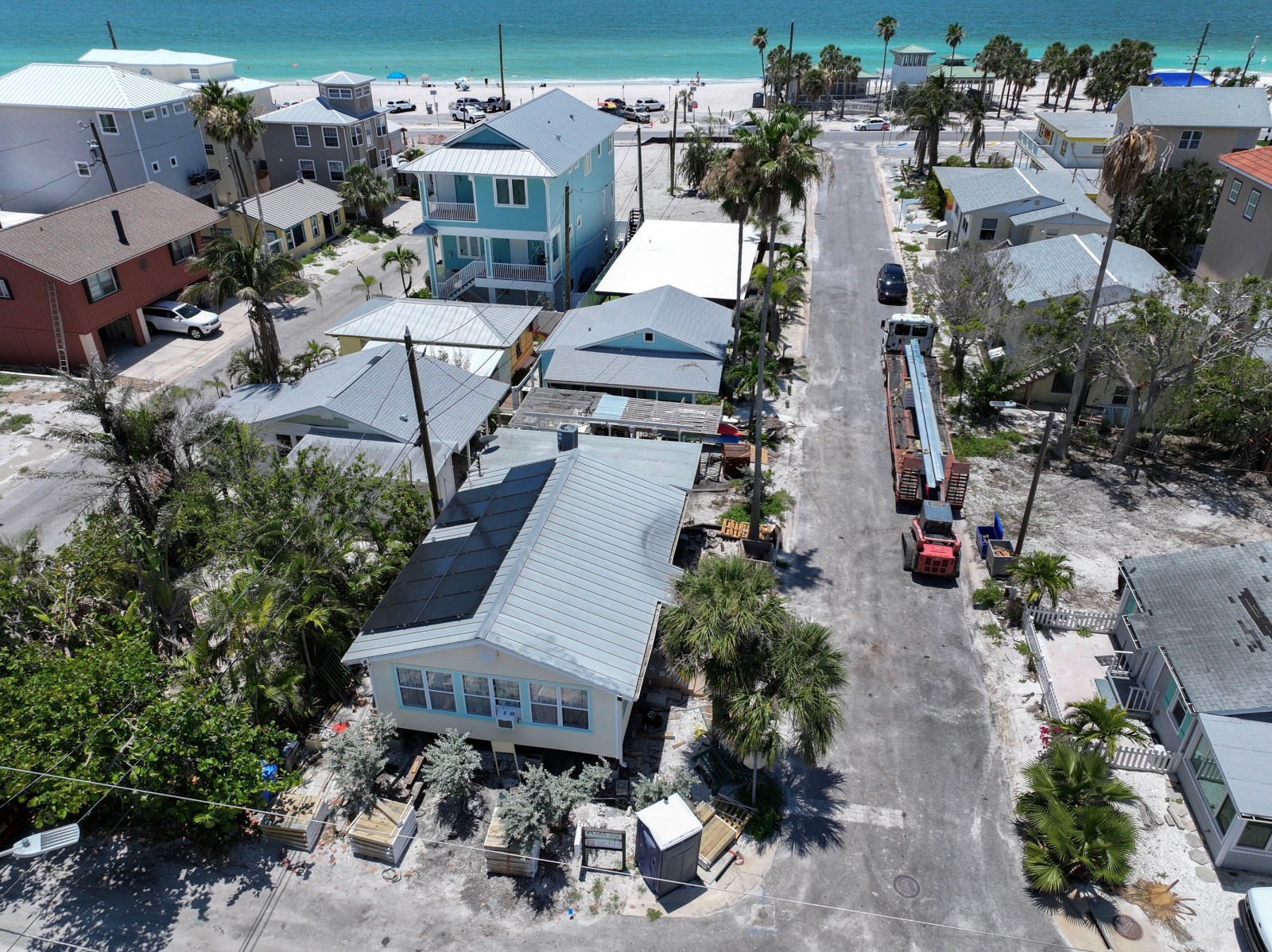
A homeowner in Pinellas County, located on Florida’s Gulf Coast, is making significant changes to her property to combat future flooding. The house is being elevated 24 feet in the air as a preventative measure after experiencing repeated storm damage. This effort, reported by Tampa’s WFLA News Channel 8, underscores the increasing lengths that many residents in Florida are taking to adapt to growing hurricane threats and rising flood risks.
The trend reflects a broader shift among Floridians who are choosing to elevate their homes instead of leaving their properties. Rising insurance costs and persistent storm damage are major factors driving this decision. Pinellas County, surrounded by water on three sides, is home to one of the highest concentrations of FEMA-designated flood zone properties in the U.S., according to local floodplain data.
A Rare 24-Foot Home Lift
The Pinellas County home, located in Madeira Beach, is noteworthy for the height of its elevation. Kristi Robinson, who works with Modern House and Building Movers—the company responsible for the project—explained that most home lifts are lower. “Typically, we do 12 to 14 feet, sometimes 10,” Robinson said. “But 24 feet, this is the first.”
This unusual height partially aims to accommodate adding a second floor. The process has taken about a year and a half from contract signing and permitting to the physical lifting, which occurred between February and April. The method involves building structural columns, installing beams, and gradually raising the house before removing temporary supports. Robinson detailed, “They will go in and they will form columns around this house… then they’ll build the beams, and then they’ll start removing the columns.”
Cost and Timeline
The homeowner informed WFLA that the elevation alone cost approximately $575,000. Additional tasks such as new walls, flooring, stucco, and paint are ongoing. The entire project is expected to conclude by December. Despite the steep price, Robinson highlighted that the investment aims to maintain community character and enhance safety. “A lot of these homes are homes they grew up in… they want to stay in their home. This is an option where they can stay,” she stated. “We want to see homes and safety… when or if we ever do have a flood again, they won’t have a problem with that.”
Hurricanes and Flooding Driving Change
Recent years have seen significant storm activity in Florida. In 2024, Hurricanes Helene and Milton severely impacted the Gulf Coast with storm surges, heavy rainfall, and tornadoes. These events led to over 78,000 flood insurance claims and estimated losses that may exceed $10 billion. The National Hurricane Center notes that flooding and storm surge, rather than wind, account for most hurricane-related deaths and damage. Elevating homes is becoming a key strategy to mitigate these risks.
What People Are Saying
The elevation project in Pinellas County has generated discussion on social media.
- User @garydruckercic, a commercial insurance broker, commented: “Smart move. I always tell my Florida clients to lift the house first and call the insurance company second. That is just sound advice.”
- Peter Draschman, a Florida realtor, noted: “That’s wild! FEMA could have paid up to 100 percent to elevate this home. If the owner had 4 NFIP [National Flood Insurance Program] claims in a 10-year window they could have been approved for the Flood Mitigation Assistance program.”
- User @jzell2285, a microbiologist, raised concerns: “I can’t imagine local ordinances will allow that? Building codes n such. I’m guessing the pallets are just temporary while they put the real supports in?”
- Dan McGrath (@IRMAARetirement), an author and financial planner, questioned future accessibility: “No one ever plans for the future. How will this homeowner navigate the stairs when they are older?”
- User @ChaosCruxFL, an “Ops architect turned AI builder,” shared: “They are doing this to store RV’s underneath, there are several on Madeira Beach like this.”
If you have a housing-related story to share, contact us at [email protected], and your story might be featured on Newsweek.