
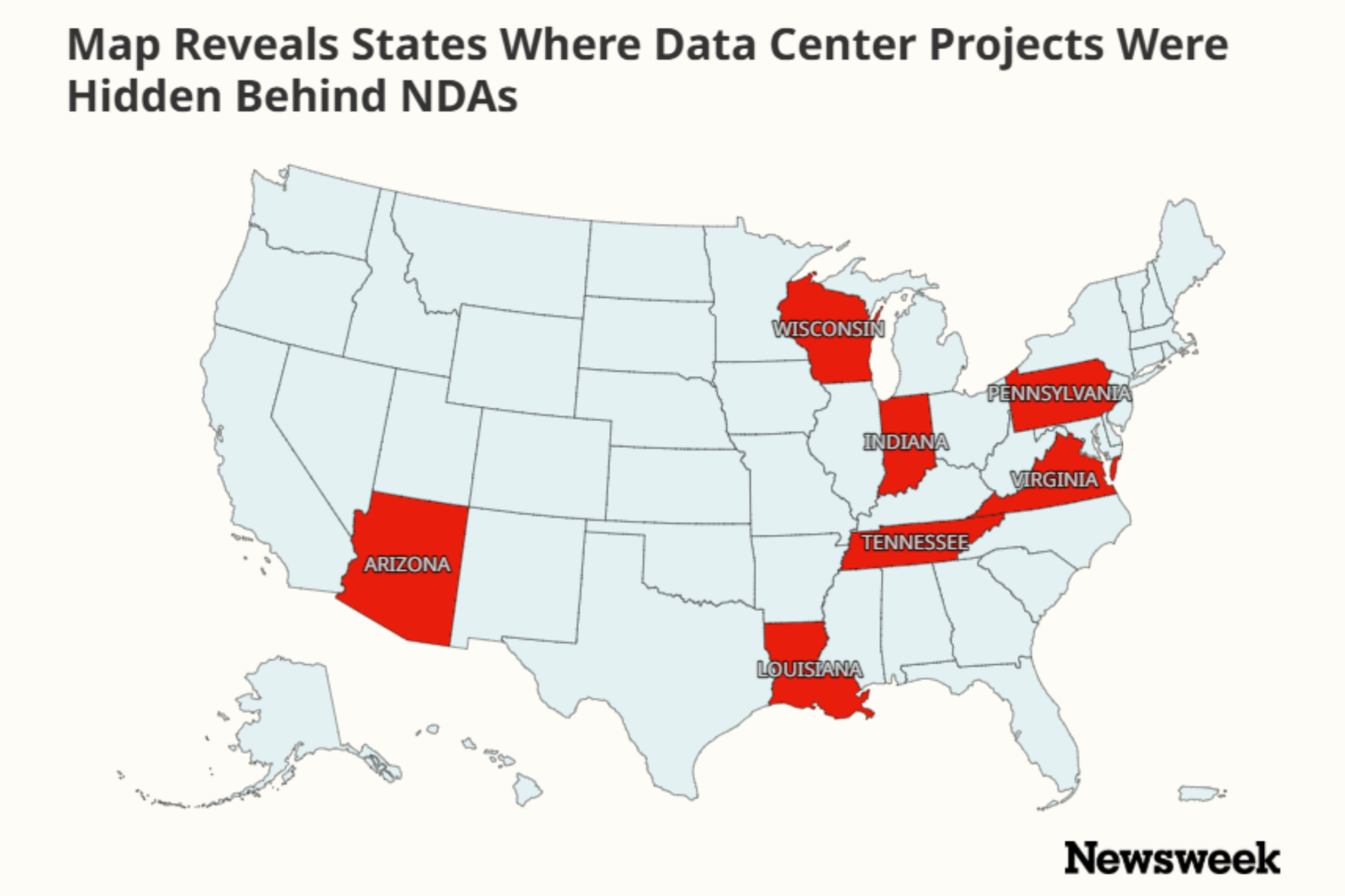
The rapid expansion of data centers across the United States, driven by artificial intelligence, is stirring controversy. A primary issue involves nondisclosure agreements (NDAs) between developers and local governments, which critics argue reduce transparency. These agreements can limit public awareness of projects potentially affecting energy grids, water resources, and communities.
Pennsylvania’s Role in the National Debate
Pennsylvania is at the forefront of this discussion. An investigation revealed that four of nine data center projects in former Governor Josh Shapiro’s “Fast Track” permitting program involved municipalities with NDAs. Kline Township, another municipality, ceased responding to records requests about potential NDAs.
Companies linked to these projects include Amazon, Quality Technology Services, and Oracle America. Governor Shapiro has adjusted his stance, recently excluding data centers from expedited permitting and prohibiting NDAs in state-managed projects going forward.
Broadening Concerns Nationwide
Other states face similar scrutiny over NDAs. Virginia’s records show that 25 of 31 localities with data center activities had NDAs with developers. This trend indicates that confidentiality is a common theme in data center proposals.
In Arizona, Amazon’s attempt to limit public discussion of a proposed $3.6 billion data center has attracted attention, becoming part of a Senate inquiry into data center transparency. Louisiana has also seen public concerns, as locals felt excluded from discussions on a major data center in Rapides Parish due to NDAs.
Tennessee and NDA Transparency Issues
In Tennessee, questions about NDAs arose with xAI’s “Colossus” facility near Memphis. Government officials signed NDAs, restricting community insight into the project’s potential impacts until shortly before operations began.
Wisconsin Watch’s investigation found NDAs connected to significant data center projects in multiple communities, including Beaver Dam and Kenosha. Indiana experienced similar issues, with Posey County officials acknowledging an NDA that restricted identifying a potential developer. Indianapolis’s Franklin Township encountered a similar scenario with a large proposed project.
Implications of Data Center NDAs
Opponents view these agreements as barriers to public accountability. They argue that data centers can significantly impact electricity use, water consumption, and local land use. Critics assert that communities deserve insight into projects before permits and incentives are finalized.
The national concern prompted a federal investigation led by Senator Richard Blumenthal. This probe seeks to uncover the implications of NDAs on public disclosure concerning data center impacts. Blumenthal argues for greater transparency, especially on projects affecting infrastructure and utility costs.
Advocates of NDAs see them as necessary for protecting business strategies and proprietary information. They argue that companies need confidentiality during site evaluations and negotiations.
National Dialogue on Data Center Transparency
The prevalence of NDAs highlights the broader challenge communities face as AI propels data center construction. Critics worry that secrecy excludes residents from crucial development decisions. As construction advances, the balance between transparency and confidentiality remains a pivotal issue.