
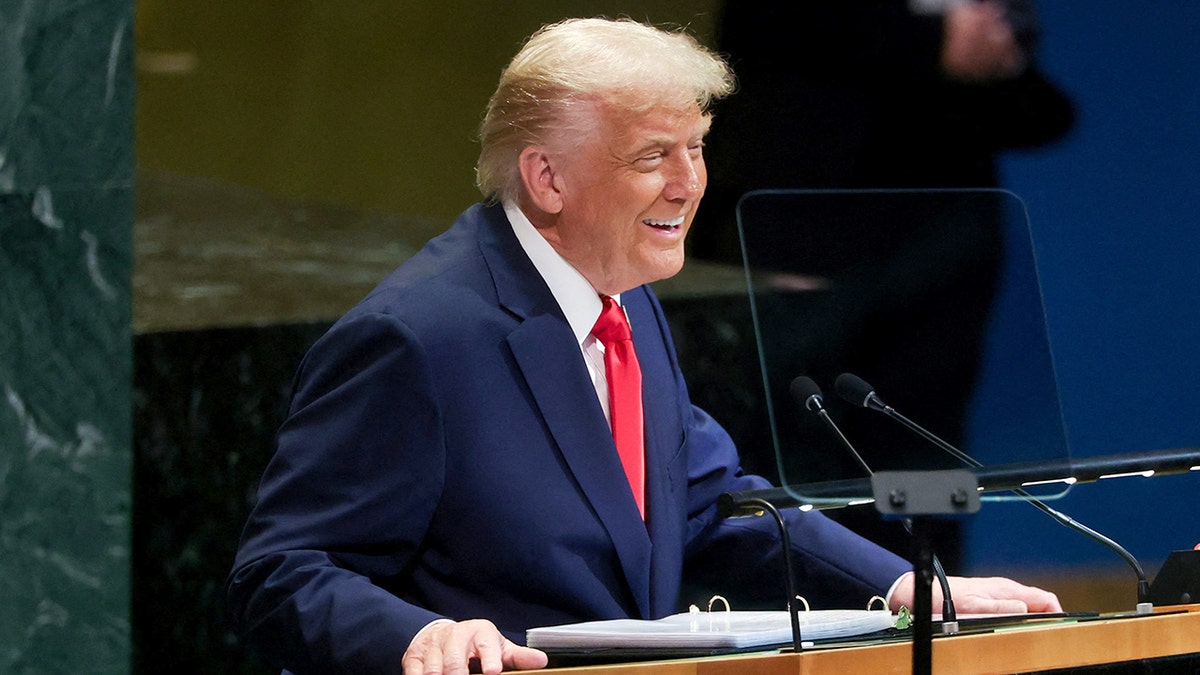
President Donald Trump and Iranian President Masoud Pezeshkian will meet in New York City for the U.N. General Assembly (UNGA) this week. This meeting is described by former White House officials as a significant diplomatic moment, with Tehran’s delegation under tight U.S. restrictions amid rising Middle East tensions.
According to reports, Pezeshkian is scheduled to speak at the assembly on Wednesday, while Trump will address the assembly on Tuesday. Theo Wold, a former acting assistant attorney general, noted the dramatic nature of this diplomatic choreography to Fox News Digital.
Pezeshkian, alongside Russian and Chinese leaders, is appearing for the BRICS summit in India. These leaders are meeting amid escalating global tensions, as reported by Reuters.
Preceding the UNGA, Trump addresses the assembly on Tuesday. Reuters revealed the U.S. has imposed strict restrictions on Iranian movements while in Manhattan. Even though visas were approved, the delegation’s access beyond diplomatic responsibilities is limited.
“The limitation is going to be less access to the international press and less ability for them to essentially poke the Trump administration in the eye,” Wold emphasized.
For Washington, the delegation must remain within boundaries. They are restricted to accommodation in New York City and U.N. headquarters.
President Trump is considering renewed strikes on Iran amid an ongoing war of nearly seven months. Tehran has set conditions for talks with the U.S., as per Mohsen Rezaei from Iran’s Supreme National Security Council.
Warnings from Iran against any major attack by the U.S. and allies have been reported, with claims that such actions are being prepared.
Tommy Pigott from the U.S. State Department criticized the Iranian regime’s officials for seeking shopping opportunities in New York, despite the harsh conditions ordinary Iranians endure.
Similarly, Pezeshkian accused the U.S. of betrayal at the United Nations General Assembly. Wold clarified that the Iranian delegation would have restricted access to commercial areas.
As the host country under a 1947 U.N. agreement, the U.S. facilitates entry for U.N. representatives. However, this time strict measures ensure the delegation does not indulge in personal shopping.
Wold noted restrictions against contacting large retailers, preventing transactions with Iranians when they arrive.
The UNGA allows Washington a chance to present essential points on actions against Iran. Iranian state media reflected New York’s lack of appeal to their delegation. Iranian spokesperson Esmaeil Baghaei claimed their attendance was a legal right.
Wold criticized the U.N. for hosting representatives from adversarial nations, raising security concerns.
“It’s perplexing to most Americans how representatives from hostile regimes engage in combat operations against America,” Wold commented.
He pointed out the contradiction within the U.N. hosting nations suspected of human rights violations.
Amid the hostility, the assembly provides potential diplomatic openings. Trump plans meetings with GCC leaders to discuss security in the region and the Strait of Hormuz.
State Department leadership hopes for private discussions between U.S. and Iranian representatives to negotiate cessation of hostilities.
President Trump is expected to make an impactful presence at the summit. According to Wold, Trump is prepared for the challenges, rising as a natural leader.
Emma Bussey writes for Fox News Digital. She has prior experience at The Telegraph across various desks such as foreign, politics, and culture.