
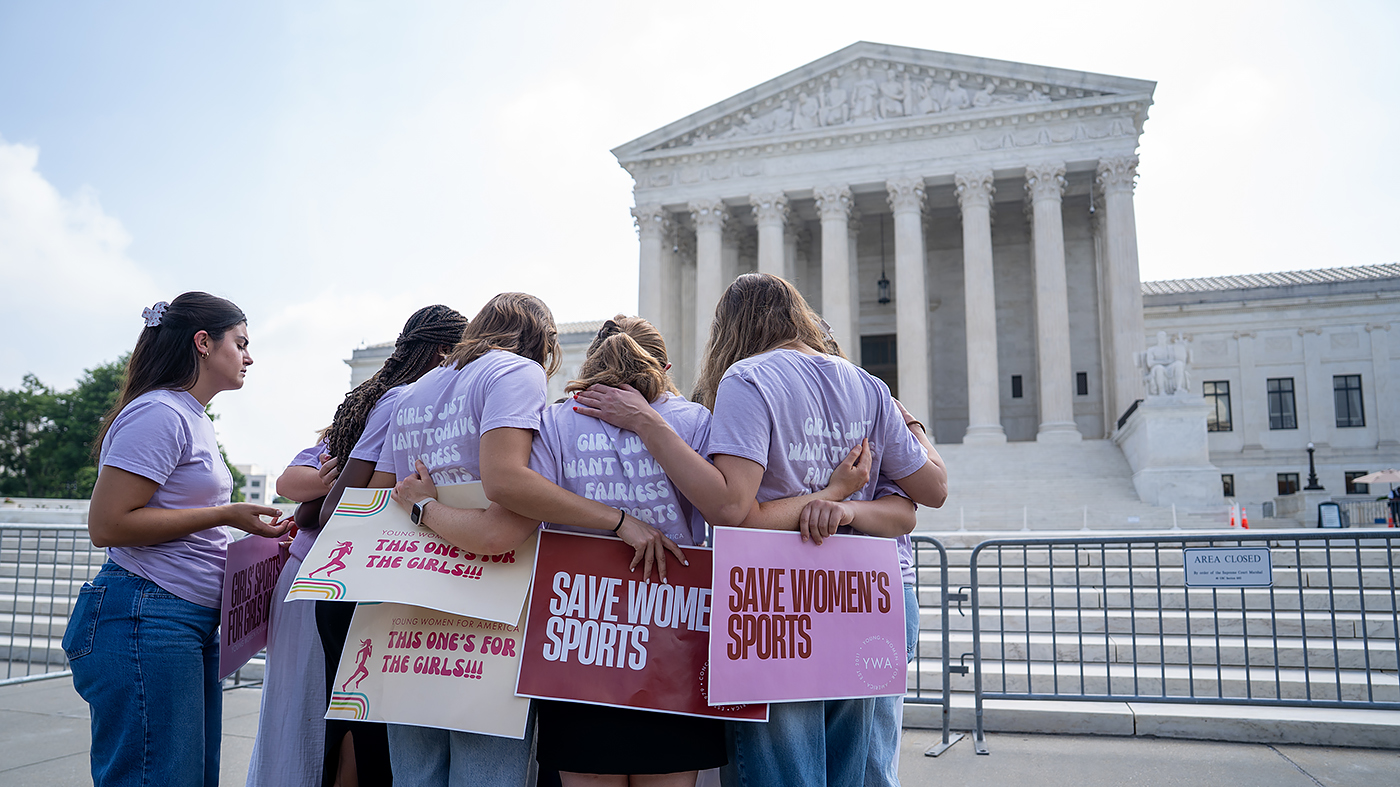
This week, all nine Supreme Court justices recognized the inherent physical differences between men and women. Their unanimous decision in State of West Virginia v. B.P.J. and Little v. Hecox marks a significant victory for girls speaking out against injustice and affirms that men cannot take the place of women.
The Court ruled 9-0 that Title IX, a federal law ensuring equal educational opportunities for women, allows states to implement sex-specific sports to protect female athletes. The decision also included a 6-3 vote affirming the Equal Protection Clause of the 14th Amendment protects women’s sports as well.
This ruling prompts questions about how confusion over such a clear issue arose. It acknowledges biology as creating undeniable differences in strength, speed, and muscle mass between the sexes. These facts have been recognized throughout history but have faced challenges from advocates of gender ideology.
These advocates have tried to erase protections based on biological differences, affecting several areas including athletic competitions and locker room policies. The young male athlete known as B.P.J. is a recent example, having outperformed over 470 girls in more than 1,400 high school track-and-field events, diminishing opportunities and scholarships for young women. B.P.J. also allegedly sexually harassed a girl, Adaleia Cross, causing her to leave the sport entirely.
An unfortunate incident involving Kallie Keeler, a high school sophomore who was allegedly sexually assaulted by a male competitor during wrestling, highlights the harms arising from disregarding biological facts. Institutions that adopt subjective gender policies have punished dissenters and attempted to reshape legal definitions of sex, contradicting the intentions of laws like Title IX.
The debates at the Supreme Court included considerable confusion over defining terms like “sex” and “woman.” Had the Court ruled otherwise, it could have set a perilous precedent affecting all aspects of women’s rights, not just in sports.
Thankfully, the Court’s unanimous decision supports legal protections for women. However, this victory serves as a warning. A justice system that turns untruths into laws cannot expect citizens’ trust. It coerces people into deception, forces unfair competition in sports, and undermines parental trust in the system meant to protect their children.
The Court answered what should have been an easy question. States without existing protections for women’s sports should act quickly to provide fairness and equal opportunity for girls and women. While this ruling is an important affirmation, it also emphasizes the ongoing need for vigilance in upholding truths in the law.
Kristen Waggoner is CEO, president, and chief counsel of the Alliance Defending Freedom.
Copyright 2026 Nexstar Media Inc. All rights reserved. This material may not be published, broadcast, rewritten, or redistributed.