
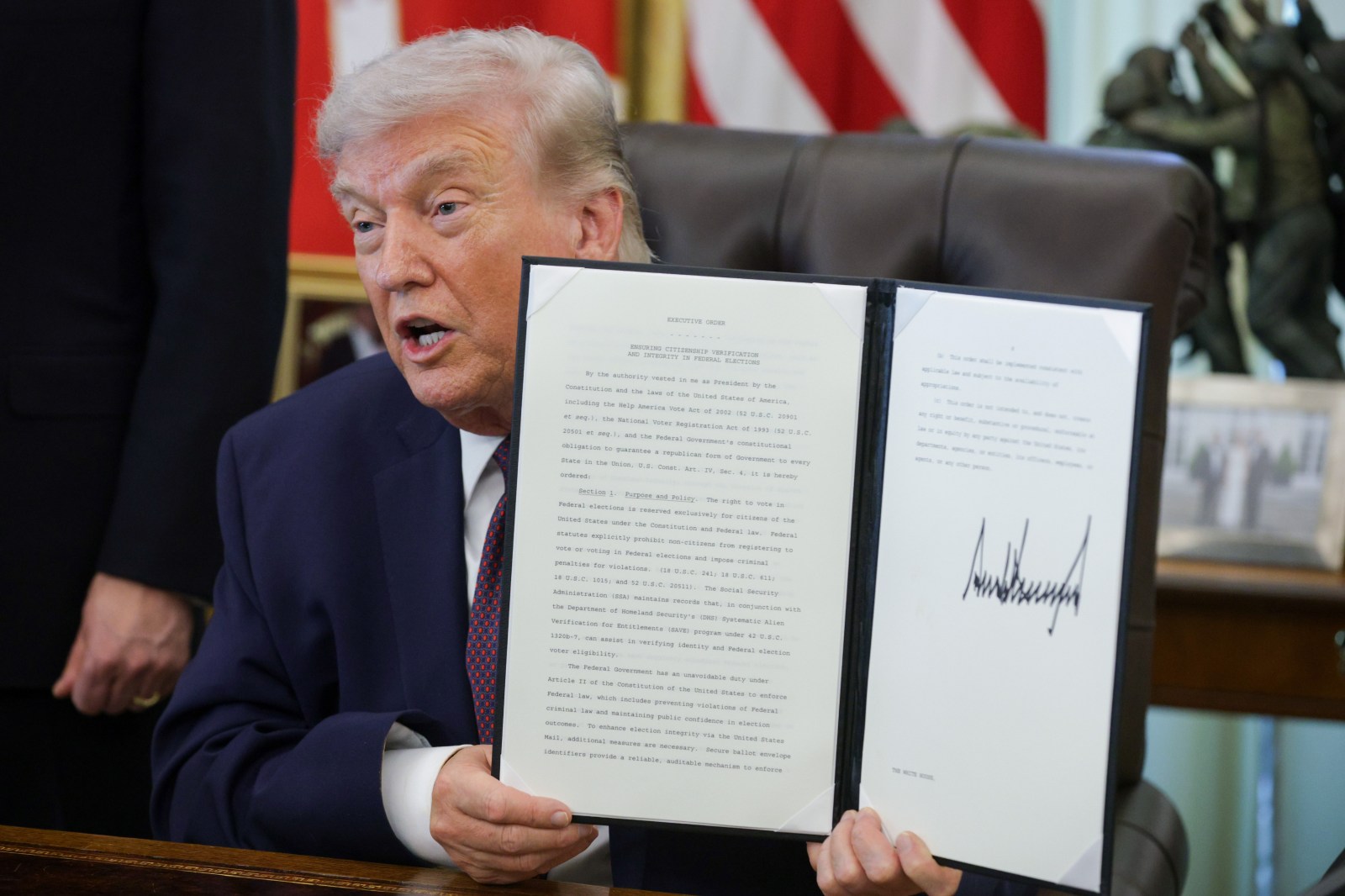
The Trump administration has approached the U.S. Supreme Court seeking urgent intervention in its legal clash over mail-in voting ahead of the November midterms. On Sunday, the administration requested the justices to permit contested U.S. Postal Service restrictions to be enforced immediately.
This request follows a federal judge’s ruling on Friday to indefinitely block the plan while lower-court litigation is ongoing. The legal dispute is of significant importance this election cycle, focusing on the manner in which millions of Americans vote as control of Congress remains uncertain. According to federal statistics, nearly one-third of U.S. voters used mail-in ballots in the 2024 presidential election. This method of voting holds considerable importance for election officials, political parties, and voters, particularly in key battleground and Western states that could influence congressional majorities.
In an emergency application, Solicitor General D. John Sauer urged the Supreme Court to overturn the block placed by U.S. District Judge Indira Talwani. Judge Talwani, appointed during the Obama administration, determined that challengers, which include Democratic-led states and voting rights organizations, were likely to prove that the Postal Service’s policy infringes on powers constitutionally reserved for states and Congress.
The Trump administration contends that the restrictions are standard postal regulations intended to enhance election integrity, not an unlawful federal interference in elections. A crucial issue in the ongoing litigation is whether the proposed changes can be realistically executed before Election Day as certain states, such as North Carolina, have already started mailing absentee ballots.
The administration argues that keeping the injunction in place exacerbates confusion, with local election officials preparing ballots based on the current systems instead of the new federal guidelines. Opponents argue that changing procedures so close to the election might lead to logistical chaos for election offices that have been preparing for months.
This legal confrontation has significant political stakes for the midterms. Control of Congress is at risk, with Republicans defending their legislative majority while Democrats aim to leverage political challenges faced by the administration to secure more seats in the House and Senate. Gaining control in either chamber would allow Democrats to set committee agendas, exercise subpoena power, and expand investigative capabilities.
The partisan divide was highlighted by Democratic Representative Jamie Raskin of Maryland on NBC News’ Meet the Press. He stated that President Donald Trump has committed impeachable offenses and defied Congress, suggesting a potential shift in congressional control could alter the trajectory of the presidential term.
The administration supports mail-ballot restrictions, viewing them as sensible measures to increase public trust in elections. Critics, however, see these rules as unnecessary obstacles to voting that unconstitutionally extend executive power into a domain traditionally managed by states.
The Supreme Court is under pressure to make a swift decision as ballots are distributed nationwide. The outcome will influence not only the handling of mail ballots as the campaign draws to a close but also whether one of the administration’s main election-security measures will be upheld.
For inquiries, contact Newsweek editor Anthony Murray.