
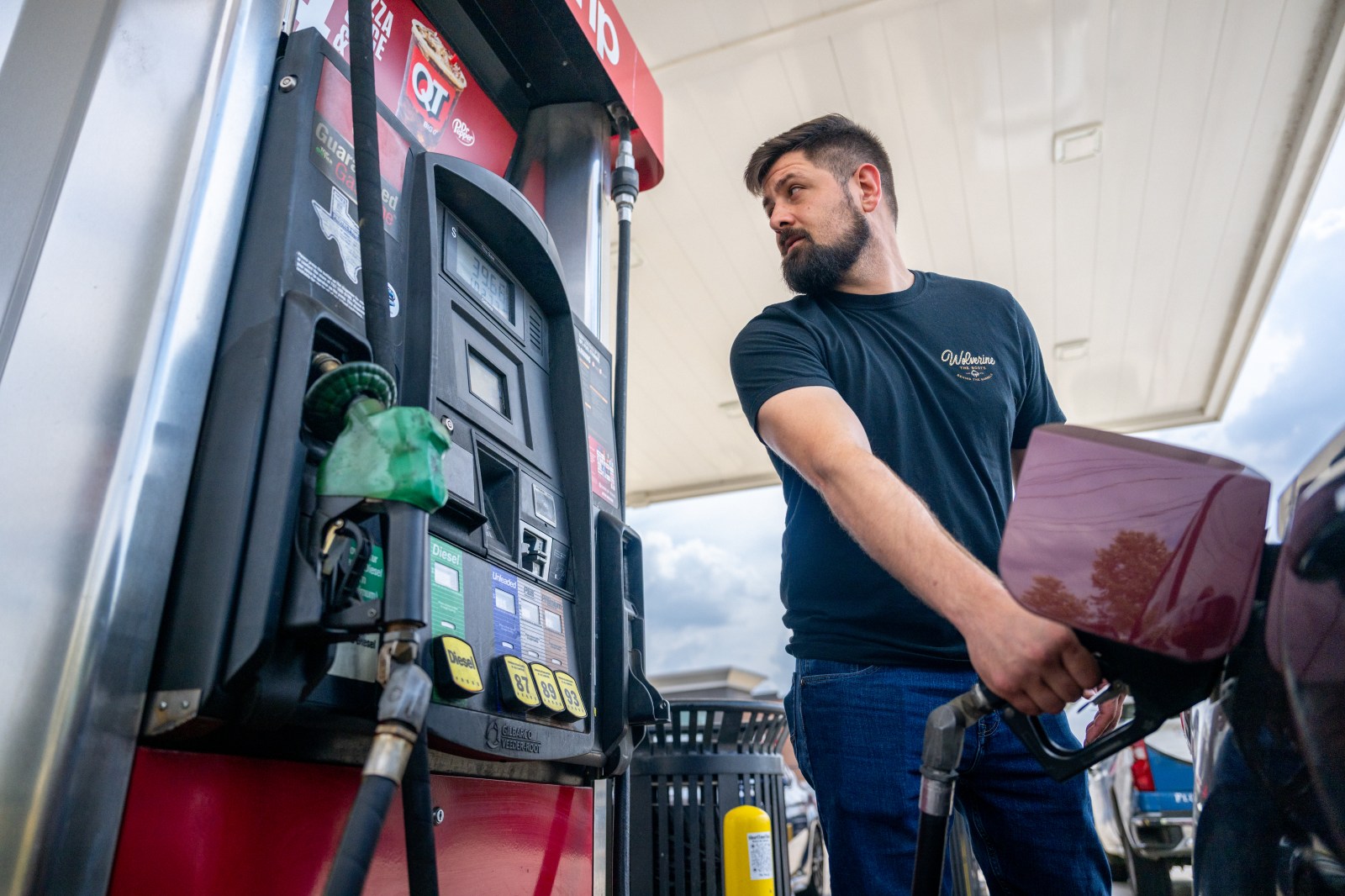
Amid high gasoline and diesel prices, states are implementing measures to lessen the financial burden. On Monday, President Donald Trump expressed optimism that fuel prices will decrease once the conflict with Iran concludes. ‘Iran will never have a nuclear weapon—we’re going to win that war very soon, it’ll be over and the gas prices will come tumbling down,’ Trump stated to reporters at the White House.
Currently, drivers nationwide face high fuel costs, with the average price for regular gasoline at $4.48 per gallon and diesel at $6.45, according to AAA. California reports even higher averages, with regular gas at $6.37 and diesel at $8.40 per gallon. In response, California and Georgia unveiled new measures Monday to curb costs, aligning with similar efforts from other states.
State Initiatives to Reduce Fuel Prices
California Governor Gavin Newsom suspended the state’s seasonal summer-blend gasoline requirement, allowing the immediate production and sale of the less costly winter-blend gasoline. This decision shifts away from the more environmentally friendly summer blend, previously slated to remain until October 31. ‘Families are paying more to fill their cars, farmers more to grow our food, and truckers more to get it to market,’ noted Newsom.
Similarly, Georgia Governor Brian Kemp declared a state of emergency, halting the state’s motor-fuel tax for 30 days. This suspension eradicates a 33.3-cent-per-gallon gasoline tax and a 37.3-cent diesel tax. ‘We’ve remained committed to helping [Georgians] and our small businesses fight through the tough times,’ Kemp commented, explaining that the order also lifts commercial vehicle weight limits to cut transportation costs impacting goods like groceries.
Massachusetts Governor Maura Healey proposed legislation to suspend Massachusetts’ gas tax temporarily for two months, pending legislative approval.
In additional moves, Texas, Alabama, Louisiana, and Nebraska temporarily loosened restrictions on tax-exempt dyed diesel, typically designated for off-road uses like farming. South Dakota eased hauling limits for farmers during harvest, allowing a 10% increase in agricultural commodity weight limits.
Other states, including Illinois, Indiana, Kentucky, and Utah, have taken steps to cut or freeze gas taxes, further alleviating costs for consumers.
AAA and Federal Considerations
AAA foresees a potential new September record for fuel prices. ‘Typically, the start of autumn brings lower gas prices, but lingering volatility in the Strait of Hormuz and the high cost of crude oil are driving up pump prices,’ the organization explained.
The Trump administration is considering a temporary U.S. diesel export ban to reduce domestic costs. As the world’s leading diesel exporter, the U.S. meets about 20% of global needs. This proposal’s feasibility is under review, with a decision anticipated soon.
Mark Williams, a finance lecturer at Boston University’s Questrom School of Business, warns that restricting exports might disrupt global energy markets, increasing costs for U.S. consumers. ‘While a domestic diesel supply surplus might temporarily lower U.S. fuel costs, this effect is short-lived,’ Williams said. ‘Over the long term, the ban would disrupt refining economics, lead to production cutbacks, and ultimately increase the costs of all refined products, including gasoline.’
Trump also hinted that fuel prices could decline post-November midterm elections. ‘Right after the election, oil prices are going to be tumbling downward. They’re going to be tumbling down, and we’ll get them down. I think for gasoline, we’ll get them below $2 a gallon,’ Trump asserted.