
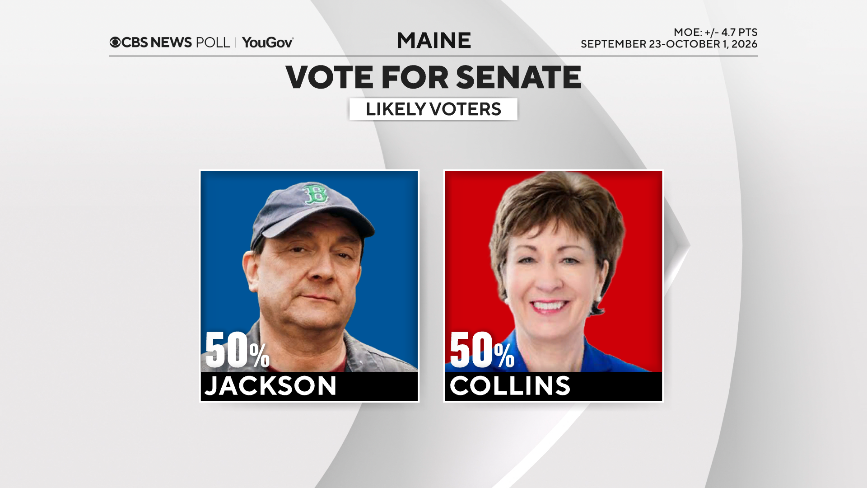
The Senate race in Maine remains highly competitive. Despite national political trends favoring Democrats, incumbent Republican Susan Collins is locked in a close race with Democrat Troy Jackson. Maine, which generally leans Democratic, presents a unique challenge as Collins garners enough support from both voters and Maine’s Democrats, indicating the race focuses more on state issues.
Collins holds an advantage when it comes to the perception of bringing federal funds back to the state. One notable aspect is her ability to attract one in five voters who disapprove of former President Trump, a figure higher than typical national support for Republican congressional candidates. Jackson faces hurdles in swaying voters who believe Collins is too aligned with Trump’s policies. His support stems from voters opposing tariffs, those wanting Democratic control of the Senate, and those seeking change over experience.
A significant 10% of voters remain undecided, highlighting the close nature of the race. Even when voters believe Jackson’s policies would benefit them financially, Collins manages to secure nearly one in five of those voters.
Maine voters generally feel that Trump’s policies have negatively impacted the state’s economy. Jackson captures the majority of this group. However, Collins’ lengthy tenure doesn’t entirely work against her. She performs well among voters who have consistently supported her in past elections.
Within the Democratic base, four in ten Democrats and most independents express a preference for a different nominee over Jackson. His support lags behind that of the Democratic gubernatorial nominee, Hannah Pingree, who maintains a stronger lead in the governor’s race. Some voters supporting Pingree are also voting for Collins, showing ticket splitting.
This information comes from a CBS News/YouGov survey of 1,114 registered voters in Maine conducted from September 23 to October 1, 2026. The survey sample accounts for gender, age, race, and education based on U.S. Census data and is adjusted to reflect the 2024 presidential vote. The margin of error stands at ± 4.7 points for registered voters.