
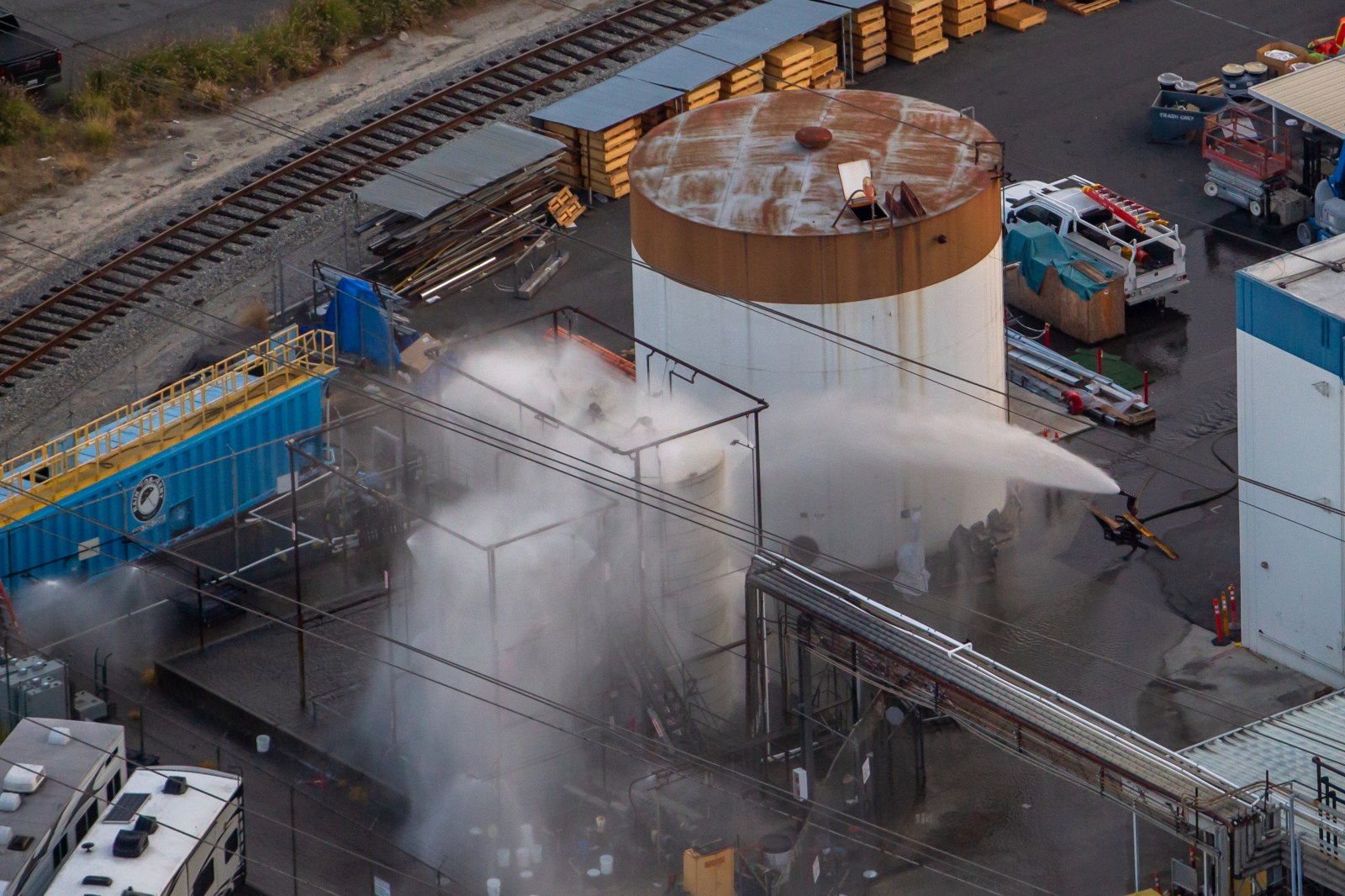
Southern California Chemical Tank Emergency: Efforts to Reduce Explosion Risk
A chemical tank in Southern California is at the center of a prolonged emergency. It has reached temperatures exceeding 100 degrees Fahrenheit, heightening concerns about a possible explosion. However, two recent developments may help reduce this risk.
Emergency crews in Garden Grove, California, are working to stabilize the tank. It holds thousands of gallons of methyl methacrylate, a highly reactive industrial chemical used in plastics and aerospace manufacturing. As the tank’s temperature rose on Sunday, officials warned of a potential thermal runaway reaction that could lead to an explosion.
Evacuation and Potential Threats
Due to the threat of explosion or chemical spill, over 40,000 residents of Garden Grove and surrounding areas have been evacuated. Despite ongoing warnings about the situation, two factors—a structural crack in the tank and favorable weather conditions—are contributing to lowering the risk.
Structural Relief: Crack in Chemical Tank
Orange County Fire Authority crews discovered a crack in the tank during a high-risk inspection. This crack may act as a pressure-release valve, allowing gases to escape and reducing the risk of pressure buildup. This kind of venting can significantly decrease the chance of catastrophic failure.
Contrary to false reports, the Orange County Fire Authority confirmed via social media that there is only one crack in the tank, and no active leaks have been detected.
Environmental Advantage: Weather Conditions
Mild weather conditions are also aiding efforts to prevent an explosion. The National Weather Service reports that temperatures will remain relatively low, with little wind activity expected. This helps maintain lower ambient temperatures, slowing the heat buildup inside the tank. Additionally, light winds help contain any potentially hazardous vapor releases.
Firefighters continue spraying the tank with water to manage its temperature effectively in mild weather conditions.
Background and Response
The emergency began on May 21 due to an overheating chemical tank at a GKN Aerospace facility. The inability to drain or neutralize the chemical has limited direct intervention options, forcing response efforts to focus on cooling and monitoring.
Methyl methacrylate poses significant risks due to its flammability and potential to release toxic fumes.
Residents affected by the evacuation find themselves unable to return home, leading to challenges in securing essentials.
Government Engagement
The White House confirmed engagement with the situation, coordinating federal resources and monitoring efforts through agencies like FEMA and EPA. The federal response supports state efforts after California Governor Gavin Newsom declared a state of emergency.
EPA efforts include air quality monitoring, and state officials are working to ensure safety outside evacuation zones.
Uncertain Future
Despite measures taken, uncertainty remains with the chemical tank’s reaction still unstable. Continued monitoring is crucial, as evacuation orders persist until the situation is fully resolved.