
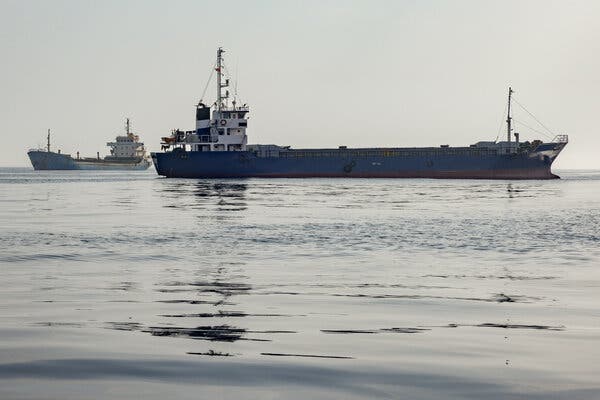
The Strait of Hormuz continues to be a focal point of international tension, as recent developments have once again affected shipping operations. The U.S. military reported that 55 ships had passed through the strait on Saturday, marking a significant day for maritime activity. However, this progress was interrupted when Iran’s military announced the closure of the waterway.
Earlier this week, shipping traffic in the strait began to climb following a preliminary agreement between the United States and Iran aimed at ending ongoing hostilities and reopening this crucial maritime route. Despite this, Iran’s announcement on Saturday raised uncertainty about the future of shipping activities in the region.
U.S. Central Command noted the substantial number of 55 commercial ships transiting the strait on the same day, a record since the strait’s effective closure at the beginning of the conflict. Nevertheless, this number remains far below the prewar average of 130 ships per day. The impact of Iran’s latest declaration on shipping traffic remains unclear.
Conflicting reports from both nations have added to the confusion. Iran’s Islamic Revolutionary Guards Corps warned that ships approaching the strait might face security threats. In contrast, U.S. Central Command spokesperson Capt. Tim Hawkins assured that the strait remains open and the U.S. blockade against Iran has ended. Hawkins stated that traffic is flowing and U.S. forces are actively monitoring the situation to maintain stability.
Throughout the conflict, the strait has been a strategic leverage for Iran due to its importance as a route for global oil and gas supplies. Even the mere threat of renewed conflict is enough to disrupt shipping operations significantly. Recent days have seen erratic and below-average shipping movement reflective of the ongoing volatility.
While the preliminary deal between the United States and Iran includes steps to reopen the waterway, shipping companies are cautious. They face logistical challenges due to vessels being anchored in the Persian Gulf for extended periods. The path forward for the strait and its shipping lanes remains uncertain as both nations navigate the complexities of diplomacy and security.