
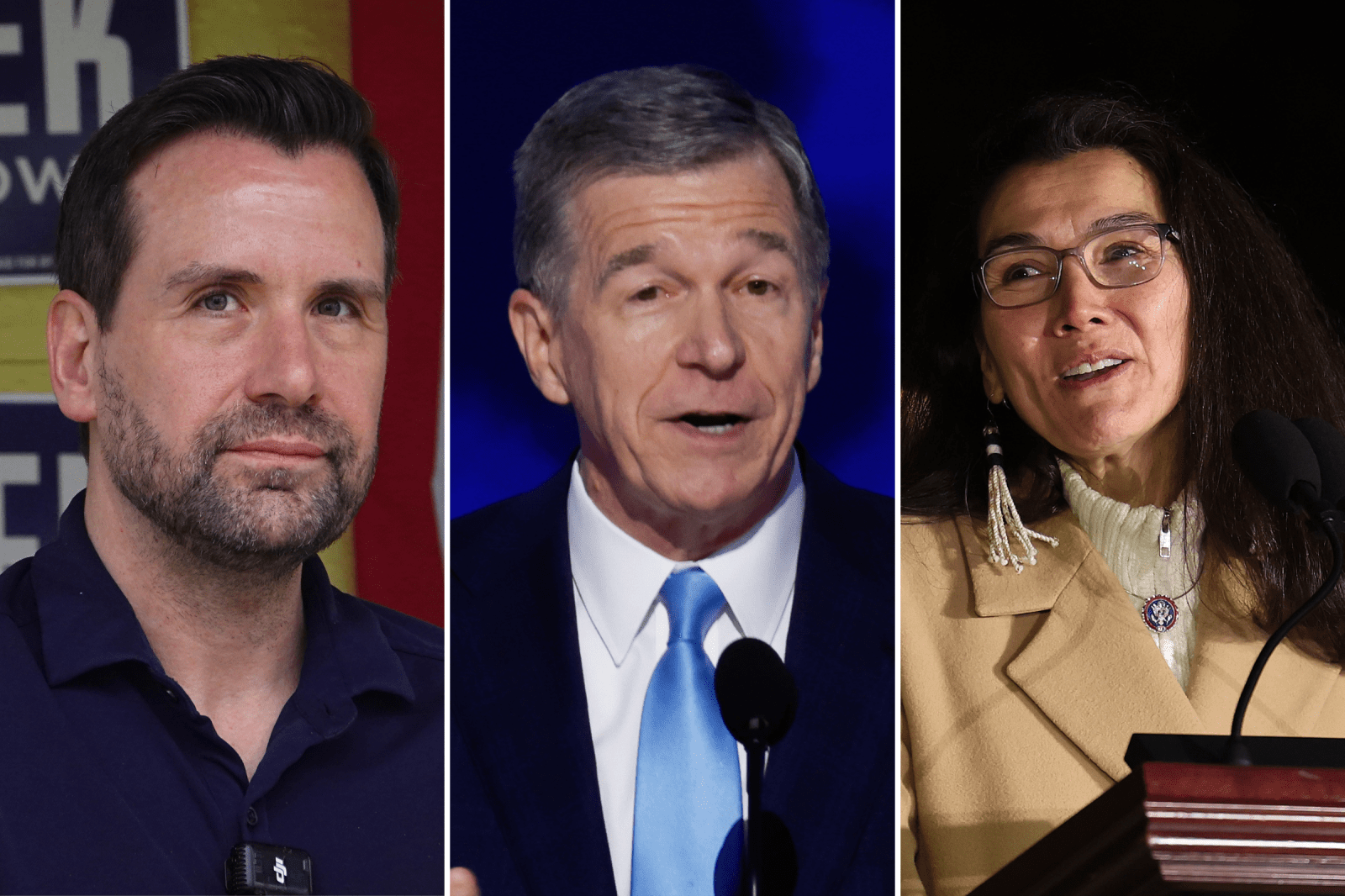
Democrats Gaining Ground in Conservative States
As the 2026 midterm elections approach, Democrats have been narrowing the voter registration gap in several states with key Senate races, challenging Republican dominance. While Republicans still hold advantage in some traditionally conservative states, Democrats see opportunities due to changing dynamics.
Recent polls indicate Democrats are leading in states like Alaska, Iowa, Ohio, and Texas, which supported President Donald Trump decisively in the 2024 elections. This shift is attributed to Trump’s declining approval ratings amid concerns over economic issues, cost of living, and high gas prices sparked by the Iran conflict.
Voter registration data offers insights into states’ partisan shifts, though not foolproof predictors of election outcomes. Factors like population changes, migration, and voter roll adjustments can affect these numbers. However, states like Georgia, Michigan, Minnesota, Ohio, and Texas do not register voters by party, adding complexity to predictions.
Professor Stephen Farnsworth of the University of Mary Washington explains voter behavior reflecting discontent with the president’s party during midterms. Trump’s low approval ratings worsen Republicans’ chances, compounded by economic anxieties and AI-related job concerns.
Competitively Shifting States for Democrats
Alaska
In Alaska, Democrats have slightly reduced the Republican advantage. GOP Senator Dan Sullivan faces former Representative Mary Peltola, with Republicans previously holding a 73,829-voter lead, now reduced to 72,290. Despite its Republican leanings, shifting urban dynamics offer Democrats new competitiveness.
Polls show a tight race, with surveys indicating a neck-and-neck contest between Peltola and Sullivan. The Cook Political Report classifies this race as a toss-up.
Iowa
Iowa’s evolving demographic has seen Democrats chipping away at Republican registration advantages. Former Representative Ashley Hinson competes against Democratic state Representative Josh Turek, showcasing a highly competitive race. Polling results vary, indicating either a lead for Turek or slight advantages for Hinson.
Kansas
Kansas witnesses a narrowing Republican voter advantage, reducing from a 401,710 lead in 2025 to 394,642. With dynamics changing in suburban areas, Democratic contenders pose increasing challenges. Senator Roger Marshall is battling Adam Hamilton, with polls indicating a tight contest.
Nebraska
Nebraska presents a challenge for Republicans as independent Dan Osborn competes against Senator Pete Ricketts. Despite predictions favoring Republicans, Osborn’s campaign showcases competitive polling results, emphasizing the potential for an unexpected outcome.
New Hampshire
In New Hampshire, despite backing Kamala Harris by a small margin in 2024, Republicans maintain a slight registration lead. As the Senate race unfolds between Representative Chris Pappas and former Senator John Sununu, polling suggests volatility in voter preferences amid a closely contested race.
Republican Gains in Key States
Maine
Republicans have made small gains in Maine, where Senator Susan Collins faces Democrat Troy Jackson. Although Democrats retain a voter registration lead, competitive polling underscores the unpredictability of this contest.
North Carolina
In North Carolina, electoral dynamics have favored Republicans, flipping voter registration advantage. As former Governor Roy Cooper competes against Michael Whatley, Cooper’s polling success contrasts with broader Republican momentum.
Democrats’ Prospects for Senate Control
Stephen Farnsworth suggests Democrats hold favorable probabilities for Senate control. Voter concerns over high living costs, coupled with foreign policy frustrations, play into Democrats’ campaign strategies.
Prediction markets reflect shifting sentiments, showing Democratic chances have improved over time. While historically favoring Republicans, recent adjustments mark increased motivations for change among voters.
As the Senate race tightens, ongoing polling will offer insights into voter attitudes, with candidates addressing critical issues from economic policies to international affairs. News coverage in the coming weeks will track these evolving dynamics closely.