
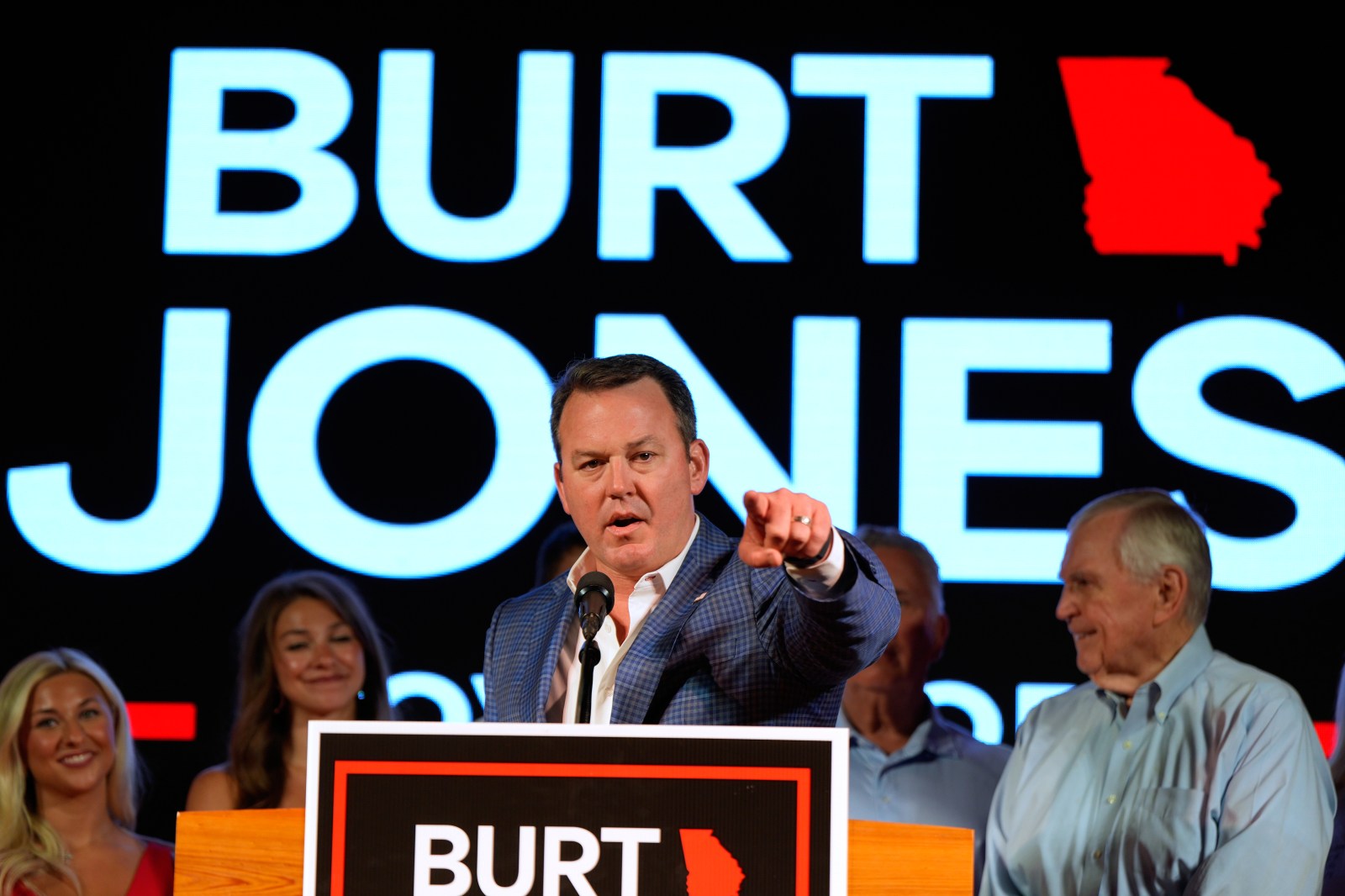
Georgia’s Republican gubernatorial runoff is experiencing a shift as businessman Rick Jackson overtakes Lieutenant Governor Burt Jones in a new poll. Initially, Jones led as the front-runner, backed by President Donald Trump’s endorsement. Despite this, the competition is now more intense.
Polling Insights
The Cygnal polling memo reveals significant changes. Jackson has surged ahead, gaining the lead after trailing Jones in the initial primary. In the May 28 poll, Jones held 41 percent compared to Jackson’s 38 percent. By June 7, Jackson’s support rose to 46 percent while Jones’s declined to 35 percent. This marks a 14-point swing in favor of Jackson. On the combined ballot, Jackson leads with 56 percent, leaving Jones at 44 percent. The memo notes Jones has struggled to close this gap.
However, other polling paints a different picture. A CivicLens Research survey indicates Jones with a 10-point lead, 50 percent to Jackson’s 40 percent. Meanwhile, a JMC Enterprises poll conducted in late May shows Jackson leading by 2 percentage points, sitting at 45 percent compared to Jones’s 43 percent. In both cases, a notable portion of voters remains undecided.
Speculative Predictions
Prediction markets such as Kalshi and Polymarket currently favor Jones, placing his odds for the GOP nomination between 58 and 61 percent. These figures suggest confidence in Jones despite his polling setbacks.
Georgia’s Political Landscape
Georgia is a crucial battleground state, despite supporting Trump in 2024. Republicans hold the governor’s office, while Democrats control both U.S. Senate seats. Following the runoff, the chosen Republican nominee will face former Atlanta Mayor Keisha Lance Bottoms in the general election.
Trump’s endorsements remain influential in these contests. He has endorsed numerous candidates this cycle, asserting his role in shaping the party’s direction. Recent victories by Trump-backed candidates over established Republicans underscore the political risks for those diverging from his views.
Governor Brian Kemp’s previous break with Trump after refusing to challenge Georgia’s 2020 election results highlights this dynamic. Though Kemp has since supported Trump’s 2024 ambitions, his temporary fallout with Trump shows the state’s Republicans do not always align fully with the president.