
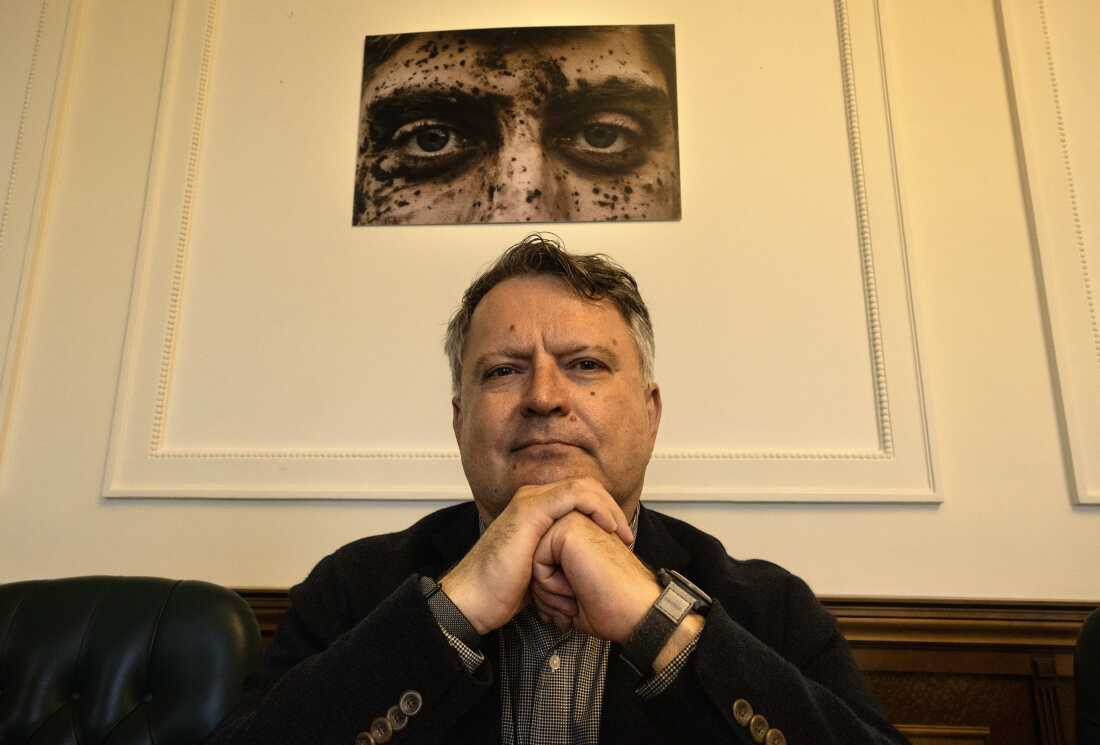
Sergiy Olehovych Kyslytsya serves as the first deputy head of the Office of the President of Ukraine. He previously held the role of Ukraine’s permanent representative to the United Nations.
On February 24, 2022, Kyslytsya, then Ukraine’s ambassador to the UN, faced a critical moment. As Russia initiated a full-scale invasion of Ukraine, he took a firm stand at a UN meeting. Addressing his Russian counterpart, Vasily Nebenzya, Kyslytsya declared, “There is no purgatory for war criminals. They go straight to hell, ambassador.”
The invasion disrupted diplomatic relations between Kyiv and Moscow, making Kyslytsya’s role unique. He was the only Ukrainian diplomat directly interacting with Russian representatives at the UN. “My fellow ambassadors in all capitals around the world would not talk to them,” Kyslytsya explains. Having been involved in peace talks, he adapted to manage his emotions and demeanor.
Negotiations involving Ukraine have faced challenges. U.S.-mediated talks ceased earlier this year due to a shift in focus toward Iran. Still, Ukraine maintains dialogue with American and occasionally Russian envoys. Kyslytsya remains an integral figure in these efforts.
Inside the secure compound of the presidential office in Kyiv, Kyslytsya spoke with NPR. The room is adorned with wartime imagery and books on history and current affairs. DeZi, his 13-year-old Jack Russell terrier, stands as a loyal guardian.
In his discussion, Kyslytsya emphasized Ukraine’s stance on ending the conflict. He proposes freezing the fighting along current frontlines without granting any form of recognition to Russian-occupied territories. He criticizes the Kremlin’s demands, such as the “3+2” or “Anchorage formula.” This proposal, originating from an August 2025 summit in Alaska involving President Trump and President Putin, seeks recognition of Russian claims over five Ukrainian regions. U.S. Secretary of State Marco Rubio notes the proposal’s failure due to Ukraine’s rejection.
Kyslytsya points to Russia’s ambition to control the entirety of the Donetsk region as unrealistic. Despite claims of progress, Russia’s military efforts are faltering. Ukrainian long-range drones have targeted Russian oil and gas facilities, undermining their war capabilities. “It’s a 21st-century war,” Kyslytsya states, asserting Ukraine’s superiority.
The Ukrainian military’s gains are evident to both the United States and other allies. President Trump commended Ukrainian troops at a NATO summit in Ankara. Meanwhile, President Zelenskyy has extended an invitation to Putin for direct talks, suggesting that Russia’s war is dictated by one person’s decisions—Putin himself.
Kyslytsya suggests that such a meeting might occur by year’s end, potentially leading to significant progress. Although Putin currently resists, the ongoing conflict dynamics could compel him to engage in discussions.
Kyslytsya’s determination implies that with sustained Ukrainian actions, Russian leadership might have little choice but to negotiate. “If we continue with long-range strikes, the Russian leader will eventually have to talk,” he concludes, believing Ukraine holds strategic advantages.