
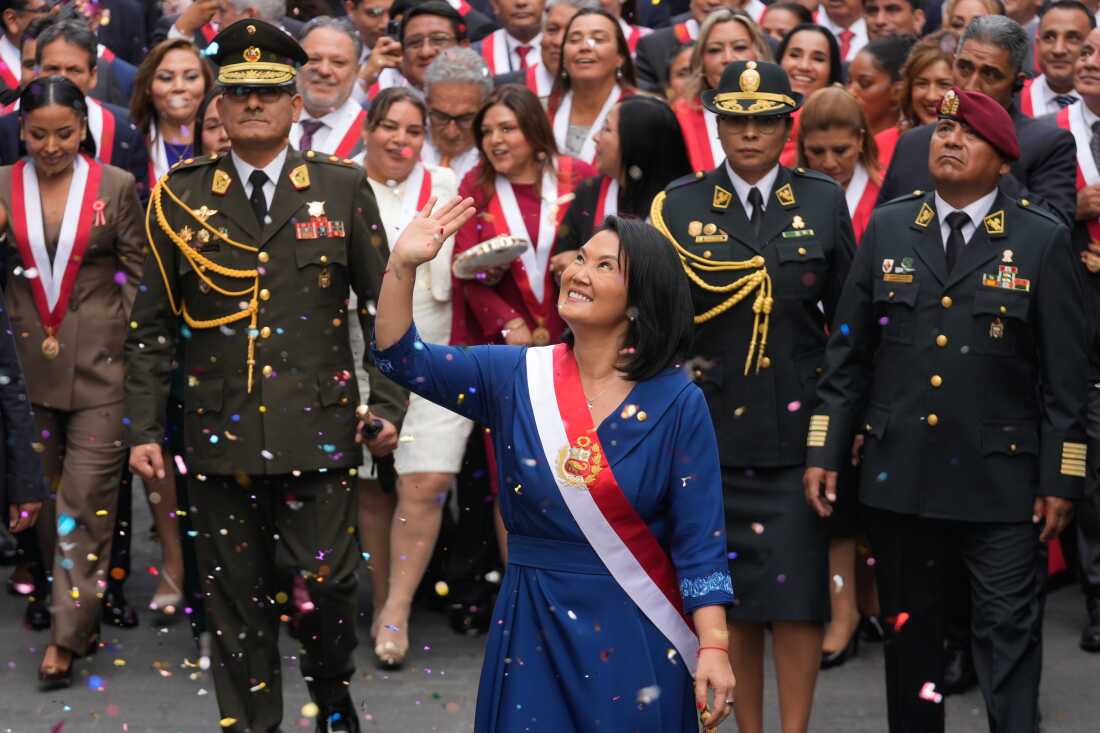
LIMA, Peru — Keiko Fujimori, leader of the conservative Popular Force party, assumed the presidency of Peru after a narrow victory in the June runoff election. She became the ninth president in ten years, taking office with aspirations to stabilize politics, curb crime, and bolster the economy.
Fujimori’s political journey includes four presidential campaigns. Her party, along with Popular Renovation, will control half the seats in the senate, a significant factor in preventing her removal by opposing legislators.
An Agenda of Security and Economic Growth
Fujimori’s campaign was grounded on enhancing national security amidst increasing extortion rackets. She also aims to foster infrastructure development by facilitating government partnerships with private investors. Amid these plans are echoes of her father’s presidency in the 1990s, which was marked by economic stabilization but later marred by human rights abuses.
Following her election, Fujimori has been vocal about combating crime with a hardline approach, promising to establish a megaprison akin to El Salvador’s Cecot penitentiary. She plans reforms to protect judges in criminal trials by allowing them to remain anonymous.
Fujimori announced plans to reorganize social services to address malnutrition and raise the national minimum wage by 15%. Additionally, she emphasized Peru’s need for preparedness against El Niño, known for causing coastal floods.
“My goal is not only to administer the state but to narrow the enormous social deficit that affects millions of Peruvians,” she stated.
Opposition and Challenges
Opposition leaders are pressing Fujimori’s government to repeal laws perceived as obstructing organized crime prosecution. The recent changes hinder preventive arrests and make it challenging for police to seize criminal assets.
Leaders are also urging an inquiry into 50 civilian deaths during protests against former President Pedro Castillo’s removal. Fujimori’s inauguration faced protests from lawmakers and relatives of the deceased, who opposed recognizing her presidency.
A Polarized Nation
Fujimori’s support concentrated in coastal regions, contrasting with highland areas, where candidate Roberto Sanchez, aligned with Castillo, prevailed. Sanchez contested the election results but was dismissed by electoral authorities.
Despite political tensions, Peru remains economically stable in Latin America, with conservative fiscal approaches. However, disparities persist between coastal and highland living standards.
Fujimori’s win adds to the conservative wave in South America, with similar victories in Colombia and Chile. This shift reflects a regional demand for stricter approaches to crime and economic sluggishness.