
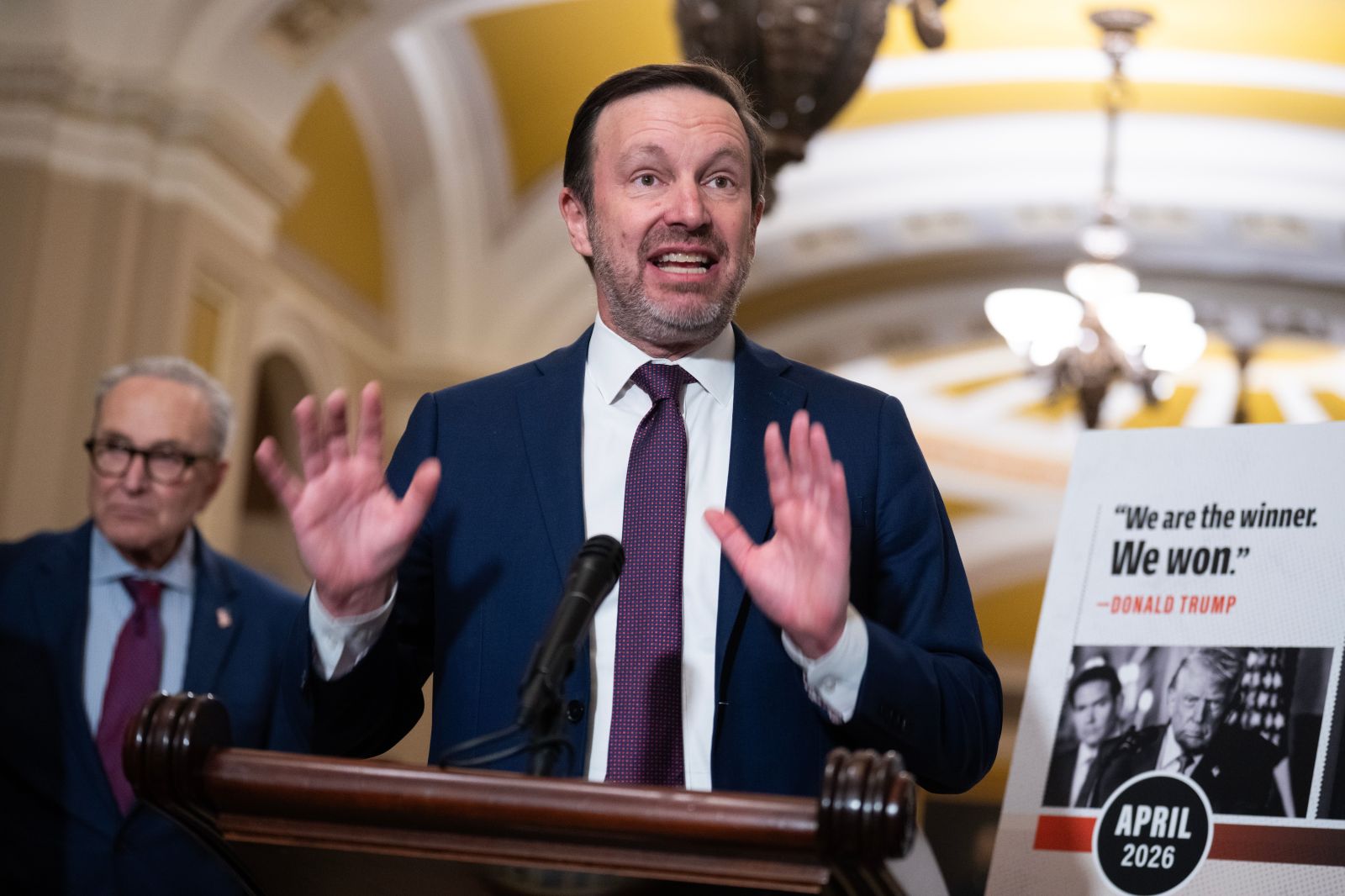
Senator Chris Murphy emphasized on Sunday that increasing the federal minimum wage could help rebuild the Democratic coalition, especially by attracting working-class voters who previously supported President Donald Trump. In an interview on NBC News’ Meet the Press, the Connecticut Democrat advocated for raising the federal minimum wage to $25 an hour, labeling it a “unifying issue” that could appeal across party lines.
Murphy noted, ‘People do not believe that this version of capitalism has worked. And it hasn’t worked.’ He highlighted that 40 percent of Americans working full-time lack enough savings for an emergency car repair. The federal minimum wage has been stuck at $7.25 an hour since 2009. Murphy’s push highlights the ongoing debate within the Democratic Party over balancing progressive economic policies with electoral appeal.
A Proposal for a ‘Living Wage’
Murphy defended his newly introduced legislation, the “Living Wage for All Act.” The plan proposes gradually raising the minimum wage to $25 an hour over several years. Large employers would need to meet this benchmark by 2032, while smaller businesses would have until 2039. Initially, the wage would jump to $12 an hour from $7.25.
No U.S. state currently mandates a $25 minimum wage. The highest state-level mandates are around $17 per hour. Murphy stated, ‘Economic analysis shows that gradually raising the minimum wage to $25 an hour will create more jobs than lost.’ He added that a $25 minimum wage aligns with survey results from both Democrats and Republicans. Critics, however, warn of potential risks such as reduced hiring and increased consumer prices. Small businesses could face layoffs due to narrow profit margins.
Targeting Disaffected Trump Voters
Murphy’s proposal aims to attract working-class voters who switched to Trump in recent elections. He argued these voters are frustrated with economic conditions and open to Democratic solutions. Murphy suggested Democrats should focus on economic issues like wage increases and union strength, while remaining flexible on social issues.
He emphasized the need to include Trump voters who may not completely align with the Democratic platform. Murphy rejected calls for more socialism within the party, instead advocating for ‘common good capitalism.’
The Cost-of-Living Squeeze
This legislative push comes amid a prolonged cost-of-living crisis. Housing prices have risen 81 percent since 2017, with rents climbing 54 percent according to the Urban Institute. The median home price reached $412,500 in 2024, requiring an annual income of $126,700. Food costs increased 3.2 percent in 2025, further stressing household budgets.
Murphy argued that aggressive economic intervention is necessary, ‘If you work full time, you should be able to pay your bills.’ Despite resistance in Washington, the bill highlights a significant political and economic issue.
Contact Newsweek editors for this story: Steve Mollman and Anthony Murray.