
An exclusive insight has emerged from a Russian government document detailing plans to expand relations between Moscow and Tehran, focusing on areas beyond conventional trade. Fox News Digital obtained and reviewed this nonpublic document, which outlines extensive collaboration plans across financial channels, nuclear cooperation, aviation, energy projects, and transportation routes towards the Persian Gulf.
The document, titled “Plan for Cooperation Between the Russian Federation and the Islamic Republic of Iran for 2024-2026,” spans 44 pages and is marked for official use. It was approved by Moscow on September 2, 2024. The document assigns specific responsibilities to ministries, agencies, and state companies and sets deadlines through 2026.
Moscow-Iran Relations
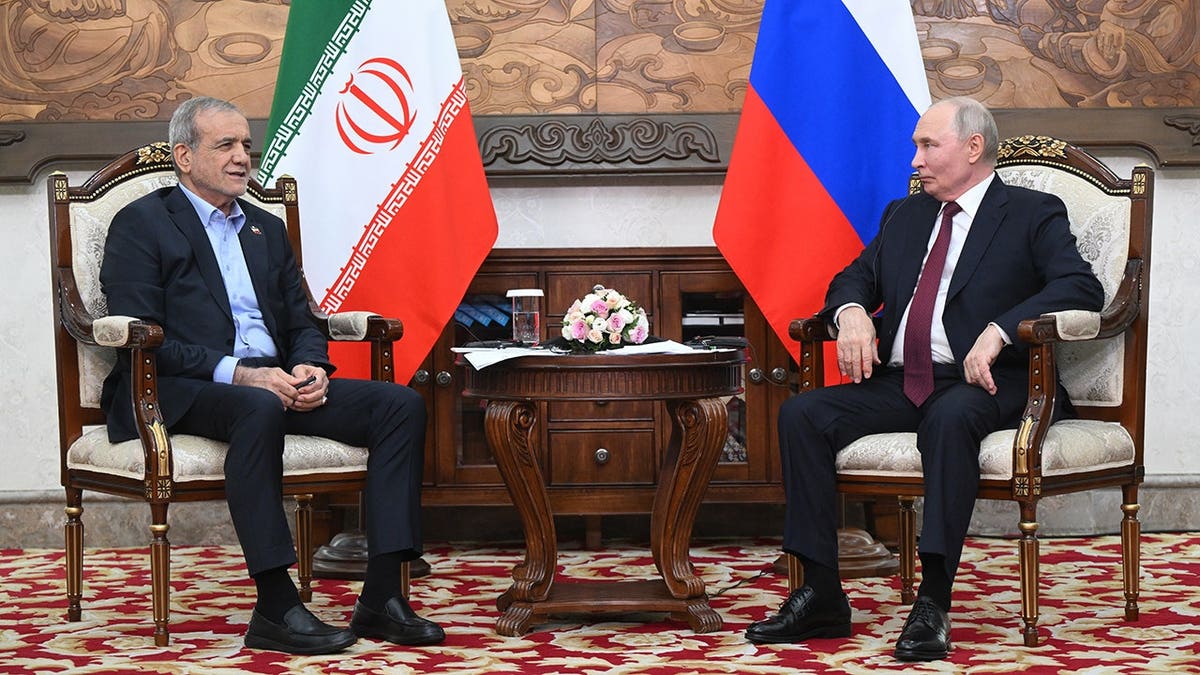
Russian President Vladimir Putin and Iranian President Masoud Pezeshkian met during the Shanghai Cooperation Organization summit in Bishkek, Kyrgyzstan, on September 1, 2026. This occurred when the document predated current conflicts involving Iran and the United States by over a year, leaving questions about the status of planned projects.
An analysis by Keti Korkiya, a research analyst with the Foundation for Defense of Democracies’ Russia Program, highlights the importance of the broader architecture Moscow seeks to build with Iran. Despite ongoing collaborations between Russia and Iran, the roadmap comprehensively illustrates plans that aim at reducing the impact of sanctions and Western economic pressure.
Financial Integration Efforts
The document does not mention sanctions evasion but focuses on financial independence. It proposes increased use of national currencies for trade and the development of independent financial messaging systems. Initiatives to shift trade settlements into national currencies were publicly acknowledged by officials in 2025.
Notably, Russian and Iranian efforts to bypass mainstream financial systems, like SWIFT, have developed. Tehran’s ambassador to Russia confirmed the use of their own confidential bank messaging systems instead of SWIFT. Korkiya classified these measures as cumulative, noting attempts to address vulnerabilities and enhance the economic relationship between the two nations.
Nuclear Cooperation
The roadmap includes significant plans concerning civilian nuclear energy. Rosatom, Russia’s state nuclear corporation, is assigned roles at Iran’s Bushehr nuclear power plant, including fuel and maintenance provision. These collaborations were not confined to paperwork; Russian specialists resumed on-site work in 2026, reinforcing the strategic partnership.
Energy and Transportation Projects
The document also outlines involvement in Iranian oil and gas fields, such as Shadegan, Kish, and North Pars, with certain financial arrangements kept confidential. Evidence indicates progression with projects like the Shadegan oil field, developed by Russia’s ZN-Vostok.
Transportation networks also formed part of the plan. Enhancing physical links, such as railways connecting Russia with ports on the Persian Gulf, featured prominently but remained in planning stages. The proposal highlights efforts to create trade routes less reliant on European corridors.
Additional Collaborations
Beyond heavy industry, the roadmap calls for collaborations in media and technology, focusing on joint content development and information security projects. Journalist training and tech contracts are included, underlining Russia’s strategic interests in diversifying cooperation.
Political Importance
The document shows a high degree of state coordination and institutional involvement, emphasizing the importance Moscow places on its relationship with Iran. Managed by Energy Minister Sergei Tsivilev, a relative of President Putin, this coordination underscores the significant political value attached to these plans.
The cooperation effort signifies Moscow’s desire to turn its partnership with Tehran into more than a convenient relationship, embedding it into regular bureaucratic processes.
Despite attempts to build alternative financial channels, a U.S. official asserted they are unlikely to match the reach or trust of the U.S. dollar and Western infrastructure. Efforts to disrupt these networks remain a priority for Washington.