
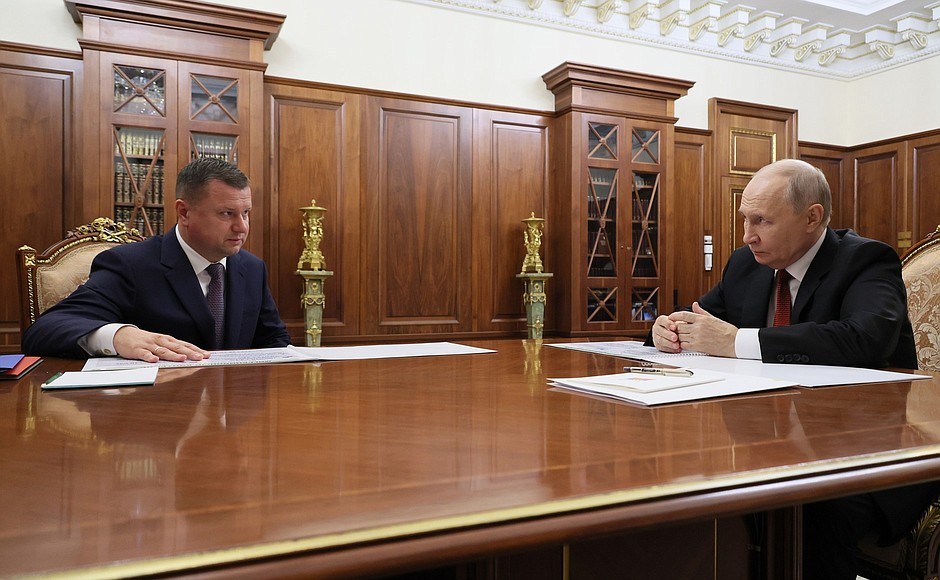
The labor shortages that Russia is facing have prompted the Interior Ministry to propose a new system aiming to manage migrant workers more efficiently. This proposal seeks to have foreign workers arrive legally, commence work immediately, and depart as soon as their contract ends.
Russia’s Structured Approach
To tackle the labor shortage, Russian companies needing workers will engage a state-run migration service to recruit foreign laborers. These workers will be brought to Russia, accommodated by their employers, and transported to and from their workplaces. This method ensures they leave when their contract concludes.
Andrei Kikot, the first deputy interior minister, introduced this model during a meeting with President Vladimir Putin. The proposal is viewed as a systematic way to address Russia’s dwindling workforce. As of May, unemployment in Russia was at a low of 2.1 percent and currently stands at 2.3 percent, emphasizing the need for an influx of foreign workers.
The Impact of War and Demographics
The war in Ukraine has exacerbated Russia’s labor issues, with over 700,000 troops engaged in conflict and significant casualties recorded. Meanwhile, Russia’s demographic changes pose further challenges. The population of economically active 30-to-39-year-olds is projected to decrease by 6.3 million by 2030, making foreign labor even more crucial.
Despite these needs, Russia’s political stance remains restrictive. President Putin’s directive emphasizes population growth through natural reproduction, while legislative measures have expelled 100,000 foreigners recently.
Potential Similarities with U.S. Policies
While America doesn’t face as severe a demographic crisis, the economy relies heavily on immigrant labor. The expansion of visas like the H-2B and certifications for agricultural positions reflects parallels with Russia’s proposed system. However, in the U.S., foreign workers can search for new employment or work for other employers upon losing a job, allowing more flexibility.
Recent U.S. policies suggest potential restriction shifts similar to Russia. The Department of Homeland Security has proposed eliminating the grace period for migrant workers who leave or lose jobs under specific visa categories. However, the H-2 visa’s protection remains, ensuring some security for migrant labor in America.
Tax and Education Changes in Russia
Russia’s July legislation imposed new taxes on migrant workers, with additional fees for dependent children. Educational regulations have also tightened, resulting in fewer nonworking migrants living with employed family members. The Kremlin perceives these measures as progressive, with nonworking migrants decreasing by 20 percent.
These policy changes aim to manage the influx and presence of migrant workers without encouraging permanent residence, adhering to the concept of “home-work-home.”