
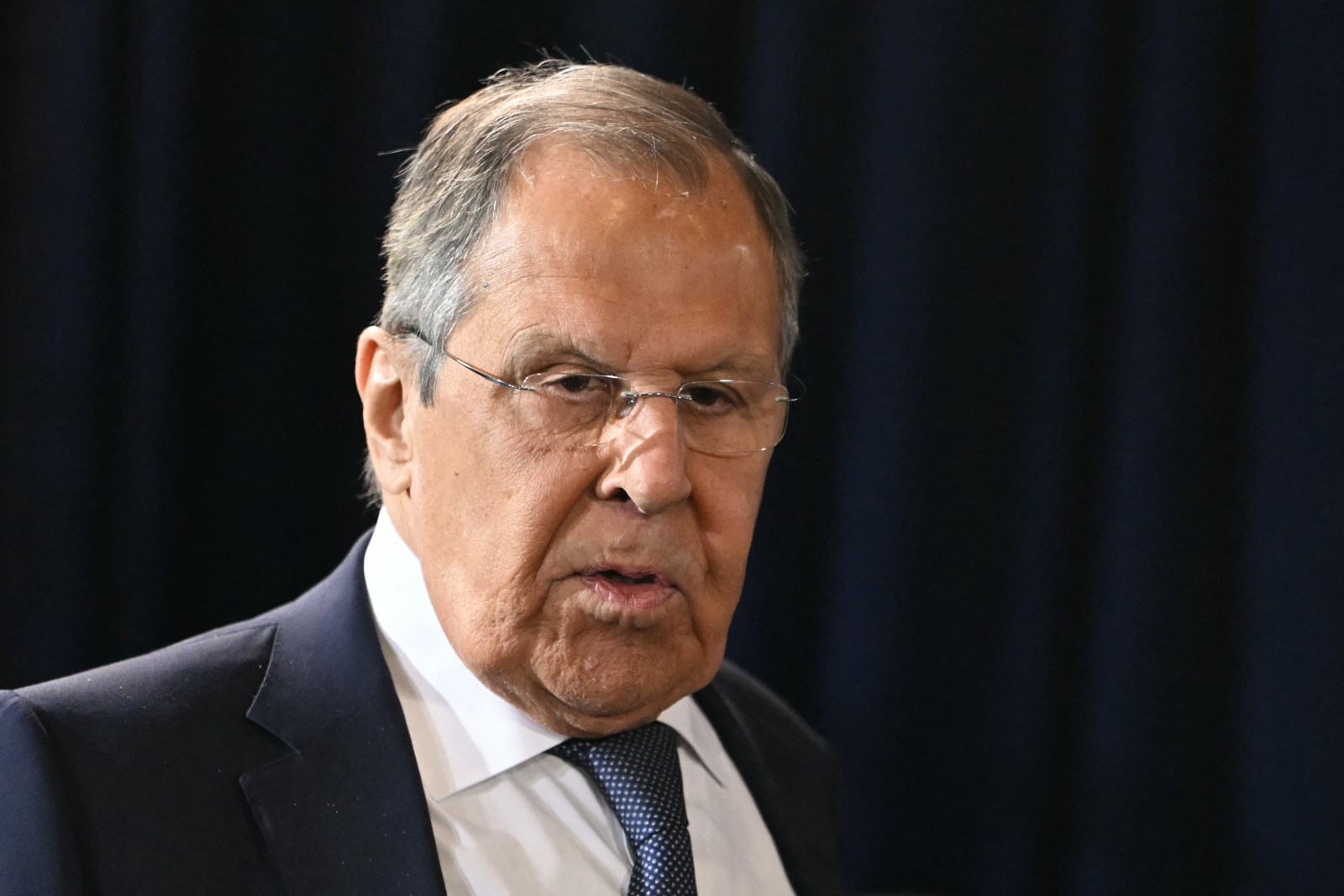
Russia has responded cautiously to President Donald Trump’s announcement of a U.S.-Iran agreement aimed at ending months of conflict. Russian Foreign Minister Sergey Lavrov expressed optimism that the agreement would soon be formalized but cautioned that its success is uncertain.
U.S.-Iran Agreement Goals
The deal, which Trump described as complete, seeks to halt hostilities and reopen the Strait of Hormuz, a vital global shipping route disrupted by the conflict. Efforts are underway for a formal signing in Switzerland later this week, although key aspects remain unresolved.
Russian Support
Lavrov highlighted Russian support for transforming political announcements into concrete actions. He stated, “We hope that everything announced today will be signed this week,” referencing statements from the U.S., Iran, and mediators like Pakistan.
Moscow’s stance combines support for diplomacy with skepticism about the durability of agreements under pressure. Lavrov welcomed progress but avoided endorsing specific terms, emphasizing lasting peace requires sustained political commitment.
Trump-Putin Discussion
The U.S.-Iran agreement has engaged high-level diplomacy between the U.S. and Russia. Trump and Russian President Vladimir Putin discussed the deal in a recent call, described as friendly and frank by the Kremlin.
The conversation underscored Russia’s engagement in the Middle East and interest in shaping negotiation outcomes. It also highlighted the geopolitical significance of the deal, affecting U.S.-Russia relations.
Complicating Factors: Israel’s Position
Despite the Washington-Tehran agreement, uncertainty remains, largely due to Israel’s position and Hezbollah’s role. Israel, not a party to the deal, stated it would not adhere to the terms and refused to withdraw from territories in southern Lebanon, questioning the deal’s ability to fully cease hostilities.
Israeli actions against Hezbollah in Lebanon caused tensions, with some Israeli leaders criticizing the deal. This stance challenges the agreement’s effectiveness, as Israel’s ongoing operations might impede regional stability.
Challenges Remain
Beyond regional opposition, the deal leaves critical issues unresolved. The memorandum of understanding set to be signed on Friday outlines a framework for ending the war but postpones significant disputes concerning Iran’s nuclear program and sanctions to follow-up talks.
This approach delays a comprehensive agreement, allowing potential for renewed conflicts if negotiations falter. The current accord serves more as a temporary ceasefire, halting hostilities while leaving deeper disagreements unsettled.
Russia’s Position Linked to Iran Relations
Russia’s measured response is shaped by its longstanding ties to Iran and consistent diplomatic posture. Maintaining close relations with Tehran, Russia promotes diplomatic over military solutions. Russian officials advocate for negotiations and warn against escalation in the Middle East.
Lavrov’s comments align with this strategy—encouraging progress while stressing the need for concrete implementation and avoiding firm commitments to the agreement’s specifics.
Prospects for Peace
As the agreement progresses toward signing, Russia acknowledges a significant step toward ending hostilities but refrains from promising lasting peace. Russian foreign intelligence chief Sergei Naryshkin acknowledged the fragility of peace.
“Peace is still fragile,” Naryshkin said. “However, the extensive work carried out by both sides and mediators provides grounds for continued efforts to restore peace in the Middle East, contingent on the agreement’s signing.”