
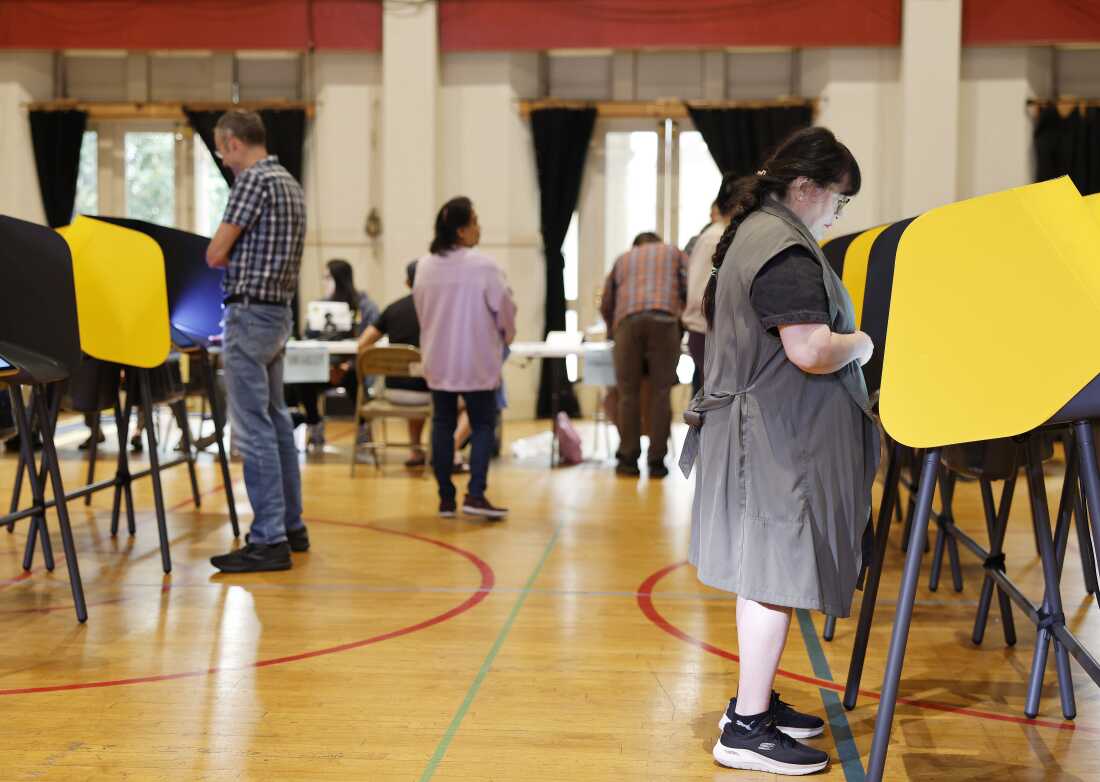
A Republican voting reform is making its way back to Capitol Hill. This time, it includes a photo identification provision, as President Trump aims to change election processes during a midterm year. Critics argue the legislation could disenfranchise millions of voters.
The newly named Safeguard American Voter Eligibility Act, or SAVE America Act, recently passed the U.S. House with support from all Republicans and one Democrat. Approval happened nearly 10 months after a previous version, the SAVE Act, passed the House.
The bill faces difficulties in the Senate, where it encounters opposition from Democrats and a 60-vote threshold needed to bypass a legislative filibuster. Some Republicans have considered ways around the filibuster, but GOP leadership is hesitant.
Changes in the new bill require proof of citizenship, such as a valid U.S. passport or birth certificate with photo ID, for voter registration. It also mandates that voters present photo ID when voting. This bill strengthens the already strong SAVE Act into the SAVE America Act,
said Rep. Bryan Steil, R-Wis., during remarks last week.
Federal law already prohibits non-U.S. citizens from voting, and instances of fraud by noncitizens are rare. However, Steil and other Republicans argue current laws lack strength and documentary proof is necessary.
Many states verify citizenship for new registrants, and about three dozen states require some form of ID to vote. Voting rights advocates argue the new SAVE Act poses greater challenges than its predecessor. They say the identification requirements will complicate voting for millions lacking necessary documents.
Approximately half of Americans lacked a passport by 2023. The bill’s immediate provisions could burden voters and election officials during a busy midterm election period without extra funding. Officials could face criminal penalties for registering voters without citizenship proof.
The Senate’s outlook on the bill remains uncertain, despite Trump’s and his administration’s public campaigns supporting the reform. Many opponents connect Trump’s endorsement of the SAVE bill with his attempts to undermine trust in elections.
Michael Waldman of the Brennan Center for Justice, which promotes voting access, labeled the measure as Trump’s power grab in legislative form.
Trump has suggested nationalizing
elections and hinted at executive action to ensure voter ID requirements.
The U.S. Constitution assigns election rule control to Congress and states. A previous executive order from Trump attempting to mandate citizenship proof was blocked by federal judges, citing presidential authority limits.
Key features in the new SAVE Act include:
- Only valid U.S. passports, driver’s licenses, state IDs, military IDs, and tribal IDs accepted as photo ID. Provisional voting allowed without one with three days to return with an ID or religious affidavit.
- Guidelines for name discrepancies, permitting affidavits for previous names. This addresses concerns over name changes, particularly among married women.
- Exemptions for absent service members and their families.
- States must submit voter lists to the Department of Homeland Security to compare with the Systematic Alien Verification for Entitlements (SAVE) system, despite privacy concerns.
The SAVE system, revamped by the Trump administration, acts as a national citizenship system. Some states eagerly use SAVE to identify and remove noncitizens from voter rolls, though it has mistakenly flagged U.S. citizens.