
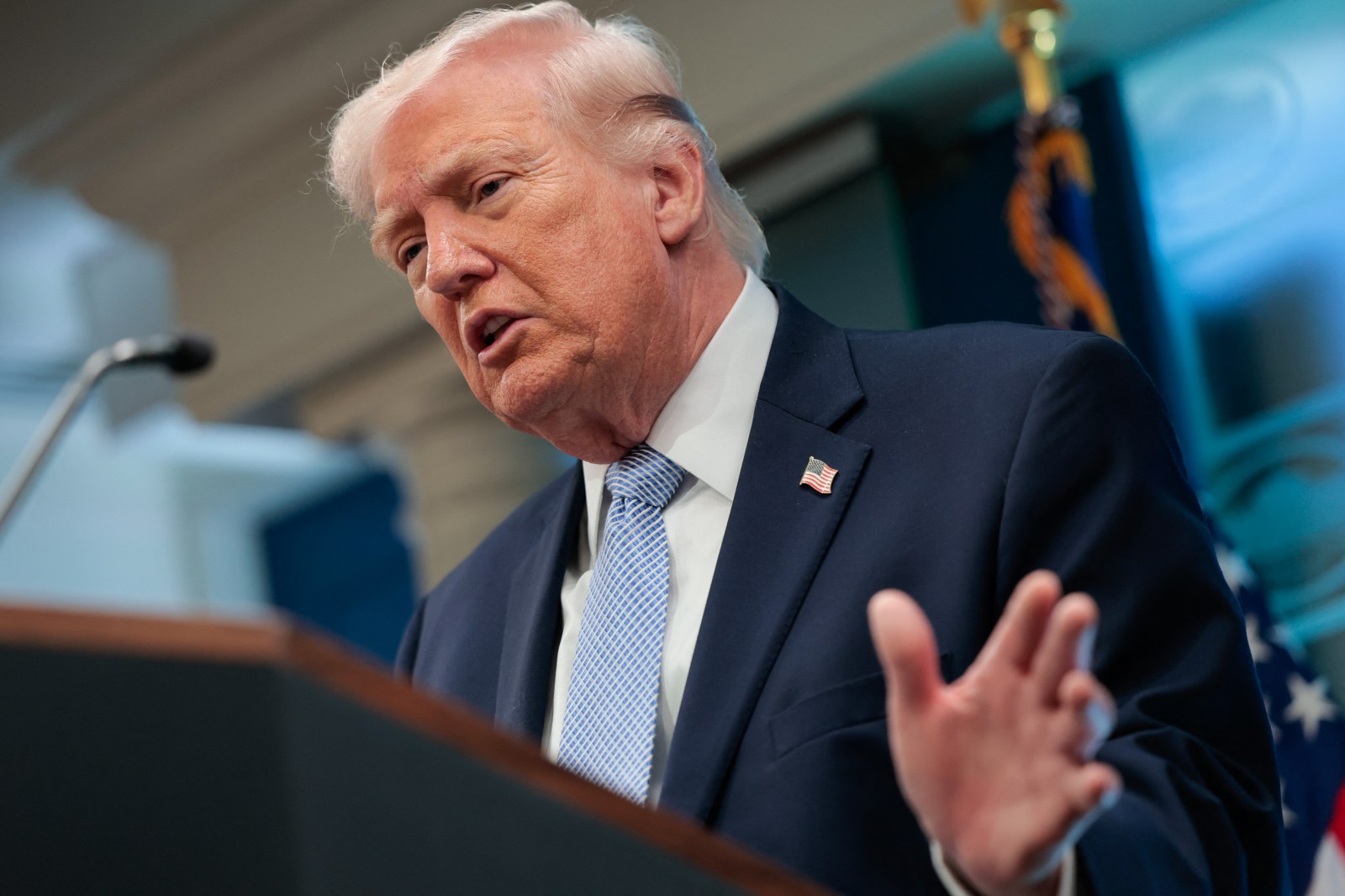
President Donald Trump’s approach to the conflict with Iran is receiving less fervent backing from Republican voters. This change comes as the United States remains in a tense standoff with Iran, even after efforts to alleviate pressures in the Strait of Hormuz. Although overall Republican support for Trump remains high, enthusiasm regarding his handling of the war appears to be decreasing, according to a fresh poll by NBC News Decision Desk.
Shifting Republican Sentiment
Results from the NBC survey reveal that 31% of Americans approve of Trump’s management of the Iran war, while 69% disapprove, figures that closely resemble polling results from spring. Notably, the proportion of Republicans who strongly endorse Trump’s conflict management has slipped by 18 percentage points since spring, now standing at 30%. Among self-identified MAGA Republicans, this strong approval has declined by 21 points.
The same trend is visible in the perception of Trump’s presidency overall. The NBC poll indicates that strong approval among Republicans has decreased to 41% from 52% in the spring, marking the first occasion where this figure has fallen below 50% in NBC’s polling history.
Nonetheless, general Republican support remains robust, with 80% of Republicans endorsing Trump’s job performance. The poll involved 7,105 adults, surveyed online from August 20 to September 1, with a margin of error of ±3.3 percentage points.
Iran Conflict’s Broader Implications
The Iran war has been one of Trump’s most challenging issues with voters. An Associated Press-NORC poll from June showed that only 34% of Americans approved of Trump’s strategy on Iran, with 65% disapproving, while a Quinnipiac University poll from July found that 60% opposed U.S. military action against Iran.
This issue has blended with economic concerns, as earlier surveys have indicated Republican dissatisfaction over rising gas prices and the economic repercussions of instability in the Gulf region. Heightened energy costs may present challenges to GOP candidates in forthcoming contests.
Trump has consistently defended his tactics, arguing that military and economic pressure on Tehran boosts American security. The White House has emphasized that polling results do not guide national security decisions.
Recent Tensions Heighten Concerns
The poll was conducted amidst renewed conflict between Washington and Tehran. Recently, American forces targeted three Iranian oil tankers in response to Iran’s IRGC allegedly firing ballistic missiles at U.S. Navy ships. CENTCOM indicated these vessels were part of networks financing the IRGC, with the strikes aiming to inflict economic costs on Tehran.
This action follows a collapse in ceasefire negotiations tied to a June agreement meant to reopen the Strait of Hormuz and offer a route for discussions on Iran’s nuclear ambitions. The continued exchange of military strikes has sparked debate among lawmakers on the administration’s strategy. The Strait of Hormuz remains critical due to the substantial flow of globally traded oil passing through, making disruptions problematic for energy markets.
On NBC’s Meet the Press, Senator John Kennedy recognized the potential political ramifications for Republicans, anticipating the Iran conflict to persist beyond the November midterms. The poll underscores that while Trump’s support within the GOP endures, enthusiasm surrounding this foreign policy issue might be waning.