
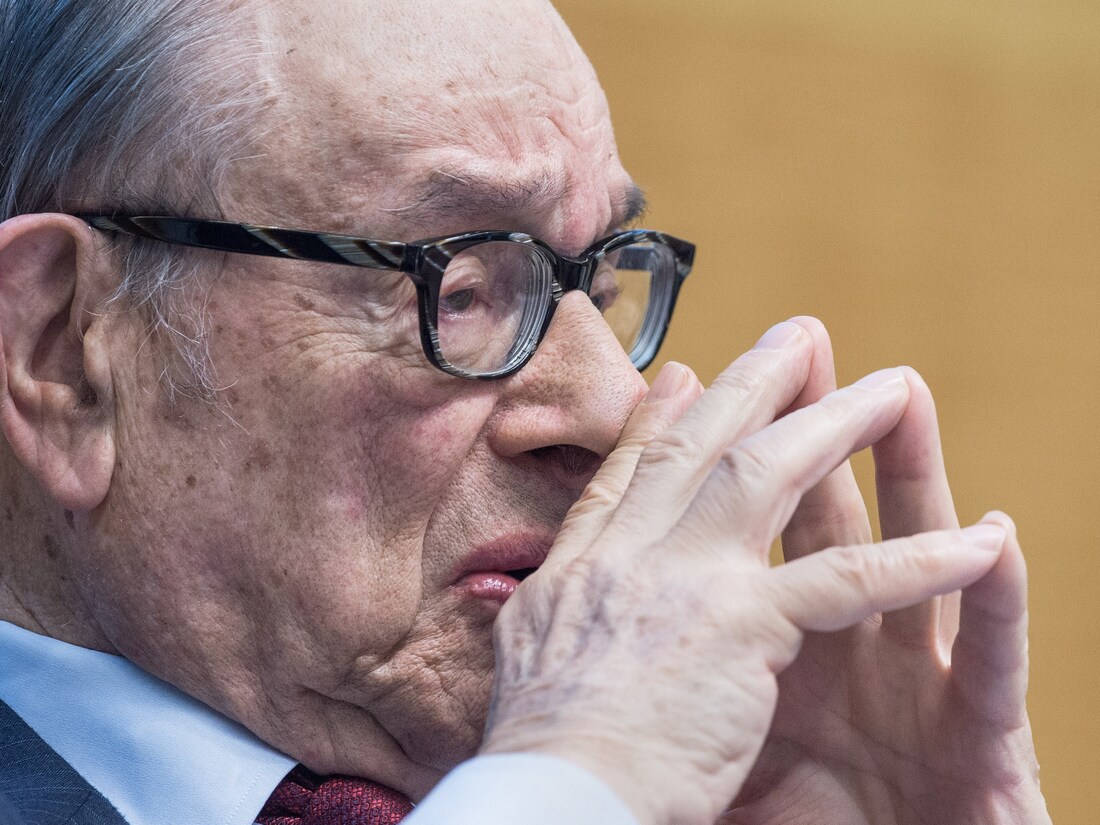
Alan Greenspan, former Federal Reserve Chair, passed away at his home in Washington on Monday at the age of 100. Renowned for his economic leadership, Greenspan was a prominent figure during some of the longest economic expansions in U.S. history.
Greenspan’s Tenure as Fed Chair
For nearly two decades, Greenspan played a pivotal role in shaping U.S. monetary policy. He served under four presidents, beginning in 1987. His tenure was marked by consistently low unemployment rates, which defied traditional central bank practices. Traditionally, low unemployment prompts central bankers to raise interest rates to combat inflation. However, Greenspan maintained low borrowing costs, allowing the unemployment rate to decline without sparking inflation.
A notable moment during Greenspan’s chairmanship occurred in 1996. During a speech at the American Enterprise Institute, he questioned whether stock prices were rising due to irrational exuberance, a comment that temporarily shook global stock markets. Despite this, his influence remained strong.
Greenspan’s Approach to Regulation
Greenspan’s light regulatory touch and low interest rates were critical in fostering long-term economic growth throughout the 1990s and 2000s. However, critics argue these policies contributed to the dot-com bubble and later financial crises, such as the subprime mortgage meltdown. His approach was heavily influenced by his libertarian philosophy and association with novelist Ayn Rand, who advocated for minimal governmental intervention.
In his career, Greenspan believed that bankers would act prudently based on self-interest without the need for stringent regulations. This perspective was challenged by the 2008 financial crisis, which occurred two years after he left the Fed. During testimony before a congressional committee examining the crisis, Greenspan admitted he might have misjudged the situation.
Reflection on Greenspan’s Legacy
Greenspan’s legacy is a complex blend of monetary prowess and regulatory reluctance. He fostered economic growth by maintaining low rates but failed to prevent ensuing financial disruptions. Economist Vincent Reinhart noted Greenspan’s courage in later acknowledging that unregulated self-interest might not always suffice to protect taxpayers and investors from risky banking behavior.
Greenspan will be remembered for both his contributions to economic policy and the challenges faced during his tenure. His impact shaped both the prosperous times he guided and the crises he struggled with.