
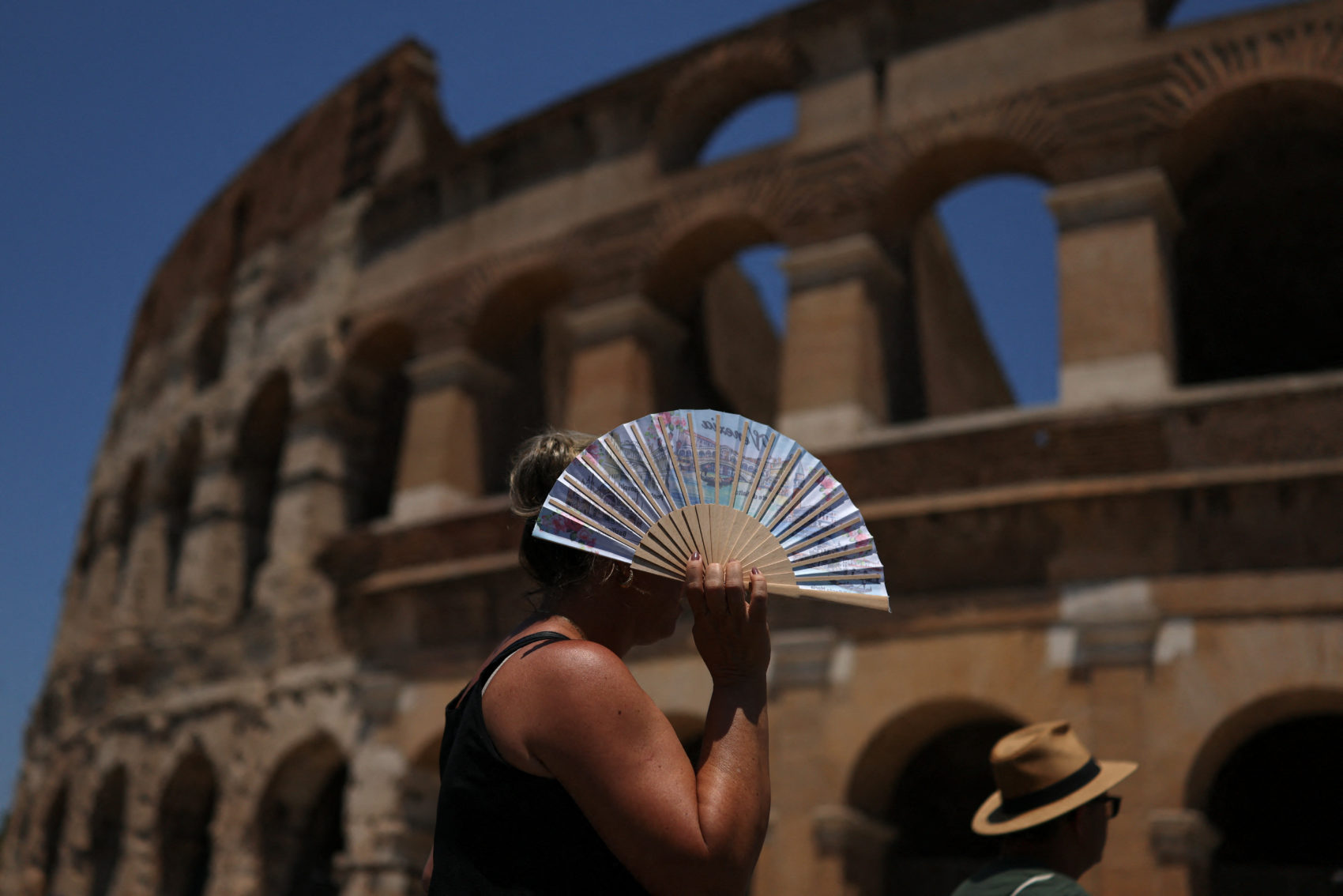
Last week, France experienced approximately 1,000 additional deaths during an intense heatwave, according to the country’s public health agency. The World Health Organization (WHO) cautioned that Europe is currently the fastest-warming continent, urging increased protection measures for its citizens. The heatwave set temperature records in multiple countries, igniting wildfires in Germany and prompting Berlin police to use water cannons to cool crowds. As the heatwave shifted eastward, temperatures soared to unprecedented levels in several locations.
Temperature Records and Climate Change
Germany recorded a new peak temperature of 41.7 degrees Celsius (107 degrees Fahrenheit) in Neißemünde, near the Polish border. Similarly, the Czech Republic experienced its highest temperature at 41.1 C (106.4 F). A study by the World Weather Attribution, a collaborative effort among European scientists, highlighted that the extreme heat and humidity of the past week would have been impossible without climate change. This rapid analysis showed such heat is now 200 times more likely than two decades ago.
Increased Death Toll in France
France reported significantly more deaths, especially at private residences in the Paris area. Public Health France indicated over 1,200 deaths occurred on a particularly sweltering Wednesday. This number rose to over 1,400 on the following two days. Pre-heatwave, France’s daily death rate ranged from 900 to 1,000. The agency expects the count of at least 1,000 additional deaths to rise with further data collection, mainly in areas under severe heat alerts, which affected three-quarters of France. Most victims were over 65 years old.
WHO’s Warning on Europe’s Warming
WHO Director-General Tedros Adhanom Ghebreyesus stated Europe is warming at double the global average. Approximately 150 million people are under extreme heat, and over 1,300 excess deaths have been recorded since late June. Tedros emphasized the need for Europe to develop preparedness and prevention strategies, as well as stronger health system responses. He noted the inadequacy of European infrastructure in coping with such heat.
Severe Weather Impacts and Fires
Sweden faced a lightning incident at an amusement park, resulting in injuries to several individuals. In Denmark, severe thunderstorms followed record heat, with 1,156 lightning strikes recorded. Germany encountered fires in areas contaminated with WWII ammunition, complicating firefighting efforts. An operation near Traisen in southwestern Germany had to pause due to explosions, and about 650 residents were evacuated.
Infrastructure Challenges
Berlin police used water cannons to provide relief from the heat at Brandenburg Gate. Meanwhile, heat damaged many highways and impacted train operations due to infrastructure breaks. A train journey from Hamburg to Prague experienced the loss of air conditioning and power, leading to the evacuation of over 600 passengers. Leipzig halted tram services due to track damage caused by high temperatures.
This report includes contributions from Paris-based John Leicester and Prague-based Karel Janicek. A free press ensures robust democracy. Support trusted journalism and open dialogue.