
Randy Levine, President of the New York Yankees and Vice Chair of the ‘Saving College Sports’ Board, spoke with Brian Kilmeade about the current destabilization in college sports. He expressed grave concerns about name, image, and likeness (NIL) deals, the unpredictable transfer portal, and changing eligibility standards.
Levine noted the financial burden on universities and highlighted efforts by former President Trump to seek bipartisan legislative solutions, targeting a resolution within 90 days. The direction of college football currently stands at a crossroads.
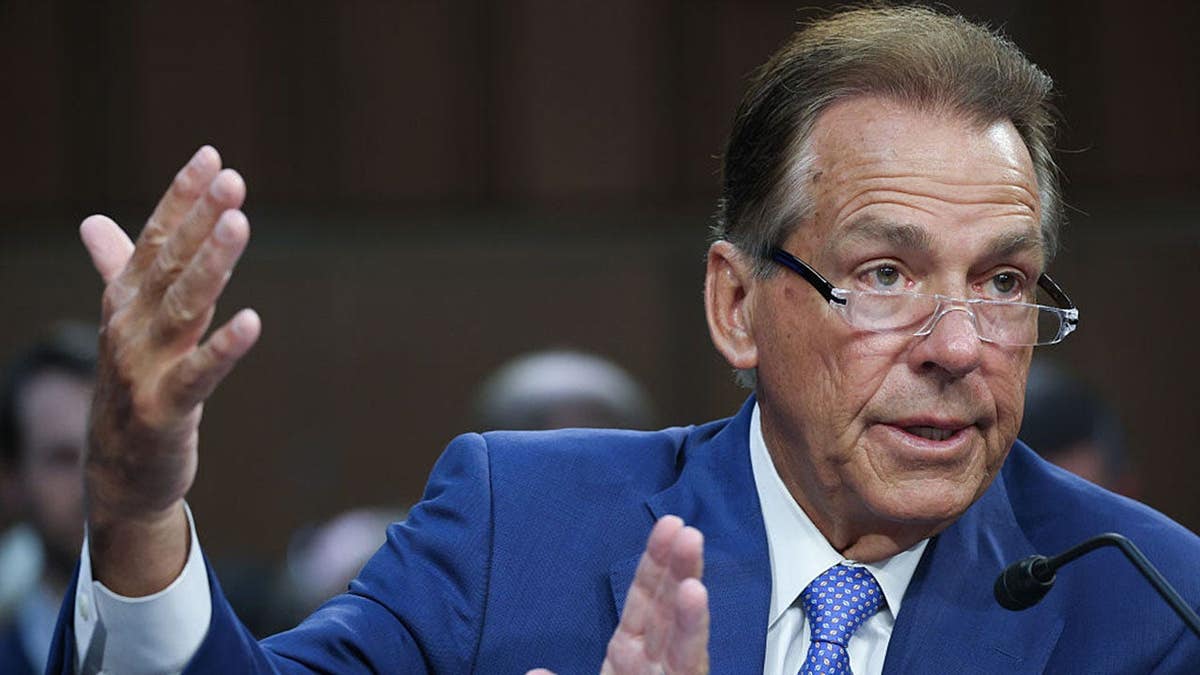
High-profile sports figures, like former Alabama head coach Nick Saban, are voicing their perspectives on NIL as lawmakers review potential regulations. Saban testified before Congress, pointing out the detrimental effects of unrestricted transfers and rising expenditures that create a financial ‘arms race’ among institutions.
“Allowing players to profit from NIL is not the same as turning it into pay-for-play,” he stated. His concern focused on collectives and external entities creating bidding wars. “A system like this no longer represents traditional college athletics,” he added.
Pete Bevacqua, Notre Dame’s Athletic Director, shared similar apprehensions. He stated that focusing resources predominantly on football might lead to a select few schools forming a ‘super league,’ akin to a mini-NFL model. He believes such an approach strays from the spirit of college football.
Saban remarked about institutions with athletic budgets nearing $40 million, suggesting smaller schools would struggle to compete. Yet, this has been a longstanding trend, predating NIL. Historically, championships primarily rest with established powerhouse schools.
A cursory glance at national champions since 2000 confirms that success is often concentrated within well-recognized programs. The presence of ‘small schools’ as champions is rare.
However, NIL might offer more opportunities for smaller programs. While traditional advantages attracted recruits to prominent schools like Alabama or USC, NIL initiatives could elevate programs like Indiana or Texas Tech. Without NIL, players such as Indiana quarterback Fernando Mendoza or Texas Tech’s robust defense might not have materialized.
Still, extravagant budgets do not guarantee success; Texas, with a significant investment in players, missed the playoffs after a 9-3 season in 2025. As college sports continues to navigate through NIL’s intricacies, the debate over its implications continues. Teams look for support beyond nostalgic notions of the past, acknowledging that financial backing is as crucial today as it was decades ago.