
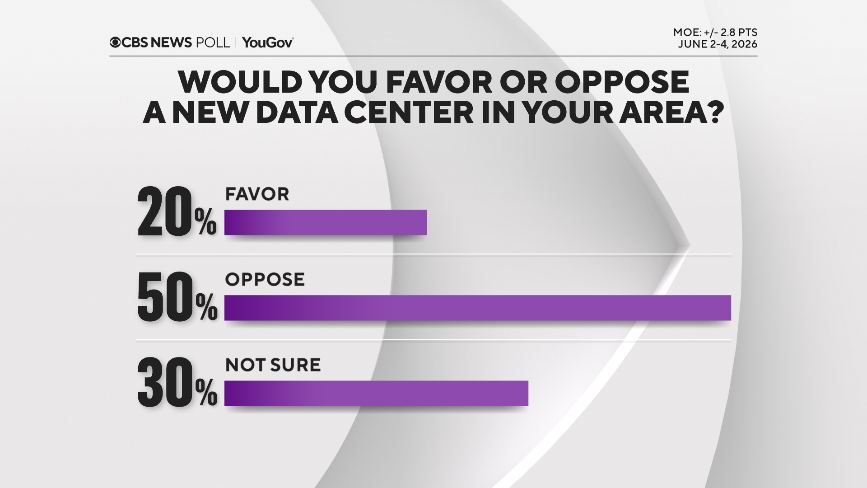
Many Americans express skepticism regarding the establishment of data centers in their neighborhoods, primarily due to perceived negative environmental and resource impacts. The pace of data center construction in the U.S. has quickened, yet most Americans feel unfamiliar with them. This unfamiliarity often leads to unease about having a data center nearby.
There is a notable divide in opinion. More than twice as many Americans oppose as favor the construction of data centers in their areas. A significant portion of the population remains unsure. Those few who claim to know ‘a lot’ about data centers identify some local benefits, but opposition still tends to outweigh support among them. Conversely, individuals who know ‘nothing’ about data centers often express uncertainty about having one locally.
The nation is split on whether the construction of more data centers is crucial for maintaining U.S. competitiveness in technology and artificial intelligence. Supporters of local data centers largely pinpoint technological competitiveness as a key reason. While more Republicans than Democrats believe data centers are essential for competitiveness, both groups show reservations about having a data center in their locale.
Environmental concerns are prevalent. Majorities believe that data centers are detrimental to the environment and vital resources like water and electricity. There’s also concern about increased energy costs in areas where data centers are built. On the positive side, a slightly larger group considers data centers beneficial for the local economy and tax revenue. Those who foresee these economic benefits are more inclined to support local data center construction.
When it comes to jobs, about half of Americans anticipate a short-term boost in employment due to data centers, but fewer expect this advantage to persist long-term. Many respondents indicate uncertainty regarding these impacts, highlighting a general unfamiliarity with data centers and their community effects.
This CBS News/YouGov survey gathered data from a nationally representative sample of 2,023 U.S. adults, interviewed from June 2-4, 2026. The sample was adjusted to be reflective of national demographics, including gender, age, race, and education, based on the U.S. Census American Community Survey, the Current Population Survey, and the 2024 presidential vote. The margin of error stands at ±2.8 points.