
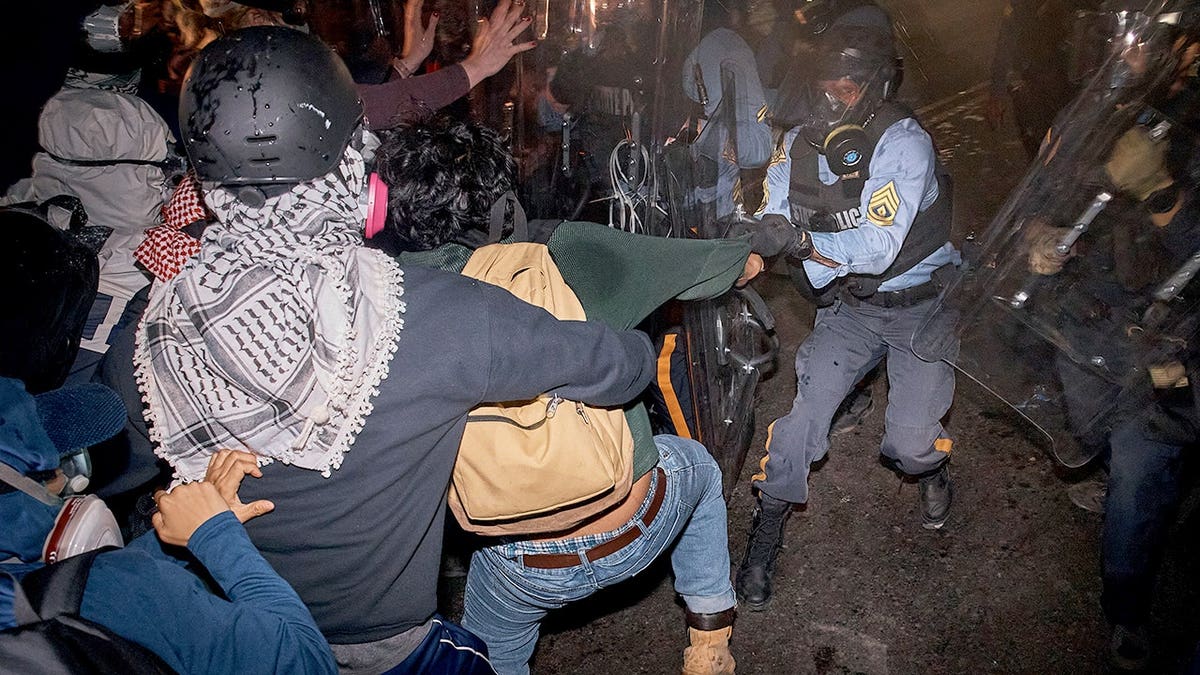
On June 3, a call to action emerged at 11:30 a.m. via social media, urging protesters to converge on Delaney Hall, the ICE detention facility in Newark, New Jersey. Prominent anti-Israel, Marxist, and Democratic organizations, such as the ‘Palestine Solidarity Working Group’ and ‘Indivisible’, circulated messages, sparking a rapid mobilization of protestors against ICE and law enforcement.
Using encrypted messaging platforms like Signal, activists organized logistics including transportation and protective gear. Through a Fox News Digital investigation, insights into these protests revealed their strategic planning by a network of well-funded groups. These groups, often tax-exempt nonprofits, coordinate through a mix of social media and secretive channels.
The network comprises roughly 100 organizations, including the ACLU and Democratic Socialists of America, with combined annual revenues of around $850 million. Many enjoy charity designations under various nonprofit categories, which allow them to receive tax-deductible donations and benefits.
Scrutiny is increasing as federal investigations focus on the alleged misuse of nonprofit status to instigate conflict. A document titled the ‘Delaney Hall Creator Brief’ advises activists on messaging. The document instructs protestors to call the facility a ‘concentration camp’ and detainees ‘imprisoned’, avoiding terms like ‘arrest’.
During protests, tactics resembled military insurgency operations seen in other cities, drawing concern from experts like Chuck Flint. These protests are not spontaneous but orchestrated actions aiming to challenge local law enforcement and federal policies.
Support for these organizations often comes from major donors like the Open Society Foundations. The protestors’ actions are compared to military tactics, organized with precision similar to that seen in other protests earlier this year.
The origins of current protests trace back to the reopening announcement of Delaney Hall in February 2025 by GEO Group Inc., contracted by ICE. Local opposition began initially with legal challenges from Newark’s city officials, such as Mayor Ras Baraka.
Activist groups like ‘Eyes on ICE NJ’, ‘ICE Out of NJ’, and ‘New Jersey Alliance for Immigrant Justice’ have been key players. Each group focuses on specific tasks: observation, policy change, or mobilization. They use well-established networks and communications to coordinate large-scale protests and media outreach.
The influence and coordination of these groups underscore the complex landscape surrounding immigration policy protests. As tensions escalate, these networks continue to challenge authorities, pushing their agenda on a state and national level.