
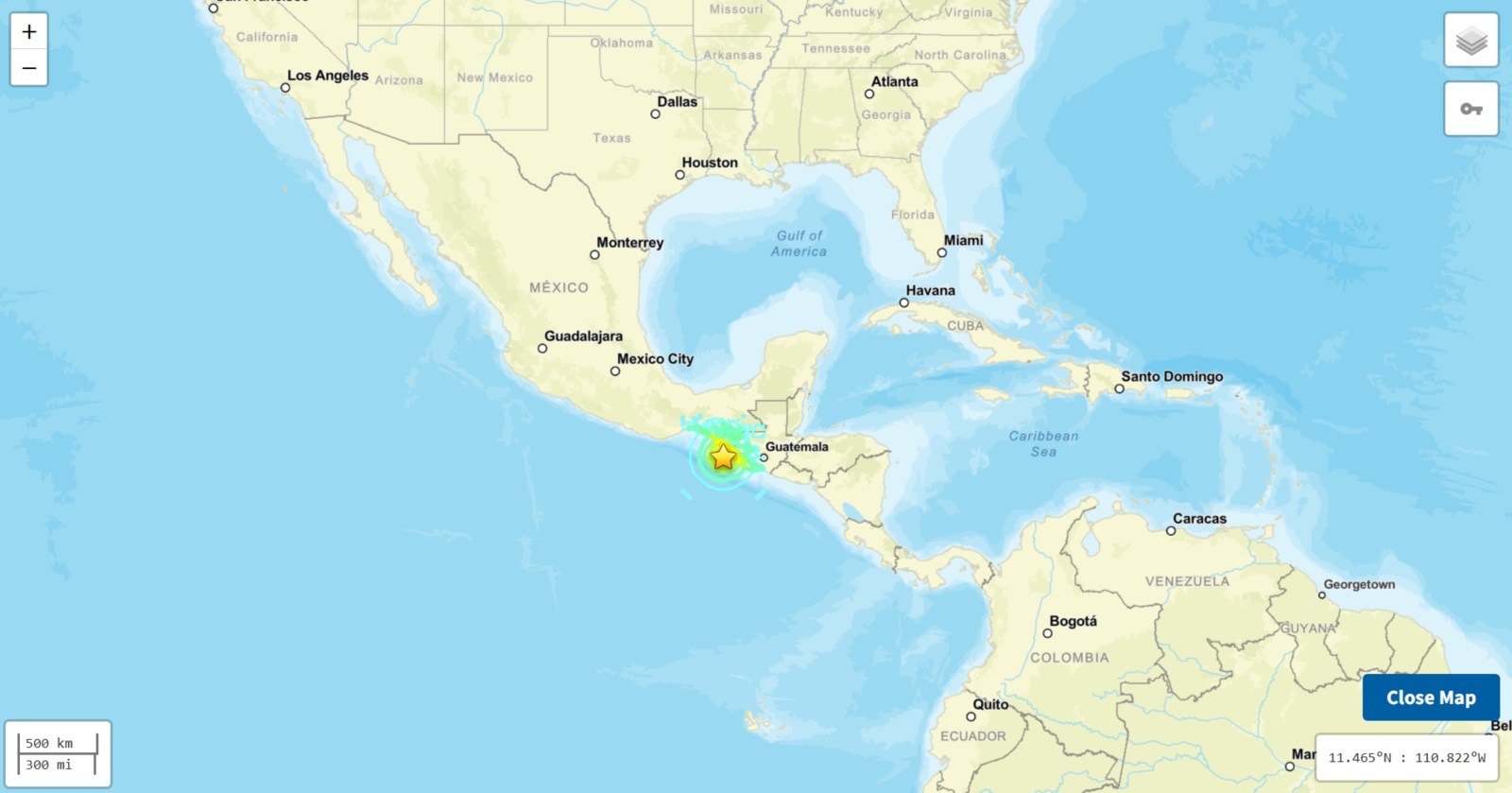
A magnitude 7.3 earthquake hit off the southern coast of Mexico early Friday morning. This intense tremor shook the region and prompted emergency officials to conduct immediate infrastructure reviews.
The U.S. Geological Survey (USGS) reported the quake occurred near the Pacific coast of Chiapas. At a shallow depth of approximately 9 miles, this depth likely amplified the shaking and broadened the area of impact.
Series of Seismic Activity
The earthquake was part of ongoing seismic activity in the region. Before and after the main tremor, weaker earthquakes continued to affect the area. Notable were a 4.7 magnitude quake near Aquiles Serdán and tremors measuring 5.1, 5.3, and 6.0 magnitude near Puerto Madero.
Epicenter Details
Preliminary data from the USGS identified the epicenter roughly 30 miles southwest of Aquiles Serdán, a coastal community in Chiapas, and near Puerto Madero close to the Guatemala border. The earthquake struck at 8:48 a.m. local time.
Potential Impact
Earthquakes with a magnitude of 7.0 or above are typically classified as major events. They can inflict severe damage, especially near the epicenter and in areas with weak building structures. The USGS highlights that such quakes can lead to significant structural damage, casualties, landslides, liquefaction, and infrastructure disruptions.
Immediate Responses and Tsunami Concerns
In the aftermath of the earthquake, there were no immediate reports of casualties or severe damage. Authorities began evaluating infrastructure and monitoring coastal areas for potential tsunami effects. Despite the earthquake’s size, no tsunami threat was expected in the U.S., according to NWS Tsunami Alerts, though a local tsunami within 200 miles of the epicenter was possible.
Meteorologist Matthew Cappucci from MyRadar Weather noted the quake involved thrust motion due to the Cocos Plate’s subduction beneath the North American and Caribbean Plates. This generated possible tsunami threats and potential liquefaction, where soil behaves like a liquid, risking further ground destabilization.
Past Disasters: Mexico’s Deadliest Earthquake
On September 19, 1985, Mexico City experienced a devastating earthquake, still remembered for its massive destruction. With a magnitude of 8.0–8.1, it caused widespread damage, amplified by soft lake-bed sediments. Official tolls recorded 5,000 to 10,000 deaths and 30,000 injuries, with thousands of buildings damaged or destroyed.
Post-Earthquake Precautions
Authorities typically advise residents in affected areas to heed local emergency guidelines and prepare for aftershocks. After a magnitude 7.3 event, aftershocks may persist for weeks and can vary in strength. Larger aftershocks usually occur shortly after the main quake but significant ones may emerge later.