
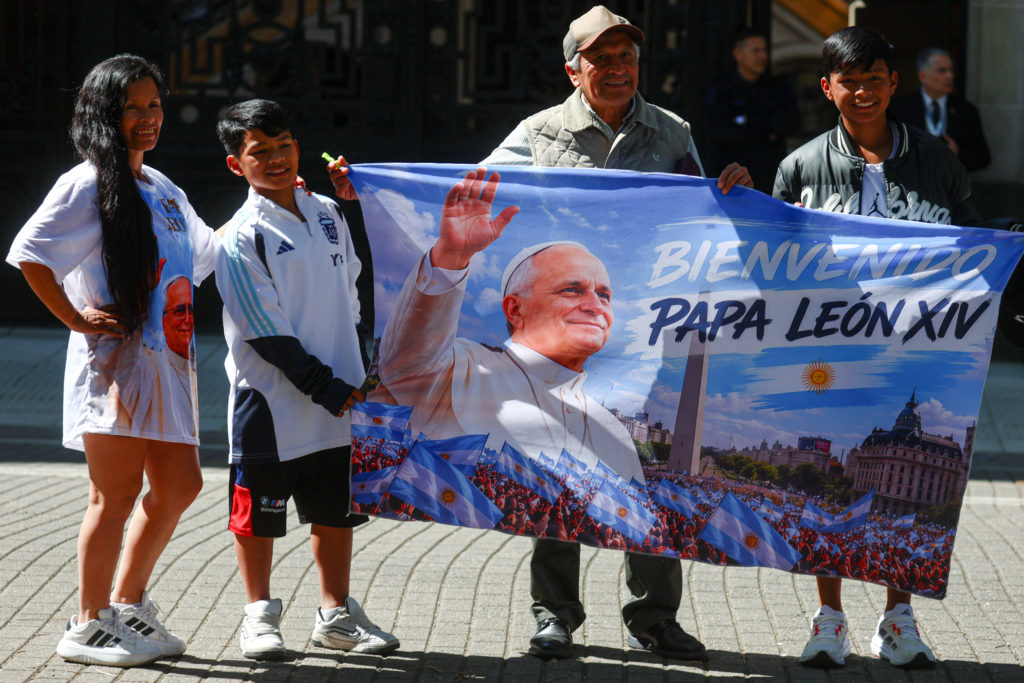
Pope Leo XIV arrived in Argentina on Sunday, delivering a nuanced critique of President Javier Milei’s economic and political strategies. He emphasized that governance should prioritize people over the economy.
In his first public address in Argentina, Leo presented a governance vision that contrasted with Milei’s stance on economic measures, social justice, and technology. He stated, “The economy must serve the person, not the person the economy,” addressing officials and civic leaders in Buenos Aires.
Leo’s visit to Argentina is politically sensitive, especially considering the legacy of Argentine Pope Francis, who never returned home during his time as pope. Milei’s government had downplayed potential political clashes, but Leo’s statements highlighted their differences.
President Milei, an advocate for reducing public spending, views social justice negatively. He has compared administrative cuts to necessary reforms similar to those seen in the Trump administration.
As Leo touched upon economic issues, he acknowledged Milei’s market-driven approach but stressed that growth should benefit not only the wealthy but also disadvantaged groups like the unemployed and retirees.
Milei’s economic policies have led to a budget surplus and decreased inflation, but real wages remain low, and formal job losses have risen.
During his South American tour, Leo also addressed education funding cuts that have impacted Argentina’s public universities, calling for greater investment in education and vocational training.
Mass protests have erupted over the government’s failure to restore funding and salaries for educators, leading to strained public sentiment.
On environmental issues, Leo underscored the importance of using natural resources for community welfare. This stood out as a caution against Milei’s relaxed regulations benefiting oil and mining investments.
Pope Leo also highlighted concerns about artificial intelligence, cautioning about its rapid advancements and the need for responsible application, especially regarding surveillance.