
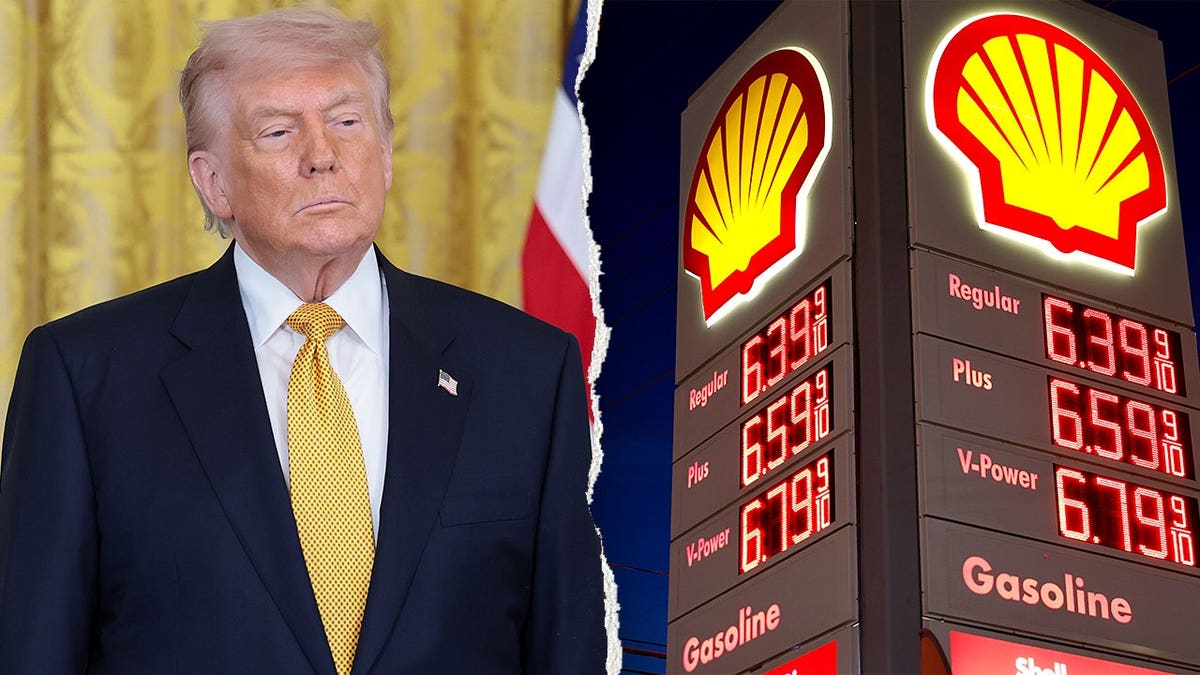
In recent years, the relationship between political agendas and gas prices has been a hot topic. Former Transportation Secretary Pete Buttigieg and former Vice President Kamala Harris criticized the Trump administration’s policies, connecting them to economic hardships. They blamed Donald Trump’s decisions on Iran for the rise in gas prices.
As the United States braces for a record-breaking summer driving season and an upcoming midterm election, political opponents are using any opportunity to voice their critiques of the Trump administration. Harris previously stated that high gas prices were necessary for maintaining democracy.
Economist Thomas Sowell once said, “there are no solutions, only trade-offs.” This insight is relevant when examining the dynamics of fluctuating fuel costs amid political conflicts and crisis management.
During the Biden administration, climate change policies resulted in elevated energy prices as a “trade-off” to safeguard the planet. President Joe Biden characterized climate change as an “existential threat.” Rep. Alexandria Ocasio-Cortez warned of catastrophic consequences if climate change wasn’t addressed.
Conservative groups have raised concerns, claiming 2025 marks a pivotal moment in addressing “climate hysteria.” During the same period, real-time consequences such as inflation and California’s mandates for electric vehicles gradually were accepted by the people.
In contrast, the 2024 election drew over 77 million voters to a candidate promising to ramp up energy production. Trump assumed office with a commitment to reinvigorate the American energy sector by lifting certain mandates.
Subsequently, gas prices reached a four-year low by October. The situation changed with Iran’s conflict. Trump’s determination to prevent Iran from obtaining nuclear capabilities fostered instability, particularly concerning the oil transit route of the Strait of Hormuz.
The resulting increase in gas prices is undeniable. During a press conference on May 19, Trump expressed optimism that the high prices would persist “for a little while,” acknowledging the discomfort faced by citizens.
It’s crucial to weigh whether removing a longstanding global threat is justifiable. The American populace holds the power to make such determinations.
While these political choices unfold, the climate change agenda faces scrutiny. The United Nations scaled back some predictions from the Intergovernmental Panel on Climate Change report. This action impacts globally influential policies like AOC’s Green New Deal legislation.
Climate anxiety led young individuals to reconsider starting families, yet caused a shift away from traditional energy sources like oil and gas. Consequently, nations were vulnerable amid crises like the Russia-Ukraine war.
The United States is fortunate with its rich natural resources. While national challenges remain, international struggles with fuel costs present a more dire scenario.
This context serves as significant information for families planning holiday travel. Despite differences in international fuel costs, the U.S. possesses unique advantages.
As citizens prepare to vote in five months, they must assess the balance between increased fuel expenses and neutralizing existential threats. Providing voters with facts allows informed decision-making.
The green agenda has seen opposition, emphasizing its limitations. The future election presents an opportunity to deliberate on trade-offs with broader implications.
Daniel Turner, founder and executive director of Power The Future, advocates for energy jobs in the U.S. He also owns a farm in Virginia. Turner can be contacted at [email protected] and followed on Twitter @DanielTurnerPTF.