
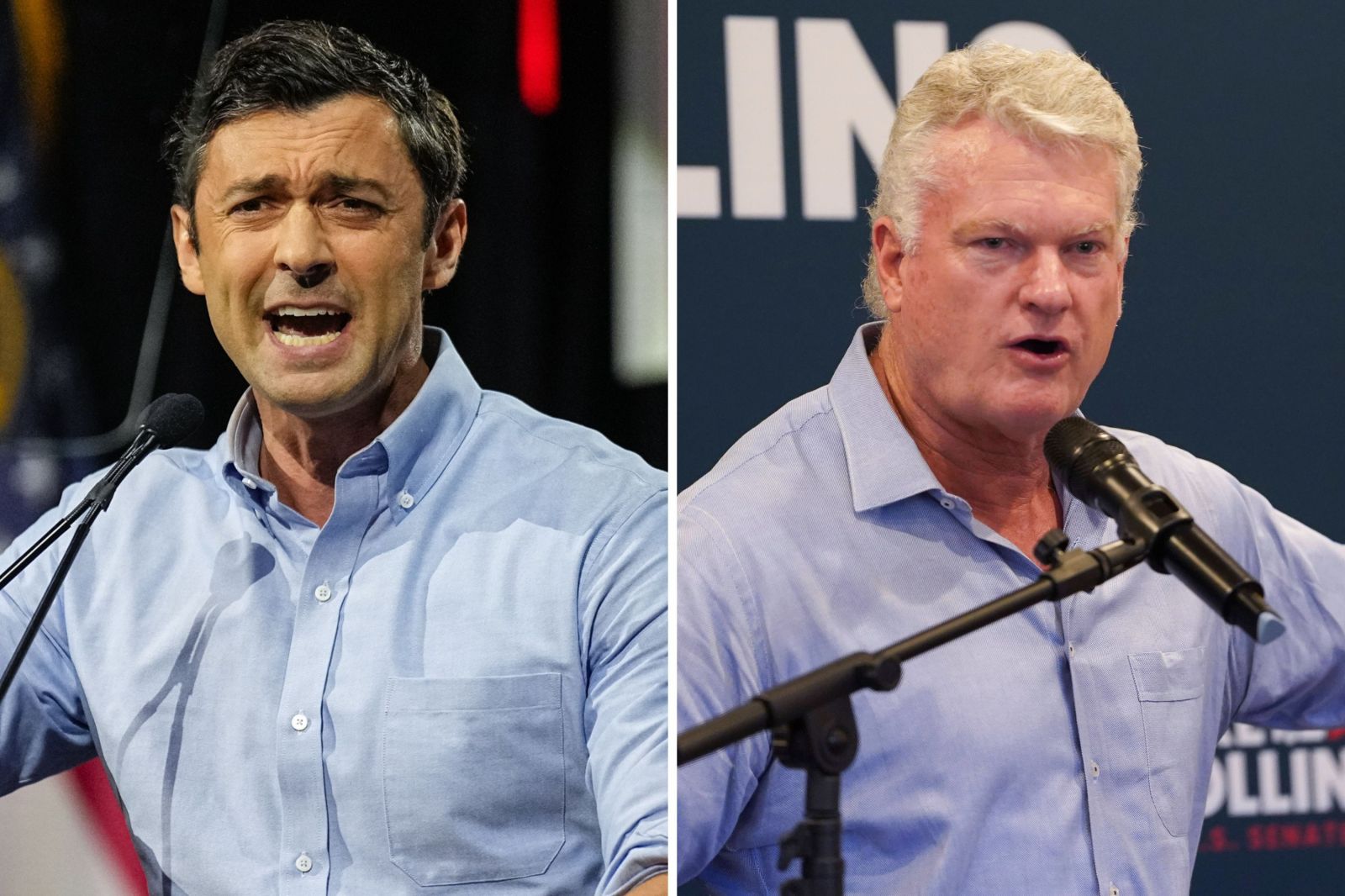
Senate Race Debate in Georgia
Democratic Senator Jon Ossoff and Republican Representative Mike Collins are set to debate for the second and last time before the November 3 election. This event marks the conclusion of the Atlanta Press Club’s debate series. The debate coincides with the opening of early voting across Georgia, where the race appears to favor the incumbent.
Debate Highlights and Accusations
During their initial debate, Ossoff targeted Collins with accusations about ties to white nationalists, a pending ethics investigation, and allegiance to Trump. Collins portrayed Ossoff as a liberal disconnected from constituents, supporting Trump’s tariffs and the ongoing conflict with Iran.
Ossoff, who initially won his Senate seat in 2020, is campaigning for his first reelection in a state that Trump carried two years ago. Collins, representing Georgia’s 10th Congressional District, secured the GOP nomination in a June runoff.
Political Context
Republicans currently hold a 53-47 majority in the Senate. Democrats need to flip four seats while retaining existing ones for a majority, with Georgia playing a crucial role in this effort.
Debate Viewing Details
The Senate debate is scheduled for Tuesday, October 13, at 8 p.m. ET. The event, broadcast live from Georgia Public Broadcasting’s studios in Midtown Atlanta, will be accessible via the Atlanta Press Club’s live stream.
Recent Polls Analysis
Ossoff leads in every public poll released since summer, but margins vary. Trafalgar Group, a firm with a Republican leaning, reported Ossoff at 51 percent and Collins at 43 percent, with 5.9 percent undecided. The poll surveyed 1,101 likely voters between October 7 and 9, with a margin of error of 2.9 percentage points.
Wedgewood Poll indicated a wider gap, showing Ossoff leading 55 percent to 45 percent among 600 likely voters early October. Big Data Poll revealed Ossoff at 52.2 percent compared to Collins’s 41 percent among late September voters.
Quantus Insights reported Ossoff at 48.2 percent with Collins trailing at 44.4 percent. Independents favored Ossoff 42 percent to 29 percent, with a notable geographic split: Ossoff led by 17 points in the Atlanta area, while Collins dominated rural Georgia by 28 points.
RealClearPolitics’ average highlighted Ossoff’s lead by nearly eight points in late September.
Pollster Matt Towery noted that Georgia is not inclined to favor either party by double digits. Reflecting this, the Cook Political Report adjusted Georgia’s status from “Lean Democrat” to “Likely Democrat,” aligning with Sabato’s Crystal Ball assessment.
Voter Concerns
Cost of living is the primary concern among Georgians. Nearly all surveys this year have reflected this worry. A bipartisan AARP poll highlighted the focus on economic issues in every statewide race. Many associate the Iran conflict with economic anxiety. A Wick survey showed 59 percent of voters concerned about the war’s impact on prices, while 33 percent are troubled by Iran’s potential nuclear capabilities.
Moreover, health care is another significant issue for voters. A University of Georgia poll found that 77 percent of likely voters emphasize a candidate’s health care stance.
Emerging Issues
Data centers, once a minor concern, have garnered attention. The AARP poll showed bipartisan worry, with Sachs Media data indicating three in four Georgians concerned about development impacts, such as electricity bills and noise.
In contrast, an Emerson College poll in March found 47 percent opposition to new data centers in their communities, against 31 percent support.
Debate Themes
The upcoming debate is expected to revolve around key issues: cost of living, armed conflict, and immigration. Ossoff criticized Collins for tariffs hindering families and businesses, vowing to repeal them. Collins blamed inflation on the current administration and pointed to energy independence as a solution.
Regarding the Iran confrontation, Ossoff accused Collins of votes that supported the war, linking it to gas price rises and doubled health insurance premiums. Collins defended the necessity of the war to curb Iran’s nuclear aspirations.
In immigration discussions, Collins alleged Ossoff’s support for defunding ICE and Border Patrol. Ossoff stressed the need for secure borders but criticized raids targeting workers without verifying criminal activity.
Ethics and Allegations
Collins faces scrutiny over a House investigation regarding misuse of government funds. Ossoff cited antisemitic videos and links to the Ku Klux Klan associated with Collins’s affiliates. Collins disavowed racism and antisemitism.
Collins attempted to align Ossoff with left-wing figures like Hasan Piker, Abdul El-Sayed, and tech investor Reid Hoffman, connecting them to controversial affiliations.