
Operation Midway Blitz: Encounters and Repercussions
In June, a Schaumburg police officer responded to a 911 call from a federal immigration agent who claimed to be followed. The officer turned off his body camera at the agent’s request. In July, a Forest Park parking enforcement worker moved a federal agent’s car, allowing the agent to avoid an activist’s camera.
These events highlight continued tensions a year after President Trump’s Operation Midway Blitz began. Local police, federal agents, and residents face ongoing chaotic and quick encounters, raising questions about accountability.
Response and Accountability Struggles
Interviews and document reviews show local officials have struggled with the operation’s impact. The blitz tested Illinois’ rules of engagement for local law enforcement’s interaction with federal immigration agents.
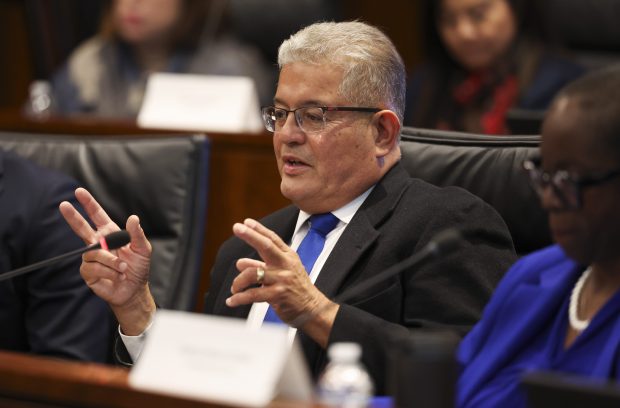
Rubén Castillo, appointed by Gov. JB Pritzker to lead a commission investigating misconduct, expressed unpreparedness for the federal action’s scale. “People were caught off guard by the aggressive federal enforcement,” he stated.
Amid rhetoric from Illinois politicians, challenges arise in managing federal authority constraints. Local prosecutors rarely pursue cases against agents, and intraparty conflicts persist over accountability efforts.
Police Caught in Complex Situations
Police have been scrutinized for their reactions to immigration confrontations. Accusations arose of local police aiding federal raids. Around the region, officers found themselves balancing prohibitions against immigration enforcement with public safety duties.
Chuck Wexler of the Police Executive Research Forum highlighted this challenge, stating, “Police face balancing immigration enforcement prohibitions with public safety responsibilities.”
Former Superintendent Eddie Johnson added that officers are caught in political struggles, emphasizing their duty to protect all residents.
The TRUST Act and Public Outrage
The Illinois TRUST Act limits state and local police participation in civil immigration enforcement. However, the blitz highlighted discrepancies between legal mandates and street realities.
For example, Schaumburg faced public backlash after a police officer turned off his body camera while dealing with an immigration agent. This sparked concerns about local government integrity.
Similarly, Forest Park experienced turmoil when an enforcement officer assisted an ICE agent. Internal conflicts arose as public criticism mounted.
Legal Complexities and Ongoing Challenges
Law experts acknowledge complexities in the TRUST Act’s implementation. When federal agents call for police assistance during protests, it creates a difficult situation for local officers, according to University of Chicago Law professor Craig Futterman.
The operation’s turbulent events culminated in confusion for city officials, as seen in Evanston. They debated responses to potential civil rights violations during encounters with immigration agents.
Seeking Accountability: Legal Efforts
Accountability often leads to Cook County State’s Attorney Eileen O’Neill Burke. At events, Pritzker criticized state’s attorneys for neglecting duties, highlighting the challenge of prosecuting federal agents.
Efforts for accountability continue through federal court orders curtailing aggressive federal tactics and state lawsuits against militarized immigration enforcement.
The Illinois Accountability Commission provides insights into federal agent misconduct, producing a comprehensive report despite lack of subpoena power.
Legislation and Action
State lawmakers have passed limited measures amid public pressure. These include stopping certain arrests near courthouses and enabling lawsuits over rights violations during civil immigration arrests.
However, challenges remain. Federal agents continue to operate near Cook County courthouses. Despite legislative efforts, broader restrictions on federal activities face legal hurdles.
State Sen. Celina Villanueva emphasized the need for action against the inhumanity impacting communities, even if complete success is elusive. “It’s hard, but we continue our work,” she stated.