
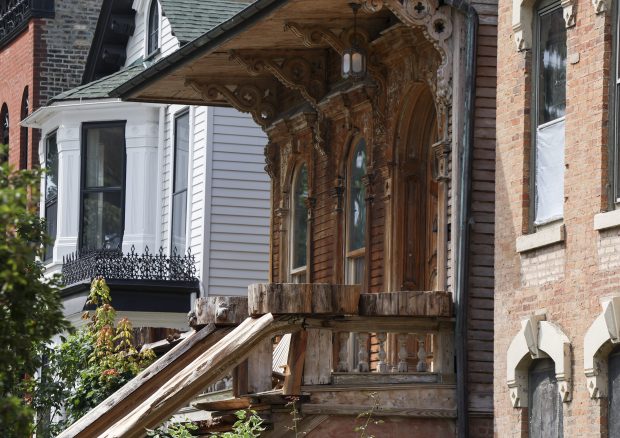
Elizabeth and Hunter Case imagined a peaceful family life in their Old Town home, with children playing in open spaces and festive decorations adorning their windows. However, their reality disrupted when unforeseen visits to doctors and calls to authorities became necessary. The root of their troubles traces back to a neighboring homeowner making unauthorized alterations to a property known as the Wacker House.
Constructed over 150 years ago and surviving the Great Chicago Fire, the Wacker House holds historical protections at both local and national levels. These protections are meant to safeguard its historical and architectural value. Despite this, unauthorized work threatens its structure, as evidenced by city records and neighbor complaints. Since 2023, multiple service requests have prompted responses from city departments, stop work orders, and federal inspections.
For the Cases, the situation is more than a heritage preservation issue. It directly impacts their daily lives. Following the onset of construction, their daughter suffered lead poisoning, as shown in medical records. The Cases claim this was due to their neighbor improperly removing lead paint from the historic property. Despite efforts to draw attention to the issue, their cries for assistance have often met dismissive responses.
The Old Town Triangle Association, a local advocacy group, has been vocal about stopping the illegal construction. Despite their efforts, construction progresses, undeterred. The owner, Michael Gancarz, according to property records, has been facing foreclosure. No responses have been received from Gancarz regarding multiple inquiries about the developments.
The Historical Significance of Wacker House
Since moving to Old Town in 2021, the Cases have immersed themselves in the neighborhood’s rich history. This area was originally settled by German immigrants. Frederick Wacker, a prominent early brewer in Chicago, was among the first settlers on what was later named the Old Town Triangle District. Though ravaged by the Great Fire, the Wacker family rebuilt their home quickly, embedding it into the fabric of the city’s history alongside other notable landmarks.
The enduring heritage of Wacker House illustrates the neighborhood’s cultural significance, emphasized by its inclusion on the National Register of Historic Places. However, the risks posed by unauthorized renovations could erase these historical threads completely.
Lead Exposure Risks
Records show Michael and Amelia Gancarz purchased the Wacker House in 2012. While renovations began in summer 2022, the Cases noted the escalating danger to their property by spring 2023. When debris from paint removal polluted the air and surrounding areas, concerns mounted over potential lead exposure, especially seeing how this metal poses such toxic risks. Initial assurances from neighbors to contain the debris did little to alleviate the Cases’ anxiety.
Medical experts like Deborah Schwartz affirm the dangers of lead, especially for children, highlighting paint as a common exposure source. In Chicago, any indication of elevated lead in a child’s blood prompts intervention from health officials, who provide assessments and screenings to curtail further risks. Investigation confirmed the presence of lead hazards not only in the Cases’ residence but also in soil contamination.
Regulatory Actions
In Chicago, landmark ordinances necessitate thorough vetting for properties protected for their historical significance. However, despite issued building permits, violations at Wacker House proliferate, affecting neighbors’ air quality and health. Numerous complaints have been logged with city departments, citing safety and potential permit infractions.
The Case family, feeling their concerns dismissed by the city, sought help from officials like their alderman, Timmy Knudsen, yet actions seemed insufficient. The city did issue a stop work order but faced challenges enforcing compliance due to restricted access to Wacker House.
Ongoing Response
The Old Town Triangle Association actively raises awareness about the illegal construction, calling for adherence to landmark ordinance requirements. Meanwhile, the EPA has engaged in their investigation following lead-related complaints but maintains confidentiality regarding enforcement actions.
Experiencing construction disruption firsthand, the Cases lived temporarily elsewhere to protect their family but noticed work persisting upon returning. Despite legal consultations and issuing a demand letter requesting compensation for abatement expenses, challenges remained complex and unanswered.
The Cases’ concerns continue to be overshadowed by complications with confirming lead origins, driven by stress over prolonged exposure consequences. While their daughter’s blood lead levels have normalized, the fear of potential cognitive and developmental harm persists.
Ultimately, the hope remains for a resolution that prioritizes historic preservation alongside community health. The Cases center their focus on creating a safe environment for their growing family, striving to redirect their sense of control into cultivating a nurturing home setting.