
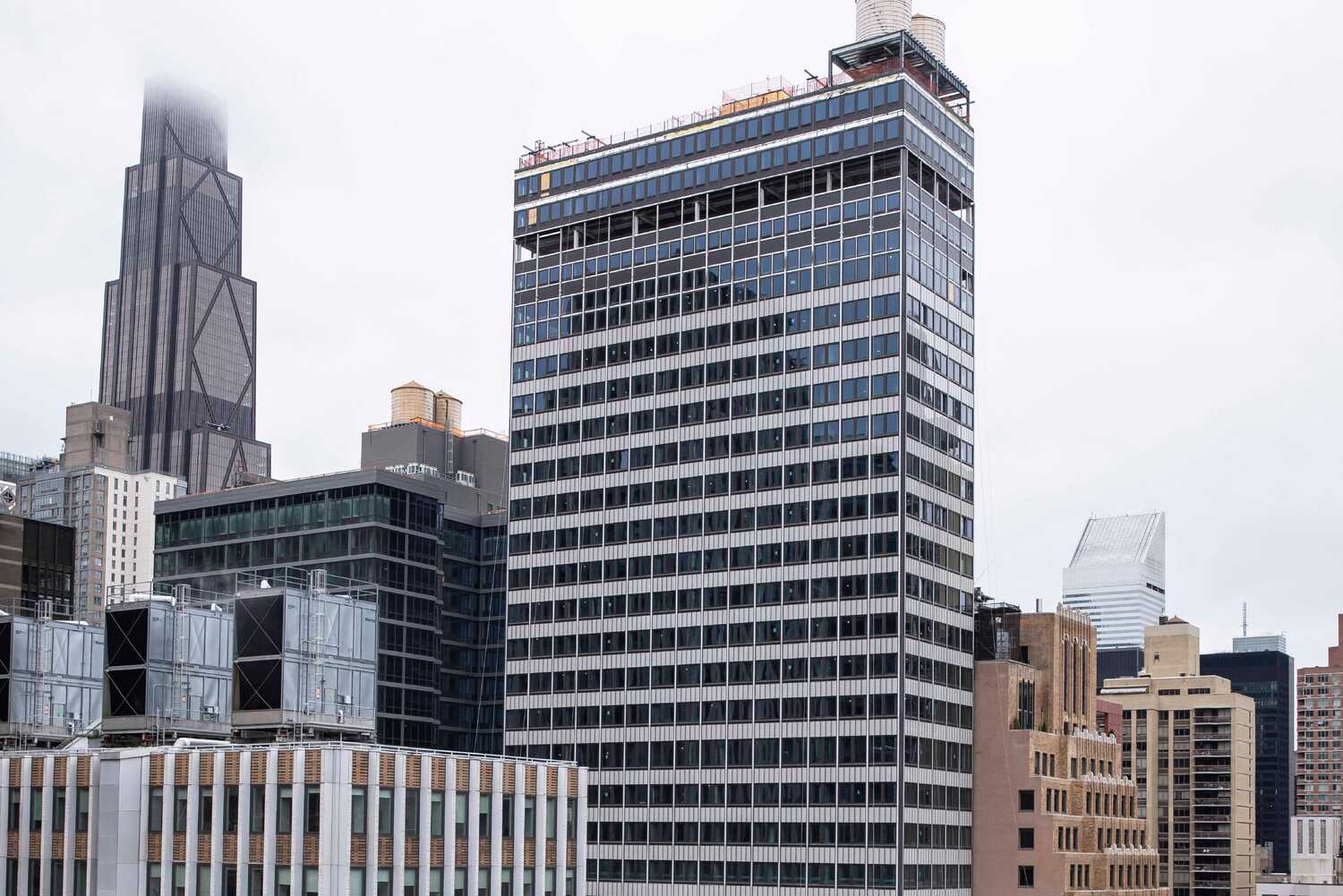
City officials in Manhattan evacuated a construction site near Grand Central Terminal on Tuesday due to significant structural concerns. The concerns emerged at a high-rise located on East 42nd Street, formerly Pfizer’s headquarters, which is being converted into apartments.
The building, located at 235 East 42nd Street and undergoing transformation into a 1,600-unit residential property, showed signs of potential collapse. This development led to evacuations, street closures, and emergency responses during the morning commute in the area around Grand Central Terminal.
The Fire Department received a report of falling bricks from the site just before 8 a.m. It was found that a steel beam on the 21st floor had been compromised. Additionally, records indicated that two support columns inside were buckling and several upper floors were sagging.
Key Details:
Were there any injuries?
No injuries were reported. Construction workers and employees in nearby buildings at 225 and 221 East 43rd Street were evacuated as a precaution. Cliff Johnsen, representing Steamfitters Local 638, noted that members were evacuated amid visible deformation of the beams.
What measures were taken?
A designated “frozen zone” was established between 40th and 45th Streets from First Avenue to Third Avenue to enhance safety, according to Mayor Zohran Mamdani.
Scope of Work on Former Pfizer Site
The transformation of the building forms part of a broader initiative to repurpose office space as residential units. This initiative aims to address Manhattan’s housing shortage. The project spearheaded by Metro Loft and David Werner Real Estate commenced in 2024, with completion anticipated next year. Plans include elevating 235 East 42nd Street, adding 11 stories to the current 22 at 219 East 42nd Street.
Out of the 1,602 planned apartments, 400 are designated affordable. Amenities will span over 100,000 square feet and include shops, a rooftop pool, and a fitness center.
Metro Loft stated its awareness of the building’s issues, confirming collaboration with the Buildings Department to assess the scope of these challenges.
Contributors to the report include Claire Fahy, Mihir Zaveri, Caitlyn Freeman, Chelsia Rose Marcius, Matthew Haag, Hurubie Meko, and Davaughnia Wilson.