
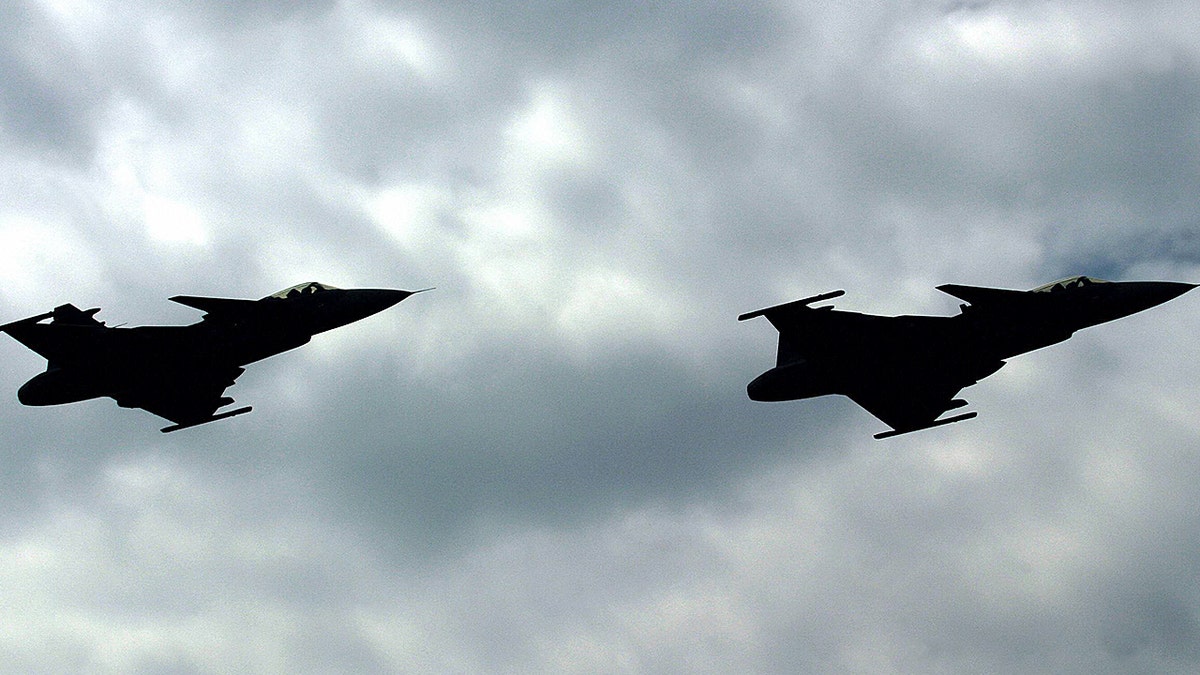
Finnish and Swedish fighter jets conducted a joint mission for the first time on September 24 to intercept Russian military aircraft over the Gulf of Finland. This operation marks an important step in Nordic defense collaboration during a period of increased tension with Moscow.
The joint mission occurred shortly before Russian President Vladimir Putin dismissed European concerns about regional threats posed by Moscow. During this time, Putin ridiculed Estonia’s defense preparations, criticizing Estonia’s new defense minister.
The Finnish F/A-18 Hornets and Swedish JAS 39 Gripens engaged after spotting Russian aircraft in international airspace. The operation underscored the strong cooperation between Finland and Sweden as they work together within NATO.
According to the Swedish Armed Forces, the Russian aircraft formation included a Tu-134 transport plane, a MiG-31 interceptor capable of detecting long-range threats, and Su-30 multirole fighter jets designed for both air-to-air and air-to-ground combat.
“This is what close cooperation looks like in practice,” stated Maj. Gen. Jonas Wikman, commander of the Swedish Air Force. “Built over years on trust and strong personal relationships, we can now operate seamlessly together — as air forces, as nations and as Allies.”
Worries have risen due to recent Russian military activity along NATO’s eastern flank. These incidents include Russian drones entering Polish airspace, a Mi-8 helicopter crossing into Poland from Kaliningrad, drones crashing in Romania and Moldova, and armed Russian jets entering Estonian airspace.
Estonian Defense Minister Martin Herem has warned that Russia might use military force against Estonia within a year and urged a review of Tallinn’s defense capabilities. Prime Minister Kristen Michal stated that Estonia is prepared to close border crossing points if threat assessments signal a change.
At the St. Petersburg International United Cultures Forum, Putin addressed these concerns, denying any preparations for military action against Europe and dismissing Herem’s warnings as politically driven nonsense.
The tension in the Baltic region is compounded by incidents since Russia’s invasion of Ukraine in 2022, involving gas pipeline sabotage and hybrid threats. NATO has strengthened its eastern presence in cyber and space domains while advising member countries to build resilience against Russian actions such as cyberattacks and airspace violations.
NATO, describing its activities as defensive, pledges a strong response against any attack on its members. Secretary General Mark Rutte emphasized the importance of U.S. involvement during a visit to Iowa, stating Putin knows the intertwined nature of U.S. and European alliances.
European intelligence shared on September 24 assessed that while a full-scale Russian invasion of a NATO nation is improbable, the risk cannot be entirely dismissed. The Danish Defense Intelligence Service noted the risk of a limited Russian attack as “low but growing.”