
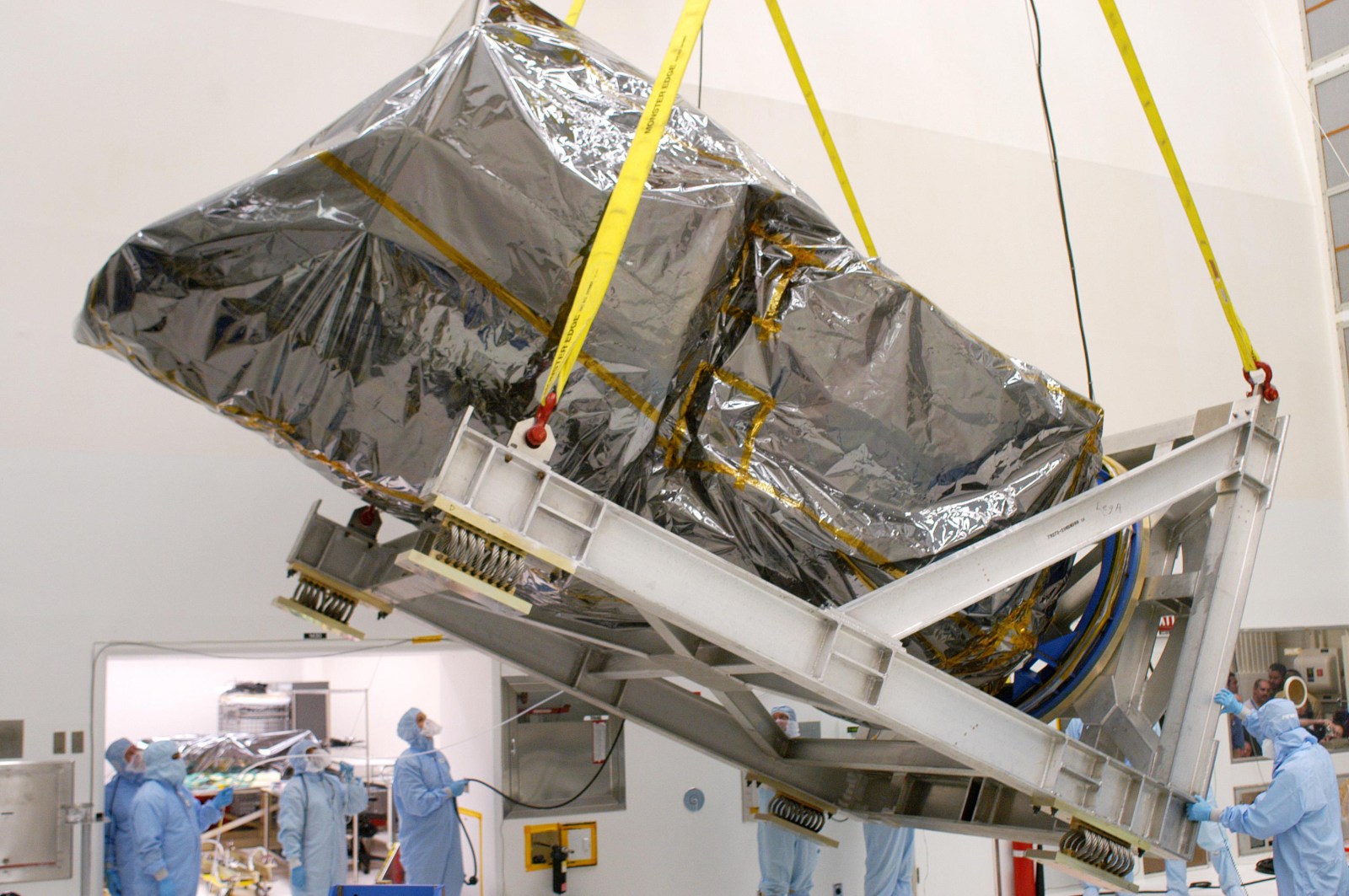
NASA’s Swift Observatory Nears Re-Entry
An aging NASA space telescope, known as the Swift Observatory, is nearing its return to Earth. This telescope, which has spent over two decades studying some of the universe’s most powerful explosions, is expected to re-enter Earth’s atmosphere within days. Its impending descent raises questions about potential debris survival and where it might land.
Re-Entry Details
The U.S. Space Force reports that the Swift Observatory is predicted to re-enter the atmosphere around Friday.
Years of orbital decay have been hastened by intense solar activity. While most of the 1.5-ton spacecraft is expected to burn up, NASA notes that some dense parts, such as tungsten components and mirror fragments, could survive and reach Earth’s surface. However, any surviving debris is likely to land in the ocean, though the exact location remains undetermined.
Potential Landing Zones
The possible re-entry zone spans vast regions including parts of Africa, Australia, India, Southeast Asia, Central America, and South America. This extensive range highlights the complexities of predicting a satellite’s trajectory until shortly before re-entry. Atmospheric conditions can significantly influence where a spacecraft disintegrates, and officials typically refine forecasts in the final hours of descent. The U.S. Space Force continues monitoring Swift’s orbit as it approaches Earth.
Reasons Behind Swift’s Descent
Swift’s return to Earth follows an unsuccessful rescue mission. NASA enlisted Katalyst Space to aid Swift using a robotic spacecraft named Link. This vehicle was supposed to approach Swift and elevate its orbit. However, technical issues prevented the maneuver, and the rescue vehicle itself eventually re-entered the atmosphere. Moreover, heightened solar activity in recent years has contributed to Swift’s descent. Such activity heats and expands Earth’s upper atmosphere, increasing drag on satellites and causing them to lose altitude rapidly.
Swift’s Achievements
Since its launch in 2004, the Swift Observatory was tasked with rapidly aiming at gamma-ray bursts, some of the universe’s most energetic explosions. Throughout its 22-year mission, it detected over 2,000 gamma-ray bursts and approximately 1,400 exploding stars. Swift also made observations of black holes, comets, and asteroids, aiding larger observatories like the Hubble Space Telescope and the James Webb Space Telescope. By late October, Swift had descended too far to conduct stable observations, leading mission controllers to shut down its systems and conclude one of NASA’s longest astrophysics missions.