
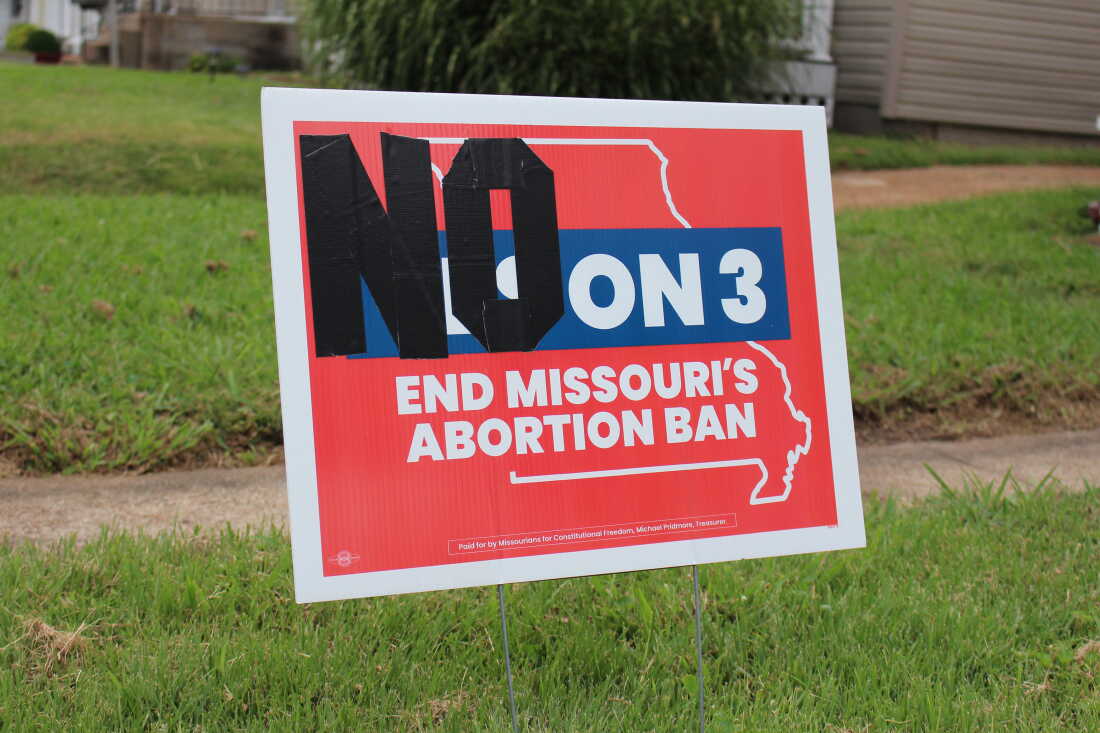
In Missouri, a significant event unfolded with the 2024 vote on Amendment 3, which supported incorporating abortion protections into the state constitution. By 2026, a “no” vote on the same amendment would maintain these protections. Resident Kelly McCoomb adjusted her 2024 sign with duct tape and repositioned it in her Maplewood yard.
Following Missouri voters’ decision to add abortion protections in 2024, McCoomb kept her supportive yard sign in her basement. She valued abortion access for personal reasons, wanting options for her daughter, reflecting on the day the state chose to reverse its stringent ban. Her intuition suggested she might need her sign again soon.
Indeed, two years later, Missouri’s Republican-majority legislature sought to repeal the newly supported protections. Both measures held the same title, Amendment 3. This political landscape required voters to switch from a “yes” to a “no” to safeguard abortion rights. McCoomb creatively altered her sign for the updated vote.
This upcoming November, Missouri and three other states will weigh in on abortion. Voters in Missouri and Nevada will revisit the issue for the second time since 2024, following the pivotal U.S. Supreme Court’s 2022 decision in Dobbs v. Jackson Women’s Health Organization. This ruling allowed states to set their own abortion policies, resulting in diverse state regulations. Some states retained legal support for abortions and introduced protective “shield laws” to prevent out-of-state prosecution of providers.
“I just think there’s a constitutional crisis that’s coming,” stated Kristi Hamrick from Students for Life Action. “Can you have 50 state standards on whether human beings have legal protection?”
This irregularity is why groups like Nevadans for Reproductive Freedom proposed the 2024 ballot measure. Their aim is to protect Nevada’s law allowing abortions up to 24 weeks. This proposal, supported by 64% of voters two years ago, needs another majority to proceed.
Nevada’s measure wouldn’t alter its current law, but it will reinforce access, making changes more challenging without back-to-back voter approvals. Campaigners ensure voters remain aware of these issues.
States with stricter rules, like Idaho, where tight bans are in place, will see similar measures. Here, voters will decide on allowing abortion up to viability, approximately 24 weeks. Utah also faces legal tests impacting its 18-week rule.
Meanwhile, Virginia, permitting abortions through two trimesters, considers cementing these rights in its constitution. Missouri provides a contrasting scenario, voting on removing protections given in 2024. Proposed changes would mean abortions only for specific cases, with limits like a 12-week timeframe for rape or incest instances.
Before the Dobbs 2022 verdict, Missouri became the first state enacting a ban. Abortions were rare as regulations were tightened over time, reducing numbers significantly. Only 150 were performed in 2021 as compared to 5,772 a decade earlier.
Margot Riphagen-Dunn from Planned Parenthood Great Rivers sees the repeated votes as contributing to uncertainty and confusion for patients. She attributes complications with providing care to these conditions. Even opponents of abortion in Missouri face challenges, needing to clarify the voting directive to their supporters.
“It is crazy that it ended up being even the same number,” said Reagan Barklage from Students for Life of America, addressing voter confusion.
In Maplewood, McCoomb appreciates that her updated sign supporting abortion access has drawn attention. She encourages others to remember the importance of voting.
KFF Health News, a national health journalism outlet, continues to cover such important issues, as an independent source of health policy research and information.