
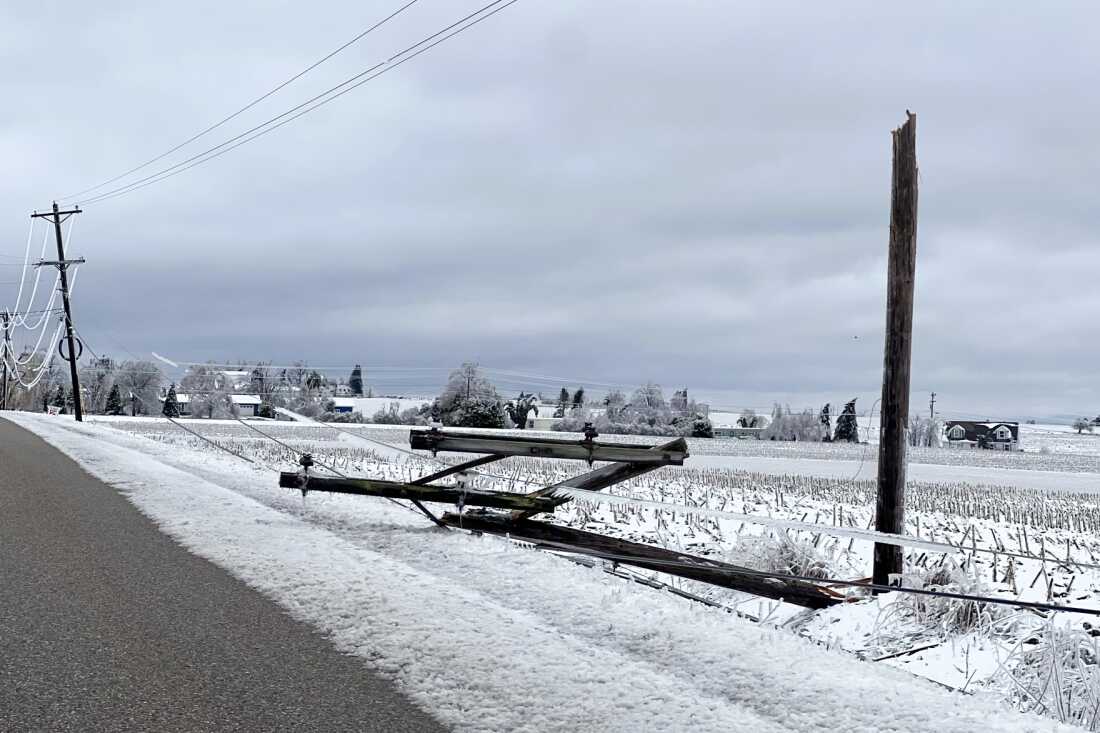
An ice storm in northern Michigan in March 2025 brought down trees and power lines, causing significant damage and outages. Research indicates that in a warming climate, the region may experience more freezing rain and potentially more destructive ice storms. Michigan utilities are considering underground power lines as a solution.
Throughout the country, power lines weren’t designed for a changing climate. Each year, storms cause numerous outages, many due to trees falling on above-ground lines. Burying these lines underground significantly enhances reliability, especially with more frequent severe weather events. However, only about 20% of the nation’s power lines are currently underground, according to a U.S. Department of Energy report.
Impact of the 2025 Ice Storm
The 2025 ice storm in northern Michigan was particularly devastating. Trees and utility poles were knocked down, leaving thousands without power for extended periods. Residents like Wanda Whiting of Lewiston faced difficult situations; her husband Dave required urgent medical help during the blackout. Navigating the dark, debris-strewn streets was a challenge, yet they reached the hospital. However, power remained out in their area for two weeks.
Planning for Climate Change
For Michigan residents, the ice storm highlighted the power grid’s vulnerabilities in severe weather. The state already experiences some of the longest outages in the U.S. Climate research suggests that northern Michigan may face more freezing rain instead of snow, leading to damaging ice storms. Richard B. Rood, a climate change adaptation expert at the University of Michigan, emphasizes the need for communities to prepare for these changes.
Michigan’s largest electric cooperative plans to bury all new power lines underground. This shift aims to improve resilience against future severe weather events.
Cost Considerations
While underground power lines offer reliability, they come at a higher cost. Burying one mile of line in Michigan might cost $400,000, while in urban areas, costs range from $2-3 million per mile. In contrast, overhead lines cost significantly less. Utilities find it cheaper to install underground lines during new construction when integrating with other utilities.
Despite the high costs, utilities like Great Lakes Energy, which operates in 26 Michigan counties, plan to bury new lines in response to the 2025 ice storm. The storm caused over 66,000 outages, costing about $150 million in damages.
Shari Culver of Great Lakes Energy notes that underground lines can be three to five times more expensive than overhead lines. But the long-term reliability benefits for their members justify these expenses. However, relocating existing overhead lines isn’t feasible due to the steep costs.
Tony Chartrand, from Traverse City Light & Power, acknowledges the challenges of underground lines, such as maintenance requiring excavation. Utilities aim to balance costs and benefits when deciding which lines to bury.
National Efforts and Challenges
Michigan isn’t alone in these efforts. Nationwide, utilities face challenges from longer, more frequent outages linked to severe weather. Andrew Phillips from the Electric Power Research Institute indicates that many utilities are moving towards underground lines, although cost remains a concern.
Tao Sun, from Stanford University, highlights that financing for infrastructure upgrades usually comes from consumers through higher bills. Utilities must plan strategically and engage communities for support in cost sharing.
In response to catastrophic events, utilities are spurred into action. For example, PG&E in California is undertaking a large undergrounding project following wildfire damage.
A year after the ice storm, Michigan residents like Wanda Whiting are still recovering and questioning the resilience of current power lines. Whiting suggests that underground lines might offer a better solution for future storms.