
Hugh Hewitt analyzes the Democratic Senate primary in Michigan, emphasizing the ideological rift between moderate Haley Stevens and progressive Abdul El-Sayed. Polls show a divide in voter demographics, with Stevens leading among Black voters while El-Sayed is favored by White and college-educated voters.
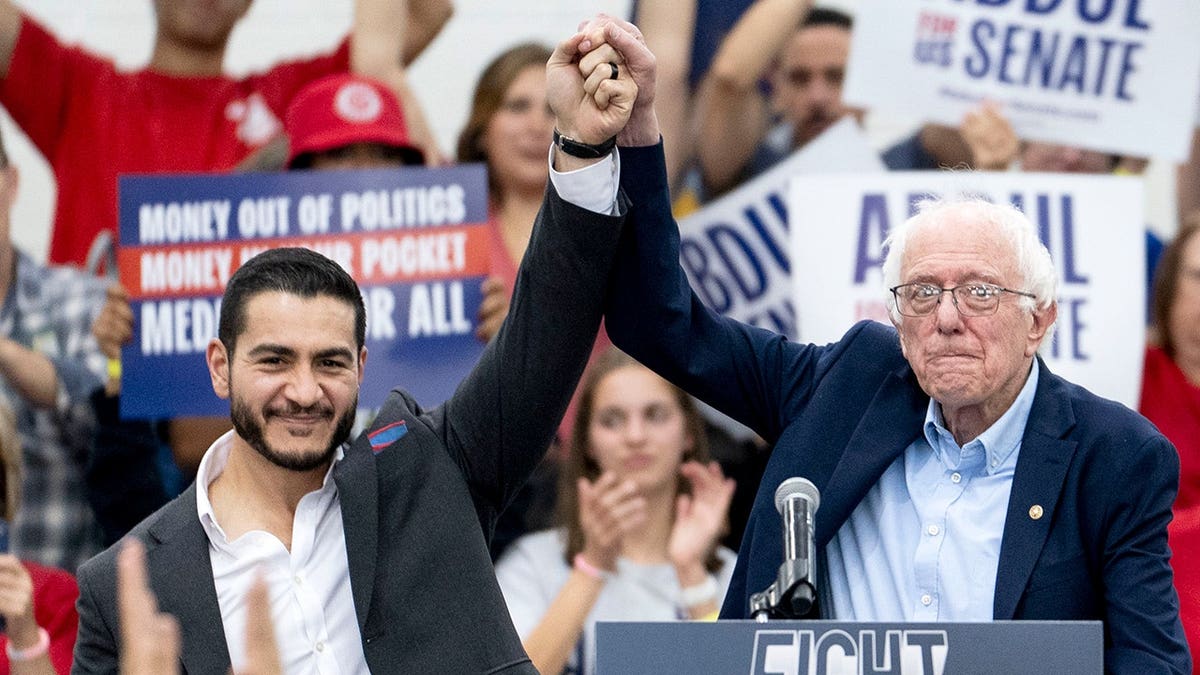
Progressive champions Sen. Bernie Sanders and Rep. Alexandria Ocasio-Cortez are joining the campaign trail in Michigan this weekend to support Abdul El-Sayed, their far-left candidate in a crucial Democratic Senate primary. Sanders and Ocasio-Cortez will accompany El-Sayed during three campaign stops. El-Sayed is a former Wayne County Health Department director facing off against Rep. Haley Stevens, who is backed by longtime Senate Democratic Leader Sen. Chuck Schumer and the party establishment.
After far-left and socialist candidates triumphed over moderates in congressional districts in New York City and Colorado last month, Michigan has emerged as the latest battleground in the significant struggle between the left-wing and center-left factions within the Democratic Party.
“The two opposing forces of the Democratic Party present very different visions,” noted veteran Democratic strategist Joe Caiazzo. “Democrats must retain this seat in November.”
The winner of the August 4 primary will challenge former Republican Rep. Mike Rogers, who appears set to secure the GOP nomination, in a key Senate race to succeed retiring Democratic Sen. Gary Peters. The open Senate seat is a top target for Republicans in the midterms and vital for Democrats as they strive to reclaim the Senate majority from the GOP, who hold the chamber with a slim 53-47 margin.
Michigan’s primary became a two-way contest recently, as progressive state Sen. Mallory McMorrow exited the race. McMorrow, once the third major Democrat in the primary, offered a progressive option between El-Sayed and Stevens but suspended her campaign after struggling to compete with her rivals.
Stevens held a seven-point lead over El-Sayed in a Detroit News/WDIV poll conducted after McMorrow withdrew and following a recent debate.
“If elected, El-Sayed would be the nation’s first Muslim senator,” said El-Sayed, an epidemiologist who made an unsuccessful gubernatorial run in 2018. He supports Medicare-for-all and has called for abolishing ICE. He’s criticized Israel during its conflict with Hamas, referring to its actions in Gaza as “genocide.” El-Sayed has pledged to reject PAC donations.
Schumer and the party establishment view Stevens as more electable than El-Sayed, who has stirred controversy with his past remarks. They fear El-Sayed’s nomination may push the party too far left. President Trump carried Michigan with just over a one-percent margin two years ago. Earlier this week, Peters endorsed Stevens despite maintaining neutrality until now.
The primary has grown contentious. El-Sayed argued during last week’s debate that the Democratic Party won’t change with leaders accepting corporate money. Stevens countered, accusing El-Sayed of benefiting from GOP efforts to boost him by insinuating his nomination would secure Rogers’ election.
The primary has also seen significant financial investments. Outside groups are spending heavily, with United Democracy Project, a PAC linked to AIPAC, investing nearly $15 million in support of Stevens and against El-Sayed. Sanders criticized billionaire-funded PACs for influencing elections.
“A victory by El-Sayed would mark a significant win for the far-left,” stated Sanders. “It’s about Abdul versus AIPAC, not him versus Haley Stevens.”
While the potential El-Sayed victory may signal momentum for the far-left, Matt Bennett from Third Way warns against overemphasizing Michigan’s results as an indication of national trends. He notes the particular importance of the Israel issue in Michigan due to its large Arab American population.
Caiazzo, a Sanders campaign veteran, also advises caution, highlighting the unique circumstances of each election.