
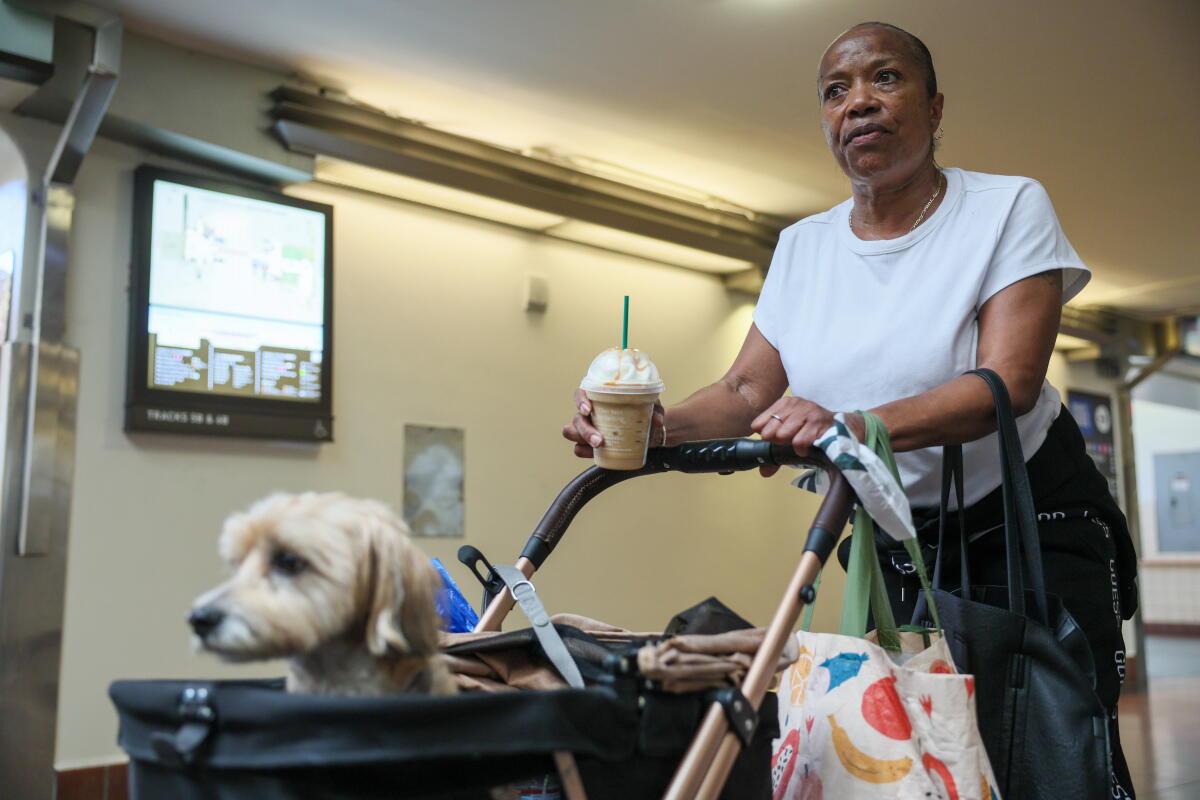
Tonia Jones routinely takes Metrolink between Montclair and downtown, often accompanied by her 12-year-old dog. The recent fare increase announcement caught her off guard. She relies on the train for both business and family visits while conserving funds for a car amid rising gas prices.
“We can’t afford that!” exclaimed Jones, 61, while waiting at Union Station. She wasn’t ready for the hike but lacks alternatives. “I don’t know what to do, just get out of California when I can.” Metrolink’s fare adjustments mean increased costs for many riders in similar situations.
Metrolink faces financial challenges and reduced services. Starting Monday, the commuter rail network raises ticket prices by up to 27%. At Union Station, few signs informed riders of the changes. Ticket kiosks displayed a “fare adjustment” notice without details, and no signs were placed near the entrance or within the depot.
Many riders express frustration over the increases. One-way tickets rise by 14%, daily passes by 27% from $15 to $19, and weekend passes by 20% from $10 to $12. Some passengers weren’t fully aware of the fare implications.
Gabriel Frias, 38, a regular Metrolink passenger for two decades, utilizes the service to travel to Van Nuys for work and Fontana to visit his children. He lamented the increased costs that offer no additional benefits.
“Everyone is struggling. For day-to-day commuters, this is another burden,” Frias said. “One-way to weekend tickets, it’s more money for the same ride.”
Adriana Rizzo belongs to Californians for Electric Rail and regularly takes transit. She has raised concerns to the Metrolink board regarding recent choices about services and pricing.
“These fare increases don’t address Metrolink’s budget gap,” she noted. “Instead, riders face a double challenge of hikes and service cuts, just as gas prices hit record highs.”
Metrolink, managed by the Southern California Regional Rail Authority, comprises several transit bodies, including Los Angeles and Orange counties. Earlier this year, the agency reduced services and proposed more reductions in board meetings.
“Metrolink strives to keep fares affordable while operational costs rise,” explained Metrolink Chief Executive Darren Kettle in a statement. “These pricing changes are part of a broader strategy to manage financial pressures and support long-term sustainability.”
Recently, Metrolink’s oversight body, Metro, criticized the agency for service cuts and sanctioned an audit of the system. The agency also faces a lawsuit from a former executive fired for raising safety concerns, claiming inadequate maintenance led to mechanical issues threatening passengers and staff.