
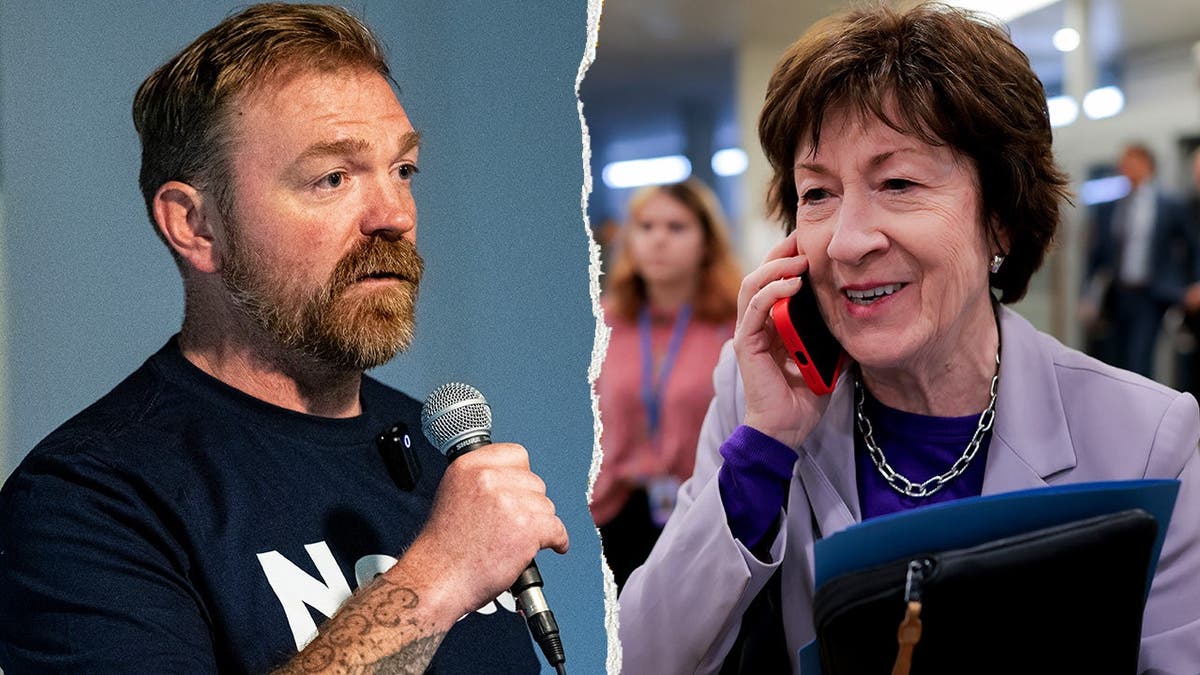
A recent poll points to a tight race in the Maine Senate election but indicates Democratic candidate Graham Platner’s struggle to connect with working-class voters. Despite his campaign emphasizing his background as an oyster farmer, he falls behind incumbent Republican Sen. Susan Collins among registered voters without a four-year degree.
The New York Times/Portland Press Herald/Siena poll shows Platner trailing Collins by 21 points with such voters, holding only 37% to her 58%. However, Platner leads Collins by 37 points among White college-educated voters but lags by 23 points among White non-college-educated voters. In a November poll in 2020, Collins led Democrat Sara Gideon by a narrow margin, highlighting a significant change in voter sentiment.
Platner’s appeal to working-class voters faces scrutiny, as some critics on social media suggest his portrayal as an oyster farmer from rural Maine rings hollow. Ryan Girdusky from the 1776 Project PAC commented that Platner appears disingenuous to working-class individuals, while journalist Melissa Braunstein echoed similar sentiments.
Platner’s campaign has faced various controversies, including skepticism over his financial stakes in oyster farming and questions about his primary income source. Reports suggest his main earnings come from veteran’s disability payments. Additionally, Platner’s affluent upbringing, including attending elite educational institutions, contrasts with his blue-collar image.
Maine Republican state Rep. Laurel Libby remarked on Platner’s perceived lack of authenticity, asserting that Mainers seek genuine candidates who understand their lives, which favors Collins.
Other controversies have marred Platner’s campaign. Allegations of infidelity, physical abuse, a Nazi-linked tattoo, derogatory military comments, and self-identification as a ‘communist’ are troubling for some voters. In the poll, 44% questioned his character, while 47% felt his views were too extreme.
Despite these challenges, Platner’s narrative as a combat veteran opposing Trump and political establishments has led to a slim two-point lead over Collins in the New York Times poll.
Furthermore, 54% of respondents in the poll favor Democrats regaining Senate majority, contrasted with the 49% backing Platner. Meanwhile, Collins maintains 10% support among voters preferring Democratic Senate control.
Potential hurdles for Collins include perceptions of her possible alignment with Trump and concerns regarding her age affecting her senatorial efficacy, as noted by some of her supporters.