
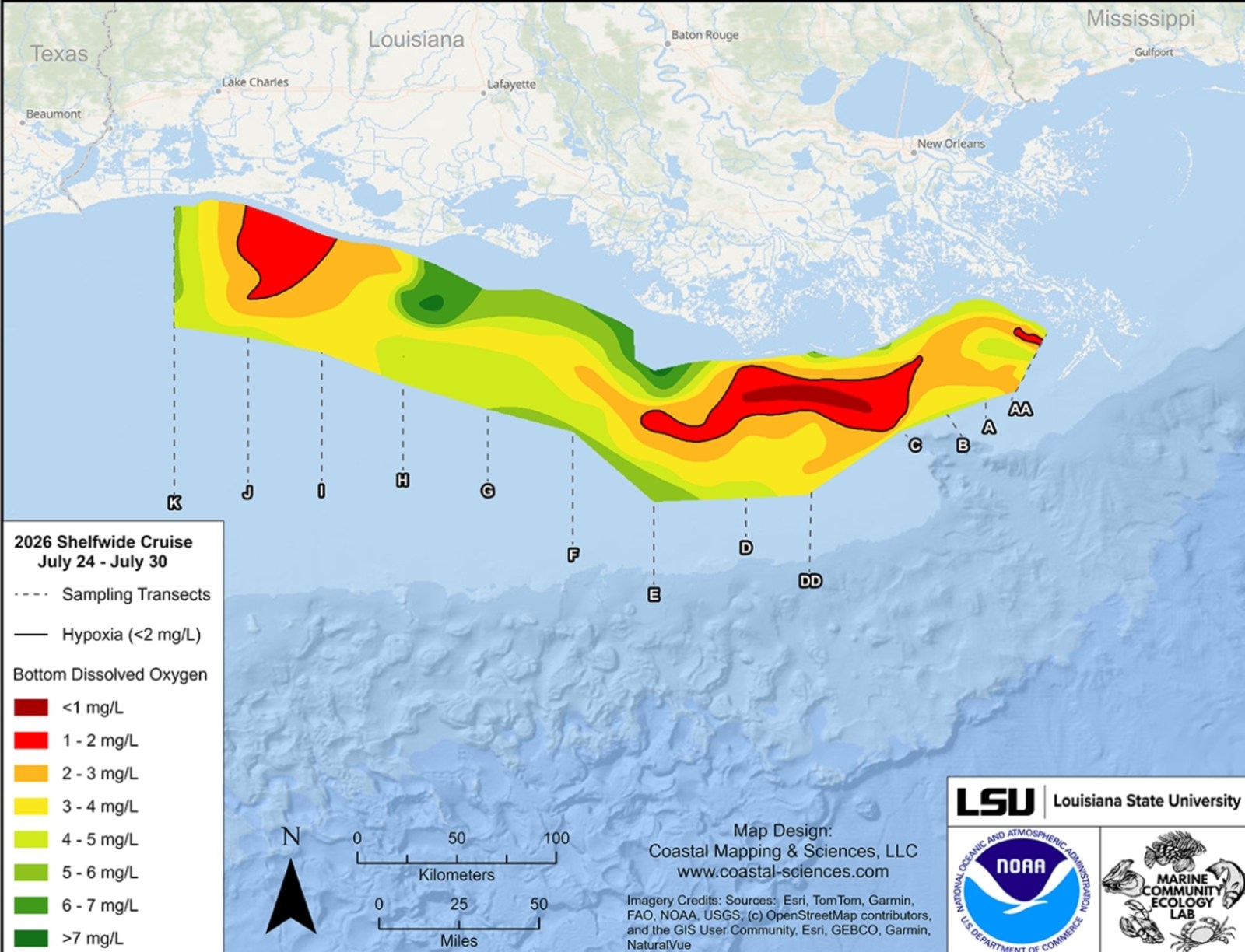
A vast low-oxygen “dead zone” has formed in the Gulf of Mexico along the U.S. coast. Recent measurements by the National Oceanic and Atmospheric Administration (NOAA) show the affected area is smaller than expected after a tropical storm disrupted conditions.
The annual hypoxic zone is a region where dissolved oxygen levels are too low to support many marine life forms. During a July survey, it measured about 1,332 square miles, roughly the size of Rhode Island, making it the second-smallest on record in four decades. These areas, called “dead zones,” cause fish, shrimp, and other organisms to either leave or struggle when oxygen is scarce.
A NOAA map shows the zone spanning the northern Gulf near Louisiana. Nutrient-rich waters from the Mississippi and Atchafalaya rivers fuel seasonal oxygen depletion. Areas in red indicate dissolved oxygen levels of 2 milligrams per liter or less, a threshold marked as hypoxic and unsuitable for many species.
Causes of Hypoxic Zones
Hypoxic zones form when excess nutrients, especially nitrogen and phosphorus, from agricultural runoff, wastewater, and stormwater enter rivers and coastal waters. These nutrients fuel large algal blooms. When algae die and sink, bacteria decompose them, consuming oxygen in the process. This leaves bottom waters with low oxygen levels during warm months when surface and bottom waters do not mix easily.
Scientists track this phenomenon due to its ecological and economic impacts. Prolonged hypoxia alters migration, reduces habitat availability, and affects fisheries crucial for the seafood industry, recreational fishing, and coastal tourism.
Animals at Risk in Hypoxic Zones
Marine species near the seafloor suffer when oxygen levels drop. NOAA explains hypoxic conditions can make essential habitat unavailable to them, forcing relocation or causing stress impacting their growth and reproduction. Fish, shellfish, coral, and aquatic plants are all vulnerable.
Some mobile animals like fish and shrimp can escape if oxygen depletion develops slowly, though their movement can clump populations and disturb feeding and breeding behavior. Less mobile organisms, especially those living in sediments, face greater risks.
Marine mammals like whales and dolphins are less vulnerable to hypoxia as they breathe air and can flee low-oxygen areas. Yet, these zones can affect them indirectly by altering marine food webs and reducing prey abundance. Changes in prey location or density might force dolphins to travel farther or adjust their feeding habits.
Why This Year’s Zone Is Smaller
Despite the smaller zone size, scientists state the Gulf did not escape severe hypoxia this year. Tropical Storm Bertha mixed oxygen-rich surface waters with deeper waters, temporarily reducing low-oxygen conditions during the survey.
Earlier forecasts predicted a much larger zone, around 7,027 square miles, above the long-term average. This highlights how weather events influence hypoxic water formation and breakup.
NOAA’s Timothy Petty emphasized data from 40 years in the region will help develop management strategies to mitigate future impacts.
Other Hypoxic Zones
Hypoxic “dead zones” are common across major U.S. waterways, including Chesapeake Bay, Long Island Sound, parts of Lake Erie, and the coastal waters off Washington and Oregon. Excess nutrients fuel algal blooms which deplete oxygen.
Chesapeake Bay and Long Island Sound experience recurring low-oxygen conditions linked to pollution. Similarly, the Pacific Northwest coast and Lake Erie also record hypoxia, showing it’s a widespread issue affecting coastal and inland ecosystems.
Future Steps
Federal agencies and researchers aim to reduce the Gulf’s dead zone to 1,900 square miles by 2035 by decreasing nutrient runoff in the Mississippi River watershed. While the zone size fell below this target this year, experts warn the role of Tropical Storm Bertha clouds an accurate assessment of nutrient problems.