
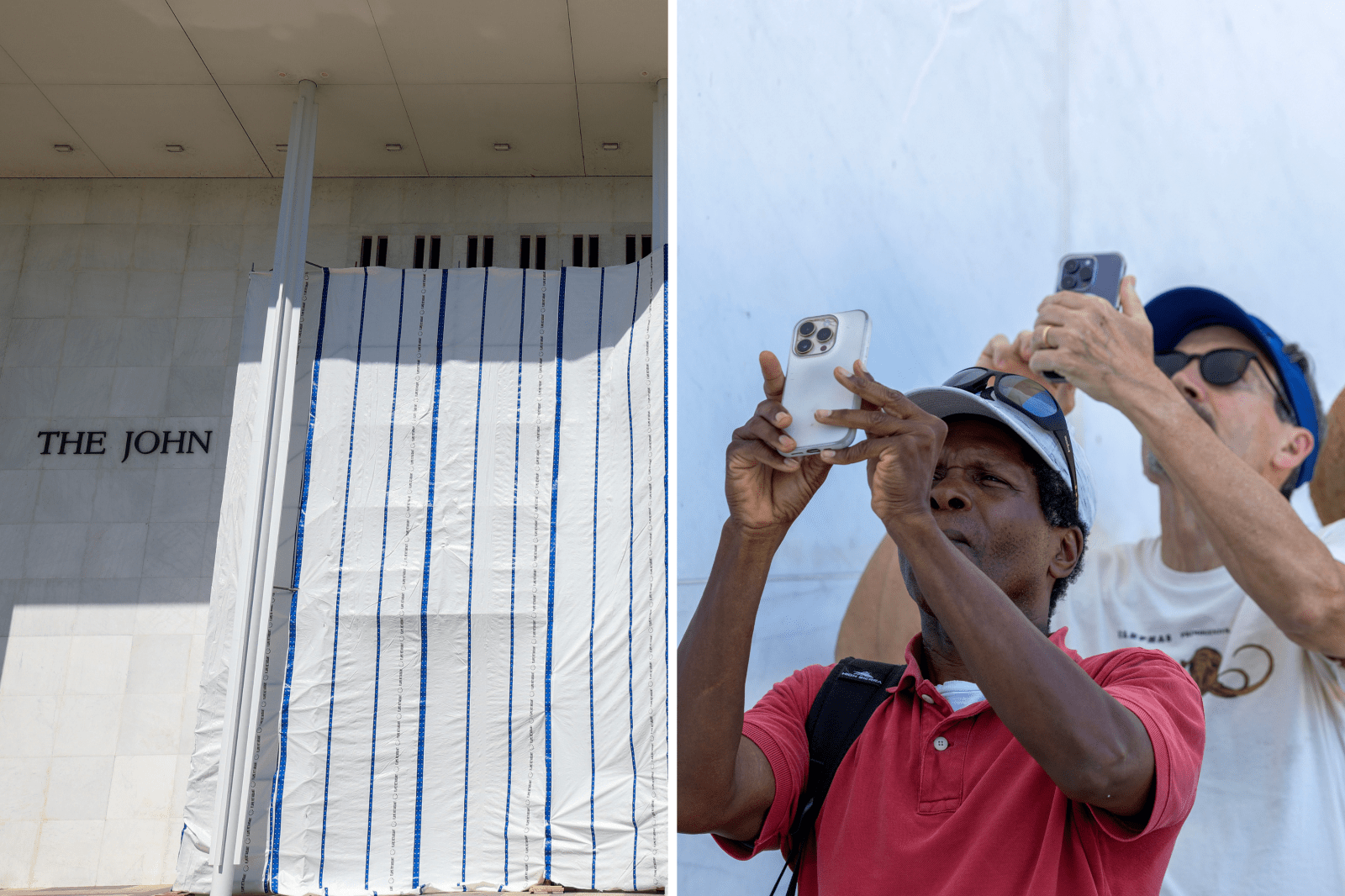
Claims about ‘broken egos’ influencing decisions at the Kennedy Center have emerged in new court filings as a legal conflict intensifies. This concerns tarps covering the building’s facade despite a federal court order to remove President Donald Trump’s name.
Tarps Obstruct Public View
Large tarps continue to cover the front of the John F. Kennedy Center for the Performing Arts in Washington, D.C., making the removal of signage invisible to the public. Attorneys for Representative Joyce Beatty, who initiated the lawsuit, have questioned whether the coverings are linked to maintenance or hindering verification of the court’s ruling compliance.
On June 19, a filing responded to U.S. District Judge Christopher R. Cooper’s directive requiring updates on renovation plans. It presented three options: complete closure, partial shutdown, or phased repairs, yet significant decisions remain pending.
The ongoing court case straddles law, governance, and public accountability. Judge Cooper reviews whether Kennedy Center officials have fulfilled both the letter and spirit of his order. His ruling issued May 29 deemed Trump’s name addition violated federal law. He emphasized the Kennedy Center’s statute designates the site as a memorial to President Kennedy, with Congress exclusively authorized to change its name.
The decision demanded removal of Trump-related signage within 14 days and disallowed a two-year closure plan, citing the Kennedy Center Act that governs the institution’s operations.
Tension Over Compliance
By mid-June, officials confirmed all Trump-related signage was removed from the building. However, the process was masked from public view, conducted behind scaffolding and flame-retardant tarps.
The tarps remain, restricting visitors from viewing the facade and blocking confirmation of new signage. Kennedy Center officials justify the delay through maintenance needs on marble and soffit panels, with no timeline provided for tarp removal.
Documents describing “decades of deferred maintenance” reveal structural concerns, including deteriorating marble and soffit panels weighing over 2,000 pounds. Despite this, Beatty’s legal team disputes the maintenance explanation, suggesting the tarps imply noncompliance, driven by leadership egos.
Public Response
The Kennedy Center experience is impacted for visitors and performers alike. Actor Tommy Gedrich expressed skepticism about the explanation, noting tarps obstruct backstage entrances, complicating access.
Public reactions vary from skepticism to indifference. Notably, Representative Jamie Raskin labeled the situation a “literal cover-up,” while others suggest Trump masked an “embarrassing defeat.”
The tarps have become a symbol for critics of political influence over cultural institutions. Protesters have gathered, calling for tarp removal. Demonstrators voiced opinions on repurposing the tarp for public spectacle.
Renovation Plans and Future Implications
The tarp disagreement occurs amid broader Kennedy Center uncertainties. Filed options include:
- Complete closure, halting programming
- Partial access with limited events
- Phased repairs while keeping performances
The originally planned two-year closure starting July was blocked by the court, requiring continued operations. The Kennedy Center aims to sustain an operational model beyond July 5, while program details remain under consideration.
Wider Legal Battle
The tarp situation reflects wider legal and political struggles over the Kennedy Center. Trump had sought to rename and conduct extensive renovations, including a prolonged closure. Beatty’s lawsuit and Judge Cooper’s ruling overturned these plans.
This disagreement over naming authority evolved into a complex conflict over governance and transparency, typified by the undemolished tarps.
Further court review is expected regarding the Kennedy Center’s order compliance, including tarp removal timeline explanations. Until resolved, one of Washington’s prominent cultural sites remains obscured.