
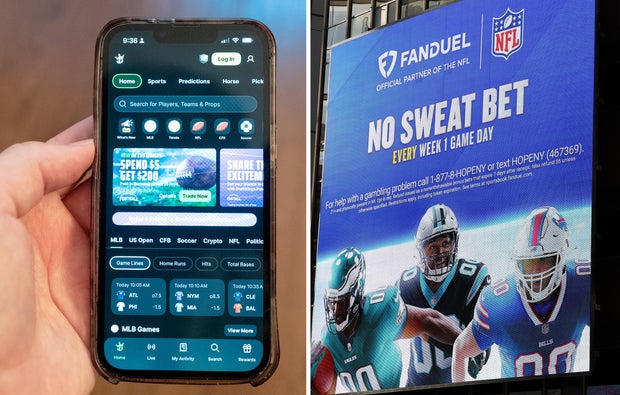
Last month, Meta faced hefty penalties, agreeing to pay states $17.1 billion and implement essential changes to meet accusations that its platforms cause addiction. Attorney Jennifer Hoekstra, having achieved a previous legal victory over Meta, is now targeting sports betting apps like FanDuel and DraftKings. Hoekstra’s firm has filed 15 lawsuits against these major gambling services, drawing parallels between their addictive designs and those seen in social media platforms.
Hoekstra explained to CBS News the profound losses individuals face due to these apps, likening the addiction alerts and workflow to those found in social media. As online sports gambling gains popularity, concerns arise over its financial impact. The American Gaming Association reported $167 billion wagered last year. A UCLA study indicated a 25% rise in bankruptcies and credit card delinquencies in states where online sports gambling was legalized.
Disputes over addictive behavior persist. FanDuel, a leading platform, claims rigorous monitoring and restriction measures. They invested $158 million on responsible gaming last year and removed 5,700 users. However, their efforts to keep bettors engaged amid losses have raised doubts. A former FanDuel employee mentioned that, rather than cutting off users, strategies focus on slowing them down.
Techniques used by these apps parallel high-end casino perks, offering luxurious experiences to retain customers, as evident with Ruiz-Haynes, a VIP user enjoying games and personalized interactions with FanDuel managers. Despite gambling amounts equal to his annual earnings, Ruiz-Haynes faces significant risk, sometimes betting his weekly paycheck.
Louis Ruggiero, a recovering gambling addict, reports similar experiences with apps offering VIP status after substantial losses. To him, and others, these tactics suggest predatory retention masked as hospitality, aimed at retaining heavy bettors.
Efforts to manage addictive tendencies continue. Despite lavish attention on prolific gamblers, companies run sophisticated data operations, monitoring bet behaviors and using notifications to reengage users at vulnerable times. Hoekstra’s suits claim that alerts create a constant presence, urging gamblers to reengage when stressed or bored.
The legal precedent set in California found Meta and YouTube negligent for social media addiction, leading to damages. Hoekstra aims to apply similar arguments to gambling apps, alleging they are intentionally addictive.
A spokesperson for DraftKings expressed commitment to responsible engagement; yet legal claims challenge these assertions. While gambling companies argue most users engage responsibly, tools for setting limits are available. Maloney from the Sports Betting Alliance insists most bettors see gambling as entertainment, not wealth creation.
If support is needed, resources like the National Problem Gambling Helpline and Gamblers Anonymous offer help.
Read the statement from FanDuel:
“FanDuel asserts its commitment to operating responsibly, investing considerably in responsible gaming initiatives, and taking measures to ensure customer trust and regulatory standards are met.”
DraftKings emphasizes responsible engagement:
“DraftKings, holding firm on responsible engagement, employs dedicated teams for customer care and offers tools ensuring players game within their means.”