
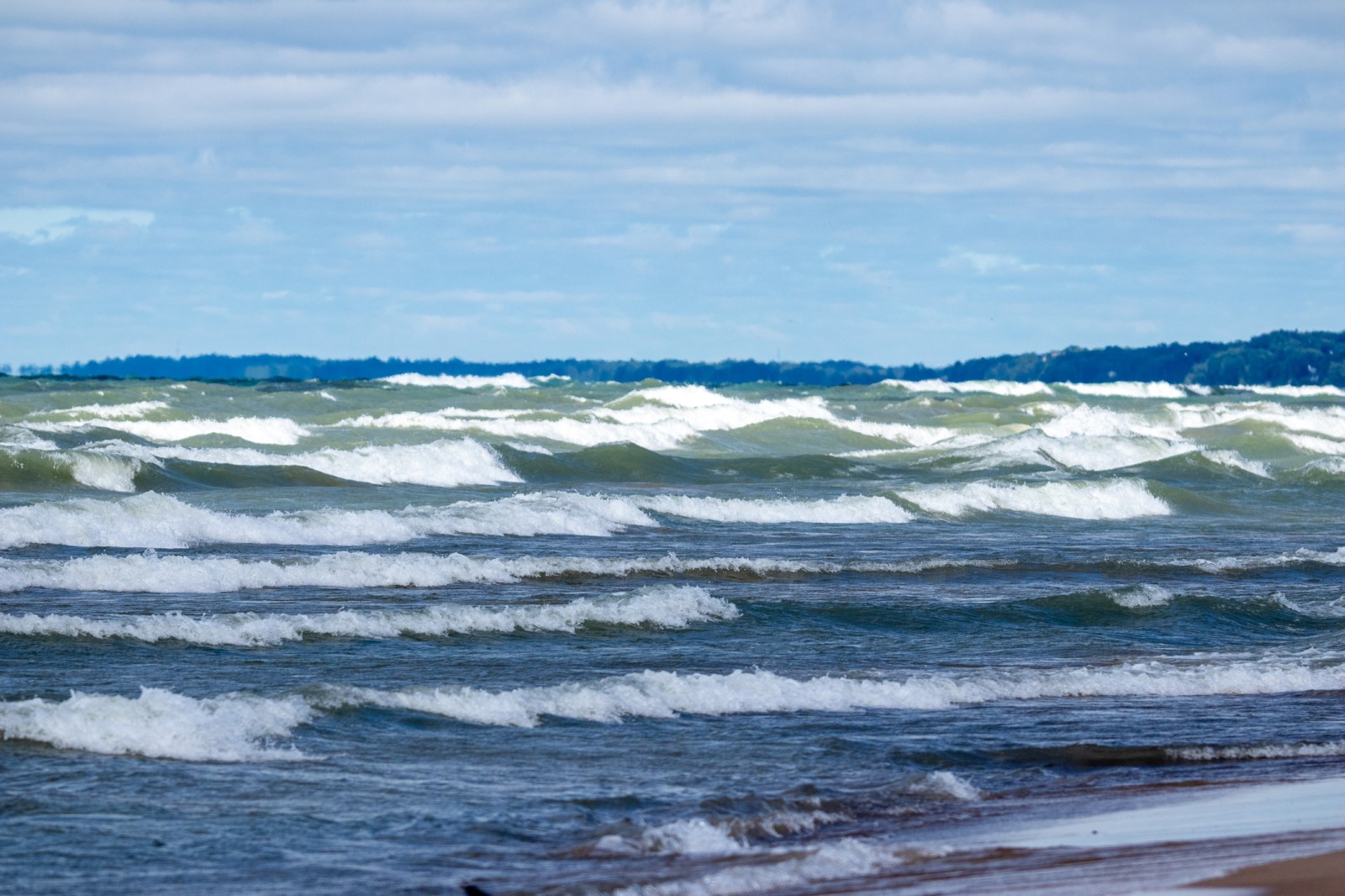
Fresh beach hazard statements have been issued along parts of Lake Michigan. High waves, dangerous currents, and rip currents could become life-threatening for swimmers at the shoreline this weekend.
The alerts follow recent warnings across all five Great Lakes. Officials advised nearly 1 million people to avoid the water, from Lake Superior to Lake Ontario.
The National Weather Service (NWS) issues beach hazard statements when waves or dangerous currents create high swim risks. Current advisories target parts of Wisconsin and Michigan. Forecasters predict hazardous swimming conditions through Friday, extending into Saturday in some areas.
Danger Across the Great Lakes
The Great Lakes Surf Rescue Project (GLSRP) warns these currents can be as dangerous as ocean currents. The organization reports dangerous currents, including rip and structural currents near piers, lead to dozens of deaths annually.
Since 2010, around 1,480 drownings have occurred in the Great Lakes. This year, 65 drowning incidents have been reported, 35 of which happened in Lake Michigan.
With the summer lifeguard season over, beachgoers face these hazards without trained rescuers.
“This time of year there are no lifeguards on the beaches across the Great Lakes,” GLSRP executive director Dave Benjamin explained.
Beaches with lifeguards typically have coverage from Memorial Day weekend through Labor Day. Not all beaches provide lifeguards.
The absence of lifeguards makes heeding official warnings crucial.
List of Impacted Beaches
NWS has identified beaches that might be vulnerable to dangerous conditions.
Wisconsin Beach Warnings:
- Kewaunee County
- Crescent Beach
- City of Kewaunee Beach
- Manitowoc County
- Point Beach
- Neshotah Beach
- Red Arrow Beach
- Door County
- Rock Island State Beach
- Baileys Harbor beaches
- Whitefish Dunes Beach
High waves and currents are expected from Friday afternoon through Saturday afternoon. Residents and visitors are advised to stay out of the water.
Michigan Warnings:
- Southern Schoolcraft County
- Lakeview Park
- Seul Choix Point
The Marquette NWS office predicts life-threatening waves and strong rip currents Friday afternoon and evening. Past identical wave conditions led to rescues and fatalities.
“Waves in rapid succession can tire swimmers quickly,” the beach hazards statement noted.
The agency’s guidance for affected areas is clear: avoid the water until conditions improve.
This warning follows an active period for Great Lakes hazards. Swim advisories were issued for all five Great Lakes earlier in the week due to large weather systems causing dangerous waves and currents.
Beach experts emphasize the strength of Great Lakes currents, rivaling ocean coastlines. Strong winds over open water generate powerful waves and currents.
Surviving a Rip Current
Safety officials stress the importance of avoiding panic in a rip current. These powerful, narrow water channels move away from the shoreline. They form when waves push water to the beach, and the water flows back through a concentrated path.
Rip currents rarely pull people underwater, but they can quickly drag even strong swimmers from shore, creating exhaustion and panic. Experts recommend conserving energy instead of fighting the current.
The GLSRP advises using the “Flip, Float and Follow” strategy. Flip onto your back, float to save energy, and follow the current to escape safely.
Swimmers capable of moving can swim parallel to the shore until out of the current. Then, gradually angle back to the beach. If trapped, continue floating, conserve energy, and signal for help.
The NWS and safety experts urge avoiding water during beach hazard statements. Dangerous currents can occur near piers, breakwalls, river mouths, and open beaches, overpowering even skilled swimmers.
With no lifeguards and dangerous waves expected, officials advise checking forecasts and treating hazard statements as serious warnings.