
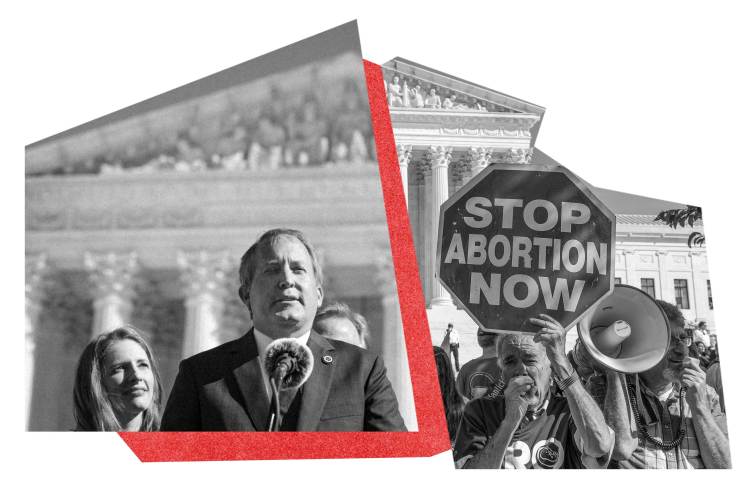
In the early days of his tenure as Texas attorney general, Ken Paxton highlighted what he saw as a national tragedy. In 2016, on the 43rd anniversary of Roe v. Wade, Paxton lamented the void left by over 50 million missing human beings, signaling his strong opposition to the Supreme Court ruling that protected abortion rights. For years, Roe stood as an obstacle to banning early pregnancy abortions, but Paxton spent his time testing its limits. In 2021, he defended a near-total abortion ban in Texas designed to evade traditional legal challenges. The U.S. Supreme Court permitted it to take effect while Roe was still in place. After Roe was overturned the following year, he continued to pursue new approaches to broaden the reach of Texas’ abortion restrictions.
Paxton’s tenure has encountered criticism due to personal scandals and allegations of misuse of office. However, both critics and allies recognize his significant achievement: advancing abortion restrictions in Texas. His approach has included pushing legal boundaries and employing innovative legal strategies. If he wins his U.S. Senate race, his ability to enact similar measures may change. As attorney general, he acted mostly independently. In the Senate, he would be only one of 100, where legislation requires a 60-vote consensus to overcome filibusters. Yet, supporters see potential for influence in drafting national abortion legislation based on his work in Texas. Legal experts expect Paxton might join efforts to pressure the FDA to revoke approval of abortion drug mifepristone and secure legal rights for fetuses, affecting contraception and in vitro fertilization.
Paxton has expressed support for in vitro fertilization while considering restrictions to prevent loss of fertilized eggs. His litigation has raised significant questions, including whether federal law overrides state abortion bans in emergency care and if a fetus should be treated as a separate patient with rights equal to the pregnant individual. In the current race, his Democratic opponent, James Talarico, supports reinstating federal abortion rights and criticizes Paxton’s supported extreme laws. Paxton speaks less about abortion lately, an issue where he’s defended harsher restrictions than many Texans favor. However, observers closely watch his Senate campaign, fearing his abortion strategies might influence his actions as a senator.
His efforts have prompted action beyond Texas. For instance, Dr. Jennifer Villavicencio, an abortion provider, has relocated twice to states with strong legal protections fearing repercussions from Paxton’s methods targeting out-of-state doctors.
When he became attorney general in 2015, Paxton had a clear anti-abortion stance. Raised by an anti-abortion activist, he married someone who emphasized being adopted because her birth mother “chose life.” A legislative contributor to a 20-week abortion ban, similar restrictions were in place nationwide, yet no state enforced bans as early as six weeks until Texas did. In 2021, Jonathan Mitchell, a Texas lawyer, helped legislators craft Senate Bill 8, a law designed to withstand legal challenges. It empowered private citizens to sue suspected abortion providers, offering financial incentives. Paxton’s office contended state officials couldn’t enforce laws they didn’t administratively control, and courts upheld this view. This allowed Texas to maintain the first enforceable six-week ban pre-Roe.
We saw in my case that Texas will go after doctors.
The repercussions were immediate. For doctors like Dr. Sam Dickman, practicing in Texas under new restrictions meant either changing medical practice entirely or relocating to states that maintained Roe protections. Examples include patients like Josseli Barnica, who died from sepsis following a miscarriage because Texas law hindered immediate care.
Following the overturning of Roe, Paxton guided Texas’ handling of abortion emergencies, wherein the Biden administration sought to ensure emergency room protections under EMTALA. Paxton argued EMTALA wasn’t a tool to override state bans, advocating for recognition of “unborn child” considerations. Courts initially favored Paxton, allowing Texas and members of anti-abortion medical organizations to operate under state law constraints. This success emboldened other states, like Idaho, to request similar enforcement of bans under contentious court rulings, elevating the issue to possible Supreme Court review.
Paxton’s approach tested new waters. A unique tactic was pressuring hospitals in cases where courts allowed abortions for grave conditions, like that of Kate Cox, whose Texas court-approved abortion was preemptively restricted by Paxton’s legal maneuvers. His influence extended to the criminal prosecution of providers like Maria Rojas under state laws, a scenario spurring debate on legal approaches to abortion provision.
With cross-state cases against providers who remotely supply abortion care, Paxton initiated a scheme later adopted by others. Despite difficulties in enforcing judgments, his tactics have inspired legal teams in states such as Louisiana, and his innovative outreach includes targeting entities that fund out-of-state abortion access, stopping municipal support efforts. In all, Paxton is an innovator expanding the network seen as complicit in abortion, underscoring his unwavering focus on advancing legal strategies to further restrict abortion access.