
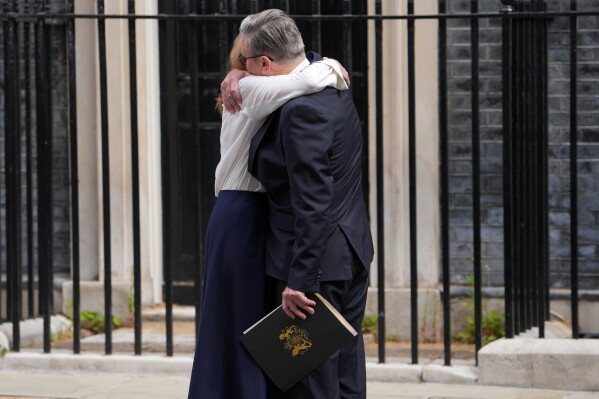
British Prime Minister Keir Starmer announced his resignation after losing support from key Labor Party members in Parliament. He intends to stay in office until a successor is chosen, possibly by mid-July.
Andy Burnham, the former mayor of Greater Manchester, has confirmed he will run for the position. Last week, Burnham achieved a significant electoral victory in Makerfield, northwest England. This success positions him as the front-runner to replace Starmer, showcasing his appeal across the political spectrum.
Despite Labor’s unfavorable poll ratings and losses in May’s local elections, Burnham increased Labor’s vote share to nearly 55%, overcoming challenges from the anti-immigration Reform UK candidate. His performance hints that Labor could remain in power if similar results occur nationwide.
Starmer expressed acceptance of his decision to resign outside 10 Downing Street, acknowledging he wasn’t the best person to lead Labor into the upcoming election.
The next general election might be held by 2029, but party leadership can change without an election. Starmer’s departure timeline is uncertain. Burnham recently returned to Parliament after serving as Greater Manchester’s mayor, announcing his intention to run for Labor leader.
Burnham emphasized the need for a responsible transition, maintaining focus on critical issues. Labor’s executive committee will open nominations on July 9. Burnham could become party leader within weeks if unopposed; otherwise, elections might extend to September.
Wes Streeting, ex-health secretary, backs Burnham for leadership. He notes Burnham’s capability to counter nationalism, citing Reform UK’s poll dominance since July 2024. Streeting encourages collaboration rather than division among Labor ranks.
Other potential candidates, such as Angela Rayner and Al Carns, haven’t responded to Starmer’s resignation. Rayner previously resigned over property tax issues, Carns over defense funding plans.
Many in Labor believe Burnham should lead without opposition to assume his role before the party conference. Burnham has been reticent about preferring a coronation over a contest.
Candidates must secure backing from a fifth, or 81, of party’s House of Commons members. Additionally, they must have support from 5% of local constituency parties or at least three groups like trade unions.
Eligible party affiliates and members will vote using a ranking system. The first candidate with over 50% of the vote wins. The winner will be invited by King Charles III to become prime minister and form a government.