
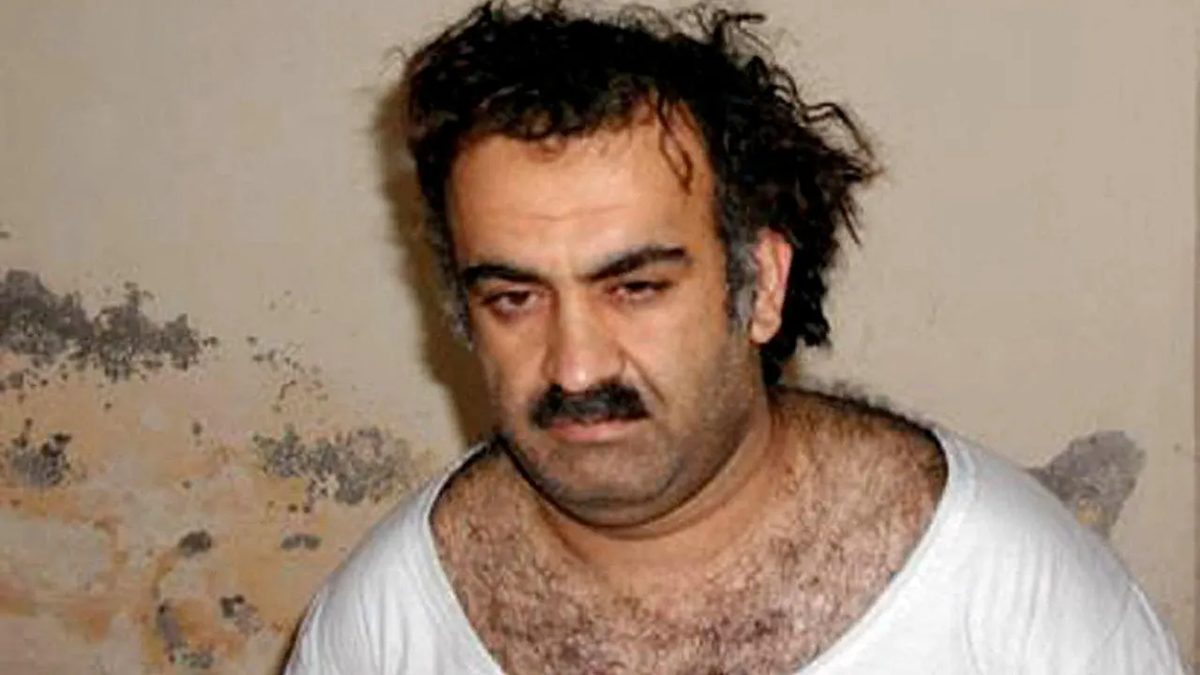
The recent decision by Lt. Col. Michael Schrama to dismiss Khalid Sheikh Mohammed’s confession has stirred significant controversy. Mohammed, the alleged mastermind behind the Sept. 11 terrorist attacks, has been held at Guantánamo Bay since 2003. The confession, made in 2007, was ruled involuntary by Schrama, complicating the prospects of bringing Mohammed to trial.
Schrama, an Air Force judge specializing in military and environmental law, is overseeing the military commission in the 9/11 case. He postponed Mohammed’s trial to June 2028, dismissing prosecutor demands for a January 2027 commencement. This decision, though not publicly announced initially, has been criticized for its timing close to the 25th anniversary of the attacks.
Gerald Posner, a journalist and author, described the ruling as a “shameful prelude to the 9/11 anniversary.”
The scrutiny around Schrama’s decision has shone a light on an essay he authored in 2023 titled “Creating a Codified Legal Response to Domestic Extremism in the Ranks.” The piece was published in “War on the Rocks,” a national security and foreign policy platform. In the essay, Schrama advocated for addressing domestic extremism among military personnel via amendments to military legal codes.
Schrama argued that military members are increasingly engaging in extremist activities, a threat highlighted by a 2021 study from the Center for Strategic & International Studies. According to the study, military personnel were involved in 17.6% of domestic terrorism plots and attacks.
In addition, 12% of individuals charged in the Jan. 6 Capitol riot had some form of military experience, including active-duty service members.
Schrama noted:
- Military institutions often adopt more conservative and isolated personas relative to civilian society.
- Young military members might be vulnerable to recruitment by extreme right-wing groups sharing similar ideologies.
- The current legal framework fails to treat domestic extremism as a distinct criminal offense.
To address these issues, Schrama proposed codifying domestic extremism as a punitive article under military law. This move would empower commanders to tackle rising extremism more effectively.
Further evidence of such extremism includes cases like a 2019 incident where a Coast Guard officer pleaded guilty to gun and drug charges. Prosecutors described the officer as a domestic terrorist, yet chose lesser charges due to the absence of a specific domestic terrorism statute.
Amid these discussions, Ronald Flesvig from the Military Commissions Convening Authority refrained from commenting on Schrama’s ruling. He stated it would be inappropriate to comment on judicial decisions.
The case against Mohammed and his co-defendants remains mired in pretrial motions. Schrama, appointed in 2025, is the fifth judge assigned to this complex legal proceeding.
The decision attracted further criticism from White House senior advisor Stephen Mueller, who condemned the judicial system for siding with criminals. He accused the system of enabling persecution of innocent Americans while shielding criminal entities.
Mueller labeled the situation as “a disgrace” and “an outrage.”
Peter Pinedo, a politics writer for Fox News Digital, reported these developments.